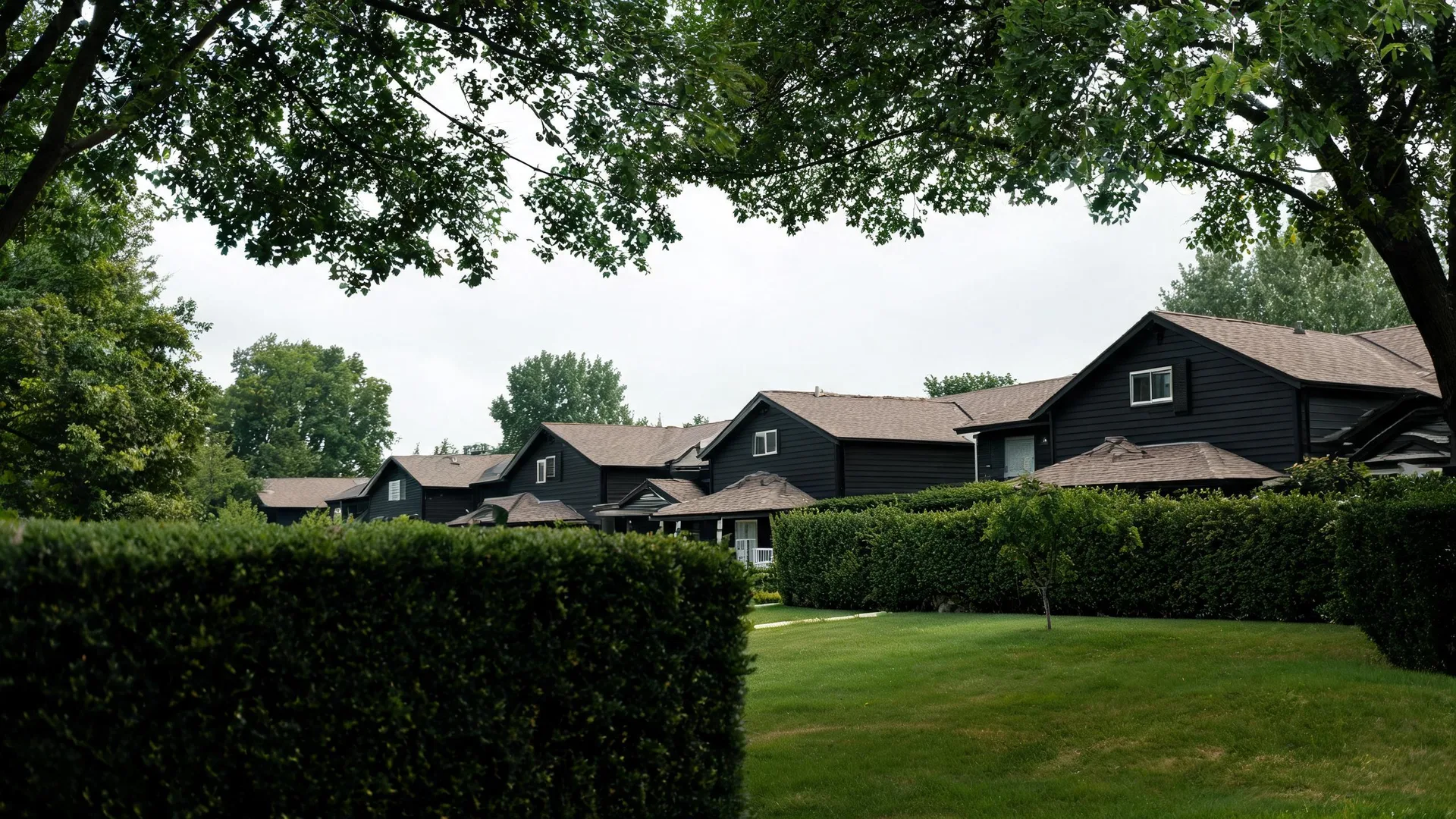



A row of dark-sided houses with brown shingled gable roofs behind tall trimmed hedges, with a mowed lawn in the foreground and overhanging tree branches against an overcast sky.

Furnace Maintenance in Des Moines, IA

Tell us about the job

Takes about a minute. No obligation.

Tune-up, service, or cleaningFurnace or heatingPolk County, IA
Step 1 of 2

What ZIP code is the job in?

Your furnace in Polk County runs about eight months a year, October through May. That's most of the calendar spent heating, not just a few cold snaps. Overnight lows average 16°F across December, January and February, so once it starts, it runs hard and keeps running. A furnace working that many hours wears parts sooner than one that only kicks on now and then. The igniter or the blower motor can start slipping before you notice anything wrong, and the slip shows up first on the coldest nights, when you need the heat most.

A furnace that never gets looked at still runs, until the day the igniter just doesn't light.

A yearly check catches the weak part while it's still just weak.

Heat starts in October here. Get the furnace checked in September.

Heat runs October through May
Winter nights average 16°F
Climate zone 5A

Half the homes in Polk County were built in 1982 or later, so a lot of furnaces here haven't put in that many hard winters yet. A newer furnace still wears, just slower, and a yearly check is what keeps it on that slower track. The tech can catch a cracked heat exchanger or a clogged flue before it turns into anything worse, and spot a blower motor running rough while it's still just rough. Skip the checks for a few years and a system that should run fine for another decade starts failing early instead. If your furnace came with the house, worth finding out how old it actually is before winter sets in.

Most furnaces here run on gas. That means a burner and a flue, not just a filter.

Gas heats 65.7% of homes in Polk County, more than any other fuel. A gas furnace lights a burner and vents the exhaust outside, and a yearly check is what confirms both are still doing their job. A cracked heat exchanger or a blocked flue won't show up as a strange noise. It shows up as carbon monoxide in the house.

Find a contractor
A man in a gray t-shirt, tan work pants and brown boots, seen from behind, climbs steps toward a dark front door while carrying a canvas tool bag holding a tape measure and screwdrivers, with a potted flowering shrub beside the entry.
A gray gas furnace with attached ductwork and piping installed in an unfinished concrete basement.

Test it while it's idle, not on the first cold night

Get the furnace looked at before October, while it's sitting idle. A tech can test the igniter and the blower motor on the bench, not while they're carrying eight months of hard running and nights down near 16°F. Whatever is wearing thin shows up easier when the system isn't already under load.

What shows up before a breakdown does

A furnace rarely just quits cold. It gives a warning first. The flame looks yellow or ragged instead of steady blue. The blower rattles or hums before it kicks on. The air coming out feels lukewarm instead of hot, or a room that used to heat fine now takes longer to catch up. Short cycling, where the furnace fires up, stops, then fires again within minutes, is the system struggling to hold a cycle it used to hold easily. Any one of these is worth a look before it becomes a no-heat call.

Why these signs matter before they get worse

A weak igniter or a dirty flame sensor doesn't fix itself. It gets a little worse each cycle until the furnace won't light at all, and that usually happens on the night it's working hardest. A tech checking these signs early is testing parts that are already most of the way to failing, not guessing at problems that might show up someday. Catching the rough-running blower or the ragged flame now is what keeps a small fix small.

Between visits, the filter is the one thing worth your attention. A dirty filter chokes airflow, and a furnace starved for air runs hotter than it should and works harder to push heat through the house. Check it monthly and swap it when it looks gray or matted, more often if there's a pet shedding in the house. Keep the area around the furnace clear too. It needs room to pull in air, and anything stacked against it close off that intake. If you have a carbon monoxide detector near the furnace or on the level above it, test the batteries the same way you would a smoke detector. Beyond that, leave the burner and the flue alone. Those are a tech's job, not yours.

A tune-up starts with the burner. The tech pulls it and cleans off any rust or scale so the flame burns steady instead of ragged. The flame sensor gets cleaned too, since a coated sensor is one of the most common reasons a furnace shuts off right after it lights. The igniter gets tested under load, not just looked at, because a hairline crack won't show until it's asked to actually fire. The heat exchanger gets inspected for cracks, since that's the part standing between the flame and the air moving through the house. The blower gets checked for a wheel caked in dust or a motor drawing more current than it should. The flue gets checked for a solid connection and a clear path outside. Gas pressure gets tested and set to spec, not left wherever the last install happened to land it. All of this is easier done with the furnace sitting idle than with a cold house waiting on the answer.