A quiet residential street at dusk lined with illuminated two-story brick houses and mature trees.

Heat Pump Installation in Des Moines, IA

Tell us about the job

Takes about a minute. No obligation.

New system or replacementHeat PumpPolk County, IA
Step 1 of 2

What ZIP code is the job in?

Polk County sees its share of storms

Polk County logged 405 severe weather events between 2015 and 2024. That includes 191 damaging wind events, 162 hail events, 17 tornadoes and 21 winter storms with heavy snow or ice. An outdoor heat pump unit sits outside through all of it.

Power doesn't always hold

In 2024, 15% of Iowa households lost power for 24 hours or more. A heat pump depends on electricity to heat and cool the house, and a long outage leaves it off until power comes back.

8 months
October through May, your system heats
3 months
June through August, it cools
16°F
the average winter night it heats against
83°F
the average summer afternoon it cools against
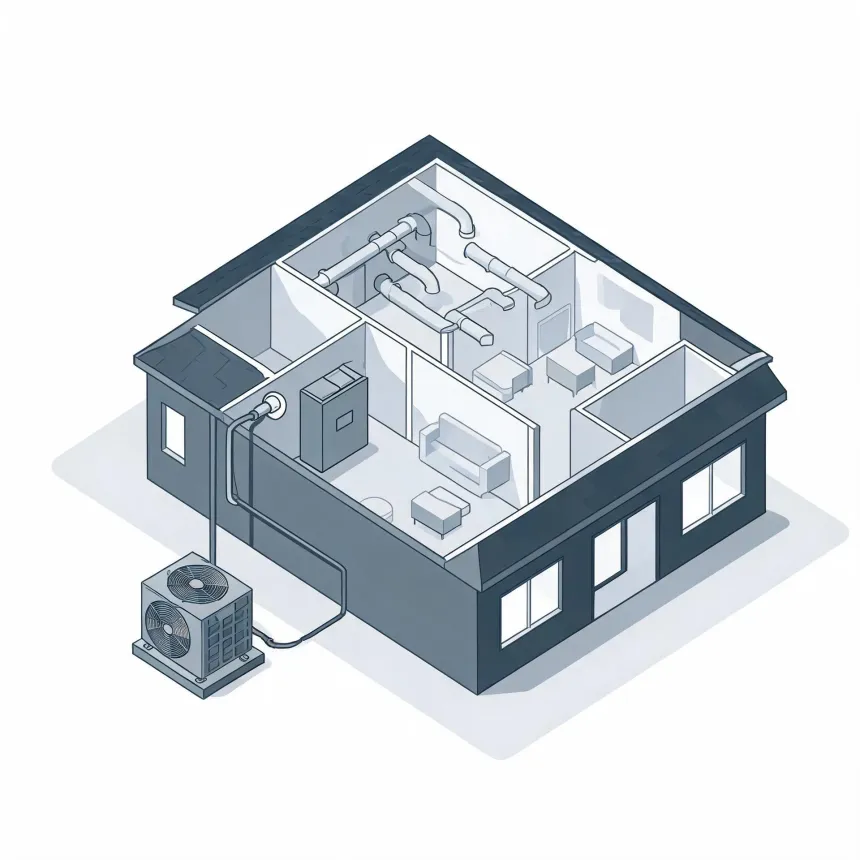
Isometric line illustration of a cutaway single-story house showing interior rooms, ceiling ductwork and an indoor air handler, connected by a line to an outdoor condenser unit on a pad beside the building.
Your system heats October through May and cools June through August.

NOAA nClimDiv, 1991–2020 normals

Gas heats 65.7% of homes in Polk County.

Most heat pump installs here add electric heating and cooling alongside the gas furnace already in place.

Eight months of heat, three of cooling: get it done before October

Cooling runs June through August
Heat runs October through May
191 damaging wind events from 2015 to 2024

Polk County sits in zone 5A under the 2021 energy code, a cool, fairly humid climate where heating matters more than cooling. A split-system heat pump installed here has to meet the federal minimums for equipment manufactured on or after January 1, 2023: at least 14.3 Btu of heat moved per watt-hour over the summer, and at least 7.5 Btu per watt-hour over the winter. Those two numbers set the floor for what a contractor can legally install, and they rule out older stock still sitting in a warehouse. A unit that clears the minimum by a wide margin pulls less power to heat the house, which counts for more here than the cooling side does. A federal tax credit is available for heat pumps that qualify, on top of meeting those minimums.

Plan for the outage before it happens

Ask the contractor where the outdoor unit will sit and what will shield it from wind and hail. Ask what happens to heat and hot water if the power goes down for a day. Some heat pump setups can work with a backup power source. Settle both before the install, not after a storm.

Find a contractor
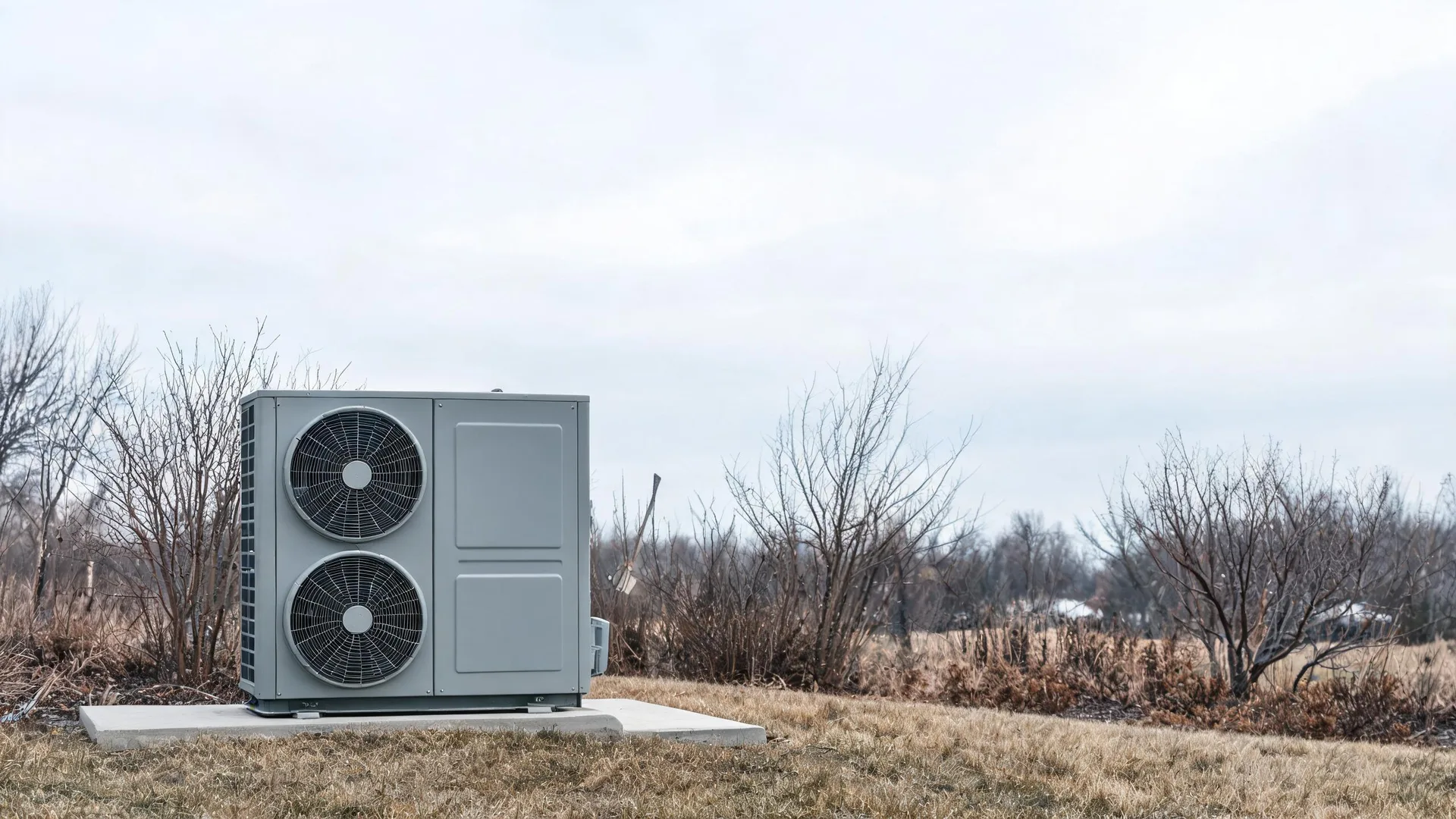
A gray heat pump condenser unit mounted on a concrete pad against the gray lap-siding exterior wall of a house.

A machine that never gets an easy year

Polk County logged 162 hail events and 191 damaging wind events between 2015 and 2024. That's what the outdoor unit sits through, year after year, as it moves heat in from the cold outside air every day the furnace isn't running, then reverses to push heat out of the house all summer. Humid summer air, averaging a 63°F dew point here, makes the system work harder to pull moisture out along with the heat. A unit built for a milder climate shows its weak points early. One sized and installed for what Polk County actually throws at it holds up to the running hours this place demands.

Ask what backs up the controls, not just the heat

A heat pump's outdoor unit and air handler run on electricity, full stop. Some systems pair with a backup generator or battery, but the thermostat and control board matter too. A contractor should be able to say exactly what keeps running, what shuts off, and what has to be reset by hand once power comes back.

Ask what the warranty covers if the unit takes a hit

Hail can dent a condenser's fins or bend the cabinet enough to block airflow. Wind can throw debris into the coil or knock the unit off level. Find out whether the manufacturer's warranty covers that kind of damage, or only mechanical failure, before deciding between brands and installers.

The efficiency rating on the label tells you how much heat the unit moves for the electricity it uses, nothing more. It isn't a measure of how big the unit is or how much heat it can put out on the coldest day. Two units can heat the same house to the same temperature, and the one with the higher rating does it on less power, month after month. That rating is measured under set lab conditions, so it won't match what you see on the coldest or hottest days, but it's still the best way to compare one unit against another before you buy. A higher rating usually means a more complex compressor and coil design, which is worth asking the installer about directly rather than reading off the label alone.

Get more than one contractor out to look at the house before deciding on a unit. A system sized off a quick glance or a rule of thumb can end up too small for the cold months or too large to run efficiently in the humid ones, and that only shows up once it's installed. Ask each contractor to walk through how they arrived at the size, not just which brand they're pitching. The lowest quote and the correctly sized system aren't always the same one, and here, where the unit runs hard both ways, that gap costs more than it would somewhere milder.