






An unfinished basement containing a forced-air furnace with metal ductwork, exposed wooden ceiling joists, a hanging Edison bulb, and bare concrete floors.

Furnace Installation in Des Moines, IA

Tell us about the job

Takes about a minute. No obligation.

New system or replacementFurnace or heatingPolk County, IA
Step 1 of 2

What ZIP code is the job in?

The efficiency rating on a furnace tells you how much of the fuel it burns turns into heat in your home instead of going out the flue. A higher rated furnace pulls more heat out of the same flame before letting the exhaust go. That difference shows up every time the furnace runs, not just on the coldest day. It also changes how the furnace is built. The higher rated ones cool the exhaust enough that it has to drain as condensate, so there's a drain line and sometimes a second heat exchanger involved. Ask what rating fits the ductwork already in place, since a bigger jump in efficiency can mean a different venting setup too.

8 months
October through May, your furnace is on duty
16°F
the average winter night it heats against
66%
of homes here heat with gas, so most furnaces here burn gas
80% AFUE
the federal minimum any new unit must meet
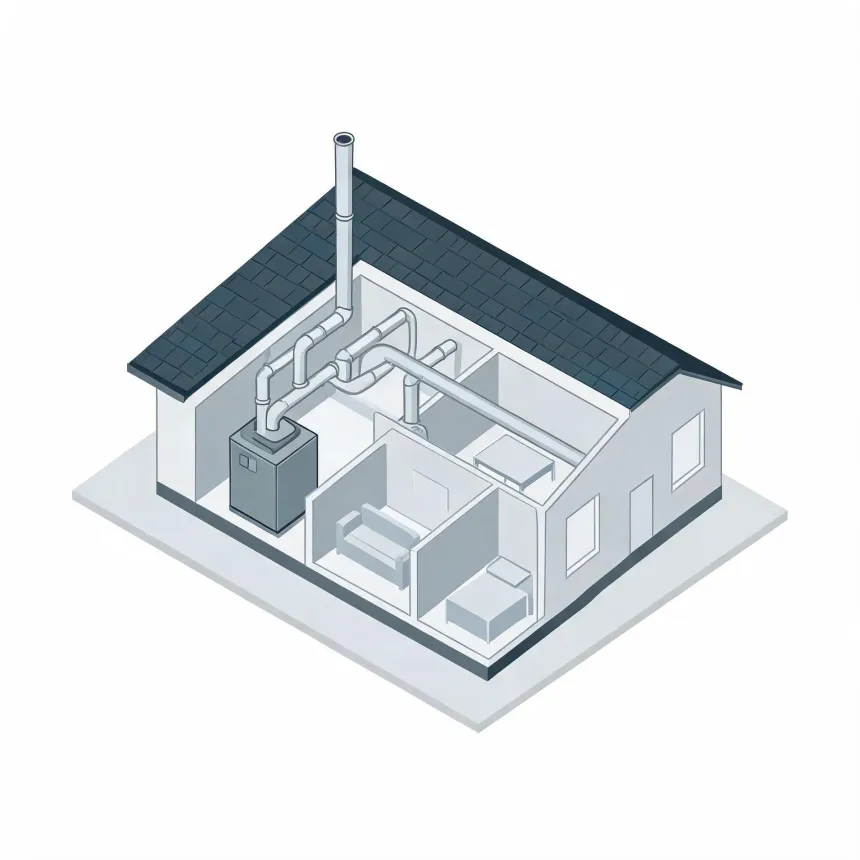
Isometric cutaway illustration of a single-story house showing a gray furnace connected to white ductwork and a flue pipe extending through the shingled roof, with simplified furniture in the interior rooms.
Your furnace works hardest from November through March.

NOAA nClimDiv, 1991–2020 normals

Natural gas ran $9.69 per million Btu in Iowa in 2024, cheaper than in most states.

A high-efficiency furnace still costs more up front, and with gas this cheap it takes longer to pay that difference back.

Eight months of heat a year, down to 16 degrees. This furnace doesn't get a break.

Heat runs October through May
Winter nights average 16°F
Climate zone 5A
Put a new furnace in before OctoberHeat runs October through May in Polk County, so September is the month to get this done.

Gas heats 65.7% of homes in Polk County, electricity another 30.7%. If gas is what you've got, putting in another gas furnace is the straightforward move, since the gas line, the flue and the ductwork are already sized for it. Switching to electric heat means rethinking all of that, not just swapping the unit. For most homeowners here replacing an old furnace, staying with gas is the simpler path.

A furnace installed now has to meet Iowa's efficiency minimum

Any gas furnace installed in Polk County has to hit at least 80 percent AFUE, the minimum for this zone. That bar moves to 95 percent in December 2028, so a furnace installed now meets the standard with years to spare before it changes. A federal tax credit is available on qualifying high-efficiency furnaces, worth looking into if you're already weighing a jump above the minimum.

Find a contractor
A man in a dark long-sleeve shirt and tan work pants, seen from behind, carries a canvas tool bag up porch steps toward a dark blue front door, with a potted plant beside him.
A gray gas furnace with attached ductwork and piping installed in an unfinished concrete basement.

Sized wrong, it struggles every time it runs

A furnace that's too big for the house short cycles. It fires, blasts the place up to temperature fast, and shuts off again before it's pulled moisture out of the air or warmed the walls and furniture, not just the air. That makes rooms feel stuffy and uneven even though the furnace is working. A furnace that's too small just runs and runs on the cold days, struggling to keep up, which wears on it the same way driving a car flat out every day would. Sizing it right isn't a guess. A contractor works out a load calculation from the square footage, the windows, the insulation and how the ductwork is laid out, and that number tells them what size furnace actually matches the house. Skip that step and either way, the furnace is working harder than it should, every single time it runs.

The old furnace gets disconnected, not left in place

A contractor shuts off the gas line to the old furnace, disconnects the venting and pulls it out before the new one goes in. If it's a high-efficiency furnace going in, the old venting often isn't sized right for the new unit anyway, so that gets swapped too. The old ductwork usually stays, since that's tied to the house, not the furnace.

Where the old one ends up

A furnace is mostly steel, copper and aluminum, so it gets hauled off for scrap rather than landfill. The refrigerant lines and gas valves get capped off safely during removal. None of that is work you do yourself alongside a new install, it's part of what the installation includes.

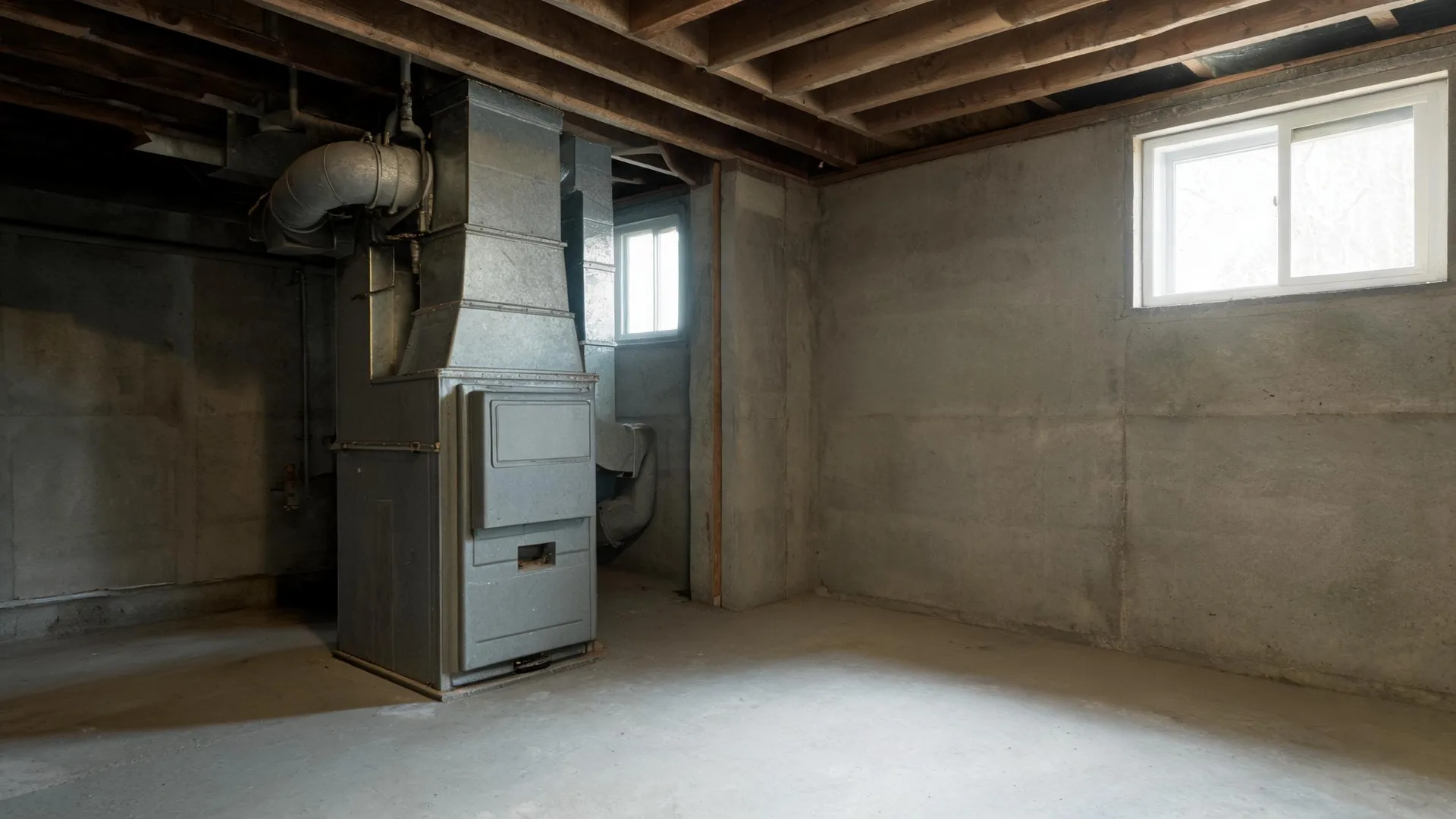
An unfinished concrete basement containing a metal HVAC air handler, exposed wooden ceiling joists with sheet-metal ducts, a hanging bare bulb, copper pipes, and stacked cardboard boxes.

A high-efficiency gas furnace would save about $90 a year to run in Polk County compared with a gas furnace.

  • A high-efficiency gas furnace$420 a year
  • A gas furnace$510 a year

Estimates for a typical Polk County home, from EIA household energy data, Iowa fuel prices and NOAA climate normals. Your home will differ.

Installation day starts with the gas and power shut off, then the old furnace comes out before the new one goes in. The contractor sets the new unit, runs the flue or vent pipe to the outside, and ties it into the existing ductwork with a supply and return connection. The gas line gets hooked up and pressure tested before anything gets fired, since a leak has to be caught before the furnace ever runs. Electrical and thermostat wiring come next, then the condensate drain if the furnace is high-efficiency. Once it's all connected, the contractor fires the furnace, checks the flame, and measures the temperature rise across the heat exchanger to confirm it's running the way the manufacturer specs it. Expect the house without heat for part of the day while this happens, and expect some noise and foot traffic between the furnace location and wherever the venting runs.