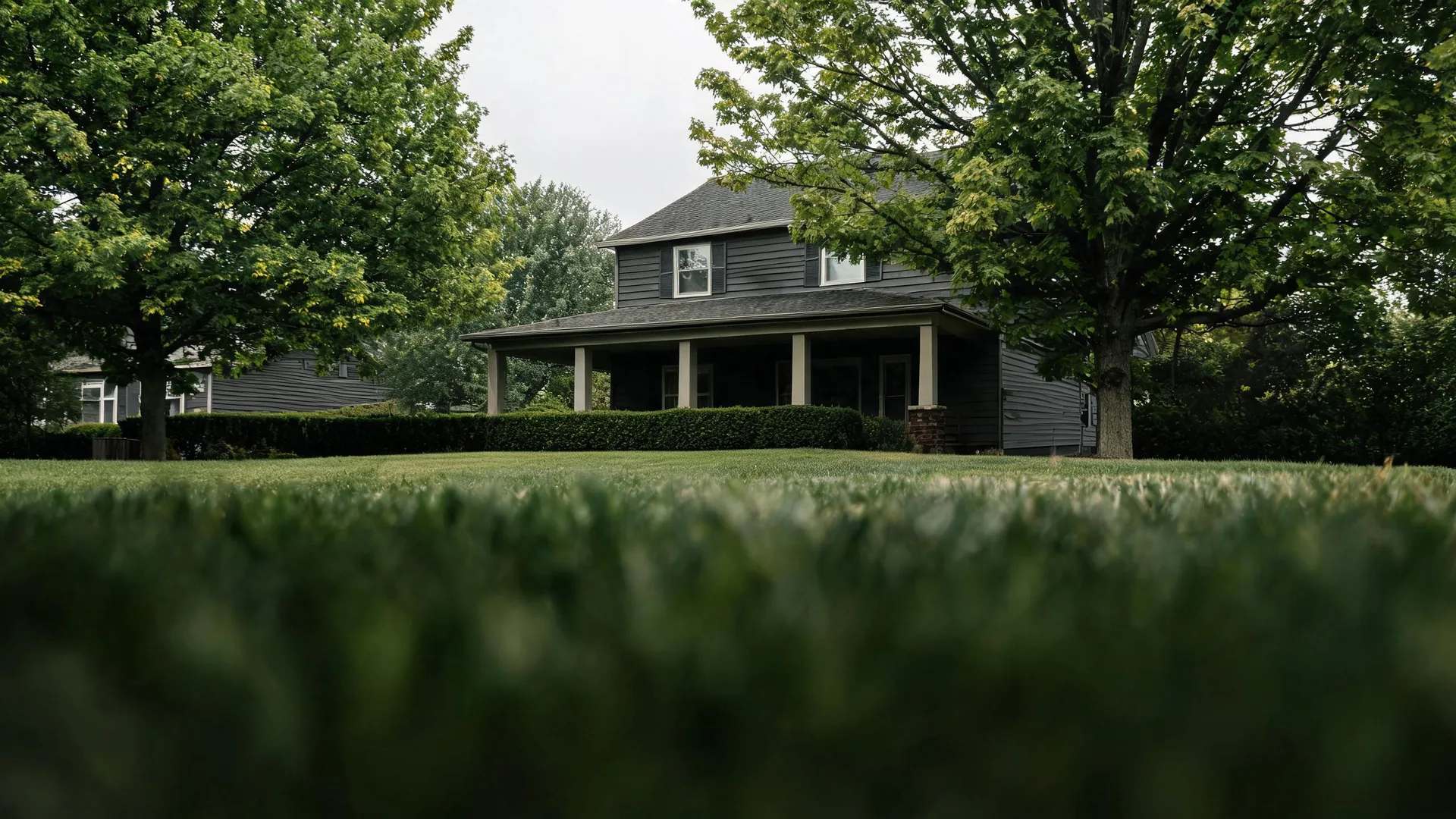





A two-story dark-sided house with a covered front porch behind a trimmed hedge, framed by large green trees, photographed from ground level with blurred grass in the foreground.

Heat Pump Installation in Muscatine, IA

Tell us about the job

Takes about a minute. No obligation.

New system or replacementHeat PumpMuscatine County, IA
Step 1 of 2

What ZIP code is the job in?

Gas heats 70.1% of homes in Muscatine County, the most of any fuel here, with electricity a distant second at 17.3%. A heat pump works differently than a gas furnace. Instead of burning fuel it moves heat, pulling warmth out of the outside air even when it's cold and bringing it inside. Below a certain outdoor temperature it needs backup heat to keep up, and in a gas-heated home that backup is often the existing furnace, working alongside the heat pump rather than replacing it outright. A contractor can look at your current setup and tell you what pairing makes sense for this climate.

8 months
October through May, your system heats
3 months
June through August, it cools
17°F
the average winter night it heats against
83°F
the average summer afternoon it cools against
Isometric line illustration of a cutaway single-story house showing interior rooms with furniture and ceiling ductwork, connected to an outdoor condenser unit on the ground outside the left wall.
Your system heats October through May and cools June through August.

NOAA nClimDiv, 1991–2020 normals

Muscatine County logged 137 severe weather events between 2015 and 2024, from hail to high wind to winter storms.

A standard heat pump sized right for your home holds up fine against all of that. There's no reason to size up or pay for extra capacity here.

Nothing about Muscatine's weather calls for a bigger or pricier unit

Power costs 13.4 cents a kWh statewide
59 damaging wind events from 2015 to 2024
46 hail events from 2015 to 2024

Half the homes in Muscatine County were built in 1970 or earlier. A house that age wasn't built with a heat pump in mind, and the ductwork, the electrical panel, maybe the insulation all date back to whatever the original setup called for. That doesn't rule anything out. It just means sizing the equipment off square footage alone won't get you the right answer. A contractor working on an older home here needs to look at what's already in place, the duct sizes, the panel capacity, before deciding on equipment, and an old farmhouse and a home built last year won't take the same installation even with the same unit.

A heat pump here has to meet zone 5A's minimums, and a federal credit can offset the cost

Muscatine County sits in climate zone 5A, where winter drives the heating bill more than summer drives the cooling bill. Any split-system heat pump installed here has to hit 14.3 SEER2 and 7.5 HSPF2 at minimum, so the efficiency floor is already set before a contractor quotes anything. A federal tax credit is available on qualifying equipment, worth looking into alongside whatever a contractor proposes.

Find a contractor
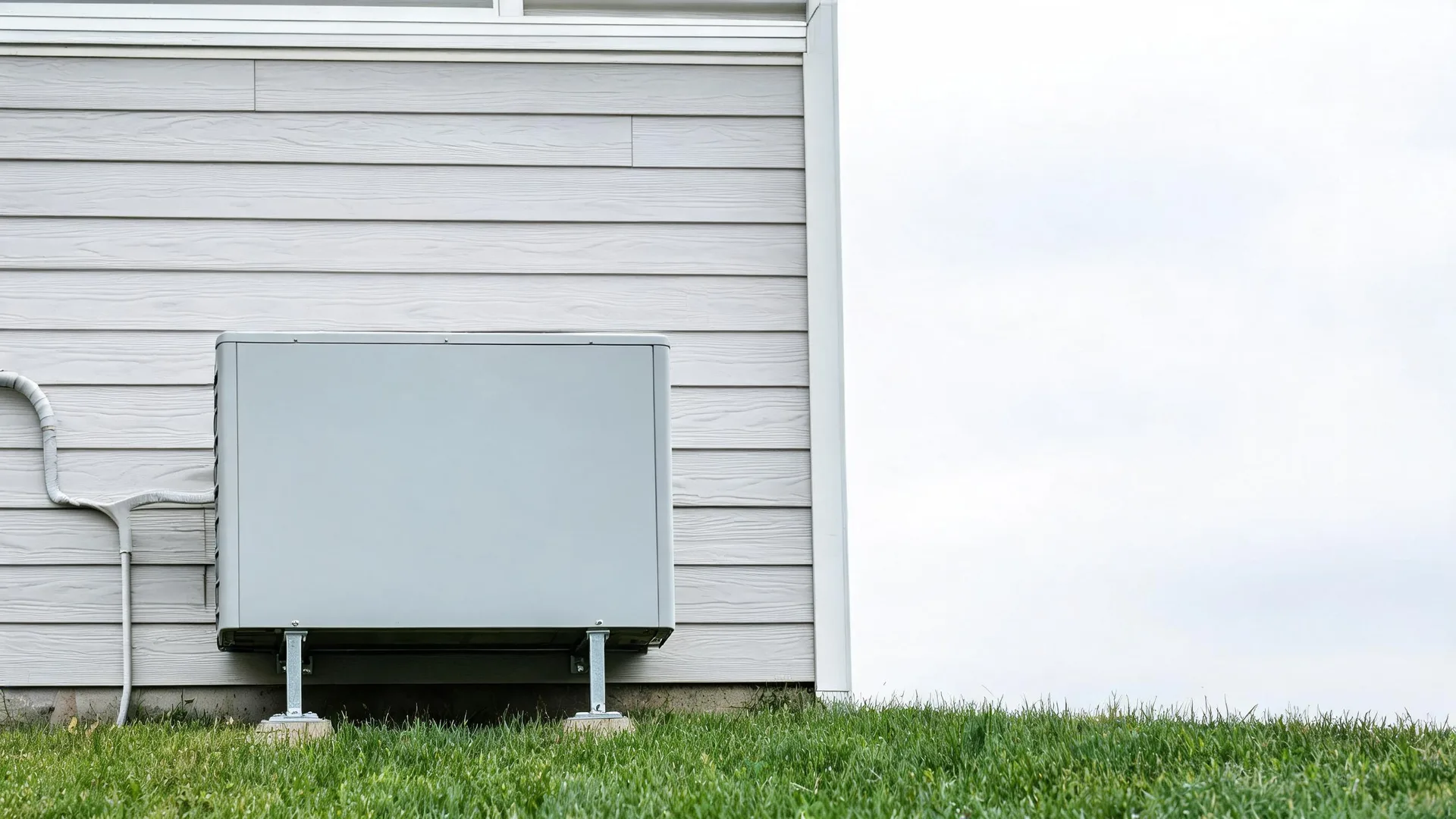
A gray outdoor HVAC unit mounted on a concrete pad beside a house with gray lap siding and a stone foundation.

A full winter, nothing more than that

Winter here runs cold enough that a heat pump works through months of overnight lows averaging 17°F, and this clip shows it holding through a full day and night of that. That's the normal shape of the job in zone 5A, not a strain on the equipment. A unit sized to your home handles that stretch the same way it handles the mild days in between. Nothing about running this many hours a season calls for oversizing it.

Ask for the heat loss calculation, not a square footage guess

A contractor should walk the house, check the windows and insulation, and run a room by room load calculation before naming a unit size. If someone quotes equipment off square footage alone, ask what else they looked at. The right size keeps the compressor running in long steady cycles instead of short bursts that wear it out faster and leave rooms uneven.
Ask what happens at the coldest point of the design day

Every heat pump has a temperature where it stops keeping up on its own and backup heat has to take over. Ask what that point is for the equipment being quoted, and what kicks in when it's reached, whether that's a furnace, electric resistance strips, or something else. That crossover setting is part of the installation, not something to figure out after it's running.

A heat pump that's too small spends the shoulder months running fine, then struggles to keep up once backup heat should already be sharing the load, leaning on it more than the setup intended. Too big causes a different problem. It blasts the house to temperature fast and shuts off, then does it again a few minutes later. That stop and start is called short cycling, and it's harder on a compressor than one long steady run ever is. A system that short cycles also pulls less moisture out of the air, since dehumidifying takes a sustained run, not a quick burst. Sized right, the compressor settles into long gentle cycles instead of short hard ones, which is what lets it hold through a long cold stretch without strain in the first place.

If the old equipment is a furnace and central air setup, both usually come out, since the heat pump's outdoor unit takes the place of the AC condenser and the indoor coil gets swapped too. Where the furnace stays on as backup heat, only the outdoor condenser and the indoor coil get replaced, and the furnace is left connected to kick in below the heat pump's crossover point. A contractor hauls away whatever comes out as part of the job. Refrigerant in the old condenser has to be recovered properly before it's disconnected, not vented, so factor that step into the timeline. If the old furnace is being kept as backup, it still gets checked over during the install, since it's about to start sharing duty with equipment it was never paired with originally.