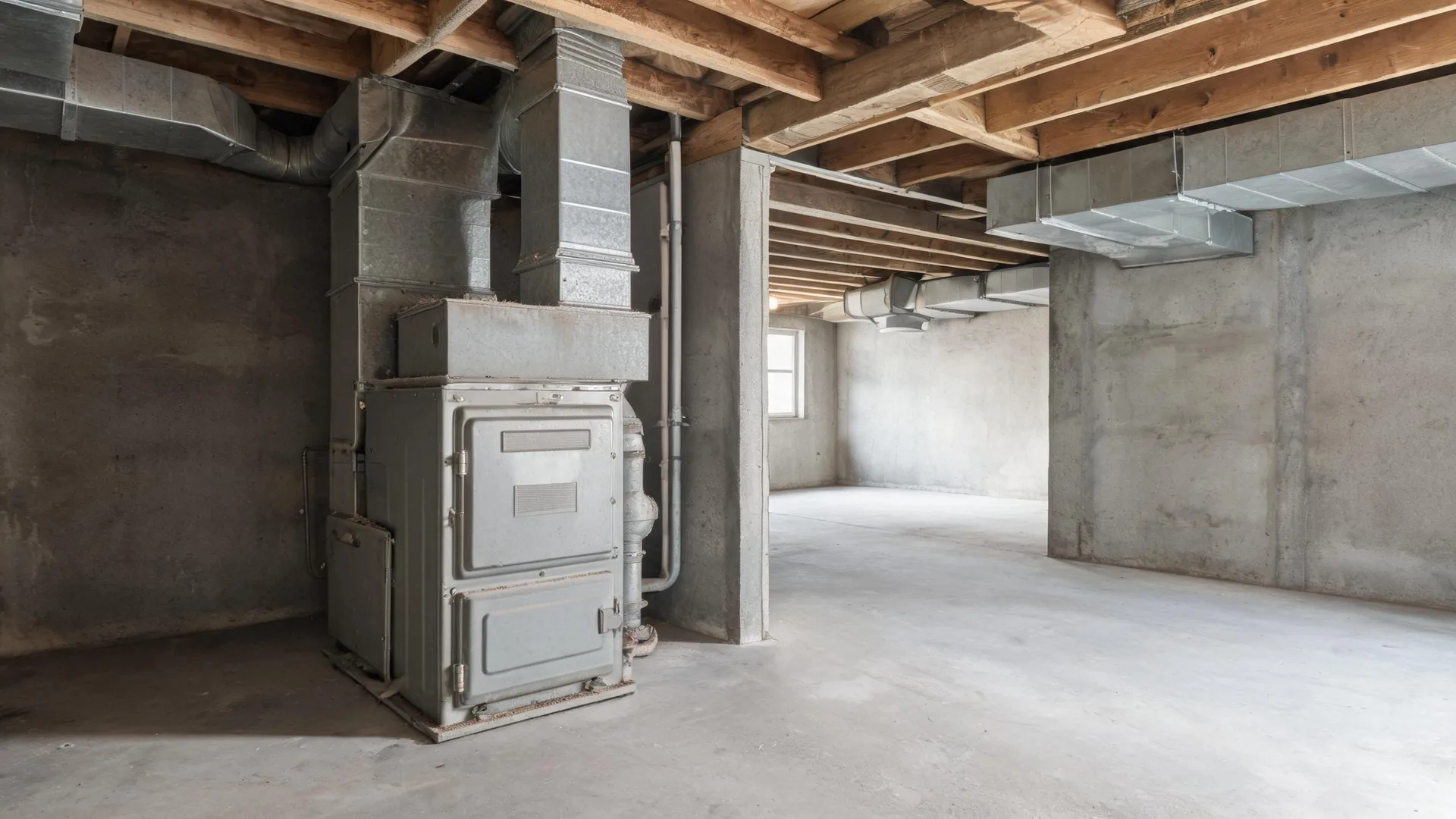
AFUE is what doesn't go up the flue
The number on the label is the share of gas that turns into heat in the house. The rest leaves through the flue as exhaust. A furnace rated higher wastes less gas doing the same job, nothing more.
Takes about a minute. No obligation.
A furnace here runs eight months out of the year, October through May. Overnight lows average 15°F through December, January and February, so the furnace isn't just kicking on now and then, it's holding that line night after night for most of the year. That's a different job than a furnace has in most of the country. Sizing it right matters more here too. A furnace that's too small will run constantly and still lose ground on the coldest nights. One that's too big will cycle on and off and wear out its parts sooner. Get the size matched to the house before anything else.

NOAA nClimDiv, 1991–2020 normals
Gas heats 74% of homes in Linn County.
Most furnace installs here are gas furnaces, so parts and know-how are easy to find.

Linn County is in zone 5A, a cool climate where the furnace does more work than the air conditioner over the course of a year. Any furnace installed here now has to meet 80.0 percent AFUE, the federal minimum for this type of unit. That floor is set to rise to 95.0 percent, but not until furnaces built in December of 2028. A furnace bought today only has to clear 80.0 percent, though many units on the market clear it by a wide margin. Worth asking what AFUE rating you're actually getting before you decide.
Gas here runs $9.69 per million Btu, among the cheaper rates in the country. A high-efficiency furnace will still cost less to run than a low one, but the payback stretches out longer than it would somewhere with pricier gas. That makes reliability and the right fit for this house the bigger question. Get a furnace sized and installed to hold through a Cedar Rapids winter first.
Find a contractor
A furnace earns its keep over how many winters it runs, not how it runs on day one. Ask what the heat exchanger is made of and what the warranty on it actually covers, since that's the part that ends the furnace's life when it cracks. Ask how long the blower motor and igniter are expected to hold up under daily cycling, not under a showroom demo. Ask what maintenance the unit needs to reach its rated lifespan, and whether skipping a filter change or an annual tune-up voids any of it. A furnace that cycles on and off through the night for months wears differently than one that only kicks on now and then, so ask whether the unit you're looking at is built for that kind of steady, heavy use. Get the expected service life in writing, not just the sticker efficiency.
The number on the label is the share of gas that turns into heat in the house. The rest leaves through the flue as exhaust. A furnace rated higher wastes less gas doing the same job, nothing more.
Furnaces carrying the same AFUE can still differ in the heat exchanger material, the blower motor, and what happens to either after years of cycling on and off. Ask about those separately. The label settles the fuel question, not the durability one.
Estimates for a typical Linn County home, from EIA household energy data, Iowa fuel prices and NOAA climate normals. Your home will differ.
Installation starts with the old furnace coming out, then the ductwork gets checked before the new one goes in. The supply and return connections have to match what the new furnace needs, and the vent or flue has to be sized for it too, since a furnace that burns gas more efficiently often vents differently than the one it's replacing. The gas line gets connected and pressure tested. Once it's running, a tech sets the airflow across the blower and checks the temperature rise through the furnace against what the manufacturer specs for that model. That number tells you whether the furnace is matched to the ductwork it's tied into, not just sitting there turning on. The last step is combustion testing, checking the exhaust to confirm the furnace is burning clean and venting the way it should before anyone calls the job done.