





A row of dark-painted single-story houses with gabled shingle roofs behind a trimmed hedge and mown lawn, surrounded by large leafy trees under an overcast sky.

Furnace Installation in Le Mars, IA

Tell us about the job

Takes about a minute. No obligation.

New system or replacementFurnace or heatingPlymouth County, IA
Step 1 of 2

What ZIP code is the job in?

A furnace here runs eight months of the year, October through May. That is most of the year spent cycling on and off, heating the house for long stretches at a time. The longer a furnace runs each year, the sooner its parts wear out: the igniter, the blower motor, the heat exchanger. A furnace sized wrong for the house feels that strain every one of those eight months, not just on the coldest days. Getting the size right at installation matters more here than it would somewhere that only runs heat for a few months.

8 months
October through May, your furnace is on duty
13°F
the average winter night it heats against
80% AFUE
the federal minimum any new unit must meet
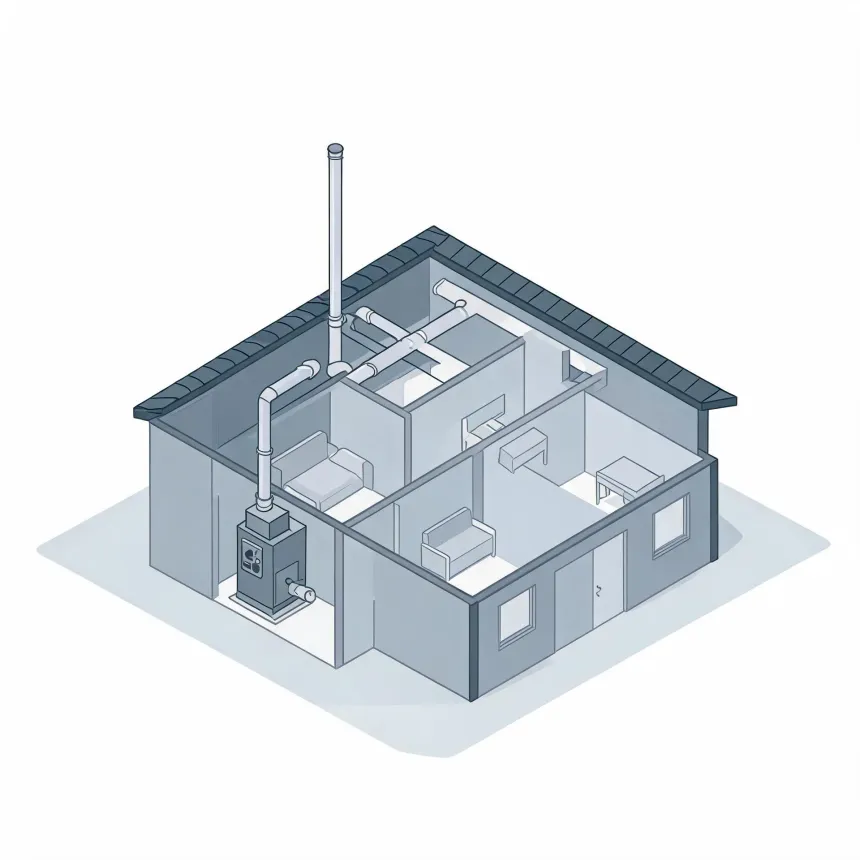
Isometric grayscale illustration of a cutaway single-story house showing interior rooms with furniture, a furnace unit connected to ductwork and a tall vertical flue pipe extending above the roof.
Your furnace works hardest from November through March.

NOAA nClimDiv, 1991–2020 normals

Half the homes in Plymouth County were built in 1971 or earlier.

A furnace going into a house that old has to match the house, not just the room sizes.

Gas heats most homes here, so a gas furnace is the easy match

45.7% of homes heat with gas
Heat runs October through May
Winter nights average 13°F
Get it done in SeptemberHeat starts running in October here, and the job goes easier before it does

Plymouth County falls under zone 5A, a cool, fairly humid climate where the energy code treats heating as the bigger job for a furnace than cooling. Any furnace installed has to meet the federal minimum for that climate: at least 80 percent of the gas it burns turned into heat over the winter. Furnaces built on or after December 18, 2028 will need to hit 95 percent, so a unit bought now still only has to clear the lower bar. A system that clears 95 percent wastes less gas doing the same job, winter after winter. Buyers here can also claim a federal tax credit toward a qualifying high-efficiency furnace, which narrows the gap between the two standards.

Size it to the house you have, not the one on paper

That means getting someone in to look at the house itself before anything gets sized or quoted, not after. A contractor who checks what's actually feeding and venting the furnace now can size the new one to match, instead of swapping in something close enough.

Find a contractor
A man in a cap, dark shirt and tan work pants walks up porch steps toward a gray front door, carrying a canvas tool bag, with a potted plant on the porch to the right.
A gas furnace with attached ductwork, gas piping, and condensate lines installed in a concrete-block basement.

Eight months of work a year, every year

Eight months of run time a year means eight months of looking for a contractor who sizes before they quote. Get more than one bid, and ask each one to walk the house before they name a number. The cheapest unit on paper is the one that costs the most in October if it is the wrong size for the house it is going into.

Ask what the load calculation found, not just the size

A furnace should be sized by a room-by-room heat loss calculation, not by matching the size of the one it replaces. Two houses the same square footage can need different sized furnaces depending on windows, insulation and how the ductwork runs. If a contractor names a size before they've measured anything, ask what the number is based on.

Ask what happens to the existing ductwork and venting

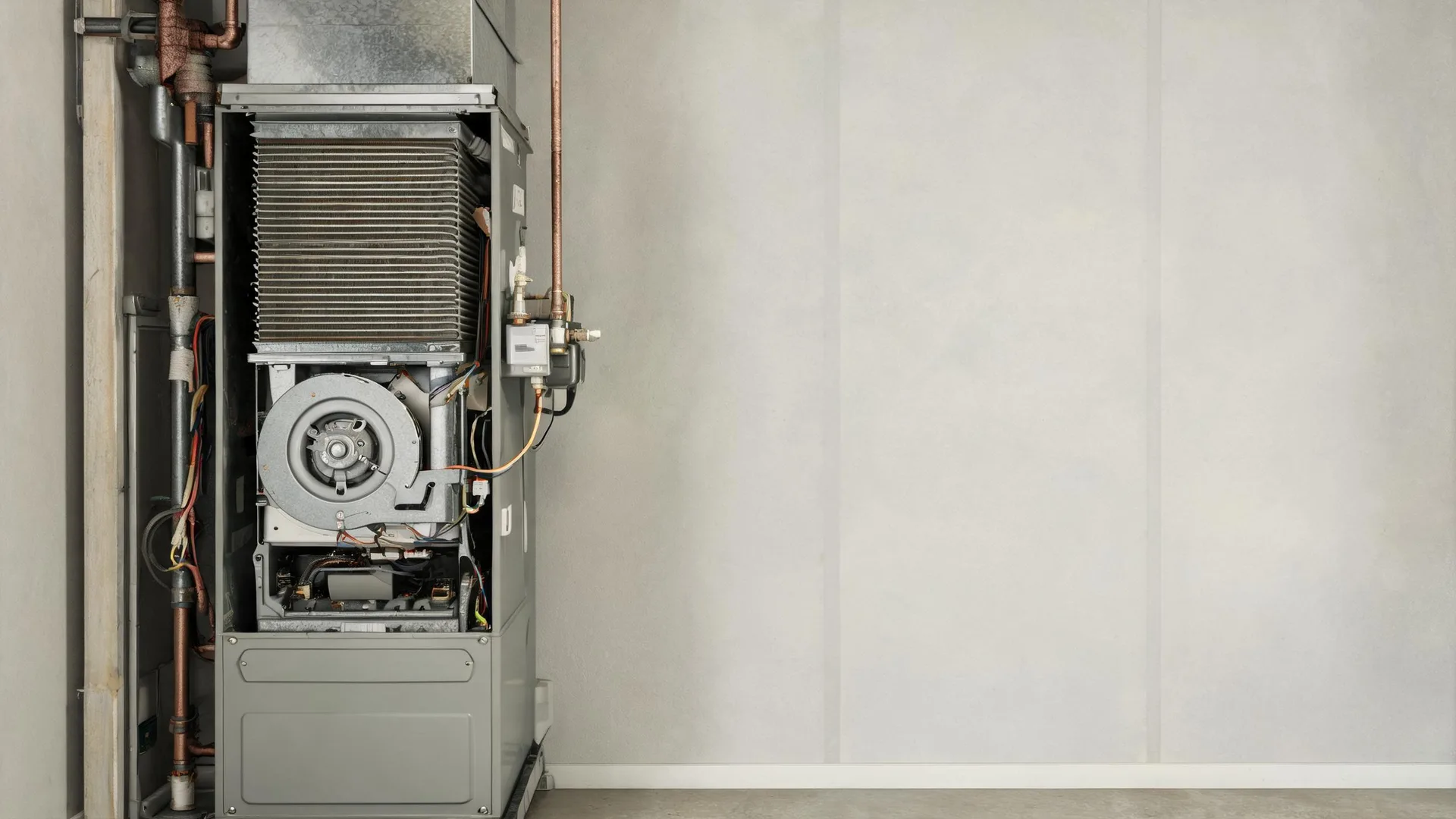
A new furnace moving more or less air than the old one puts different demands on the ducts and the vent pipe already in place. Ducts that were fine for one unit can end up undersized or oversized for another, and venting has to match the furnace's exhaust type to draw properly. Find out whether the ductwork and venting get evaluated as part of the job or just reused as is.

An unfinished concrete basement containing a gas furnace with sheet-metal ductwork, utility shelving, and exposed overhead joists.

A high-efficiency gas furnace would save about $100 a year to run in Plymouth County compared with a gas furnace.

  • A high-efficiency gas furnace$470 a year
  • A gas furnace$570 a year

Estimates for a typical Plymouth County home, from EIA household energy data, Iowa fuel prices and NOAA climate normals. Your home will differ.

Installation day starts with the old furnace coming out, along with any ductwork or venting that doesn't match the new unit. The new furnace gets set in place and connected to the supply and return ducts, the gas line, the vent pipe and the electrical circuit that runs the blower and controls. Once it's hooked up, the contractor fires it up and checks the gas pressure, the temperature rise across the heat exchanger, and the draft pulling exhaust out through the vent. Airflow gets checked at the registers to make sure the blower is moving the right amount of air through the ducts now in place. A combustion analyzer reads the exhaust to confirm the furnace is burning clean and safe before anyone calls the job finished. The whole system gets cycled on and off a few times to make sure it starts, runs, and shuts down the way it should.