




An unfinished basement interior featuring a large metal furnace unit, exposed ceiling joists, concrete walls, and scattered boxes and cables on the floor.

Furnace Installation in Oskaloosa, IA

Tell us about the job

Takes about a minute. No obligation.

New system or replacementFurnace or heatingMahaska County, IA
Step 1 of 2

What ZIP code is the job in?

Half the homes in Mahaska County were built in 1965 or earlier. A furnace going into one of those houses isn't going into a blank space. The ductwork was sized for whatever ran before it, and the house around it holds heat differently than something built last year. A furnace sized by square footage alone can end up wrong for the place it's going into. The contractor doing the install needs to look at the house itself, not just the model it's replacing.

8 months
October through May, your furnace is on duty
17°F
the average winter night it heats against
53%
of homes here heat with gas, so most furnaces here burn gas
80% AFUE
the federal minimum any new unit must meet
Isometric cutaway illustration of a single-story house showing interior rooms with a dark furnace unit, connected ductwork, a vertical flue pipe through the roof, and simple furniture, on a white background.
Your furnace works hardest from November through March.

NOAA nClimDiv, 1991–2020 normals

Furnaces in Mahaska County run from October through May.

Eight months of heat a year is a long season to run the wrong size furnace.

Gas runs cheap here, so a high-efficiency furnace isn't the priority. Picking the right fit is.

Heat runs October through May
Winter nights average 17°F
Climate zone 5A
Get it done before OctoberFurnaces in Mahaska County start running in October. September is the month to have it in.

Winter here means eight months of the furnace running and overnight lows averaging 17°F through December, January and February. That's the load a new furnace has to carry, not just a handful of cold snaps. A unit sized too small will run close to constant on the coldest nights and still struggle to keep up. One sized too big cycles on and off more than it should, which wears the parts that start it up each time. Either mistake shows up fast in a season this long. The fix isn't the biggest furnace available or the cheapest one on the lot, it's the one the load calculation actually points to.

Most furnaces here run on gas. Yours should too.

Just over half the homes in Mahaska County heat with gas. If that's what your house already has, staying with gas keeps the install simple and matches what the gas line and venting were built for.

Find a contractor
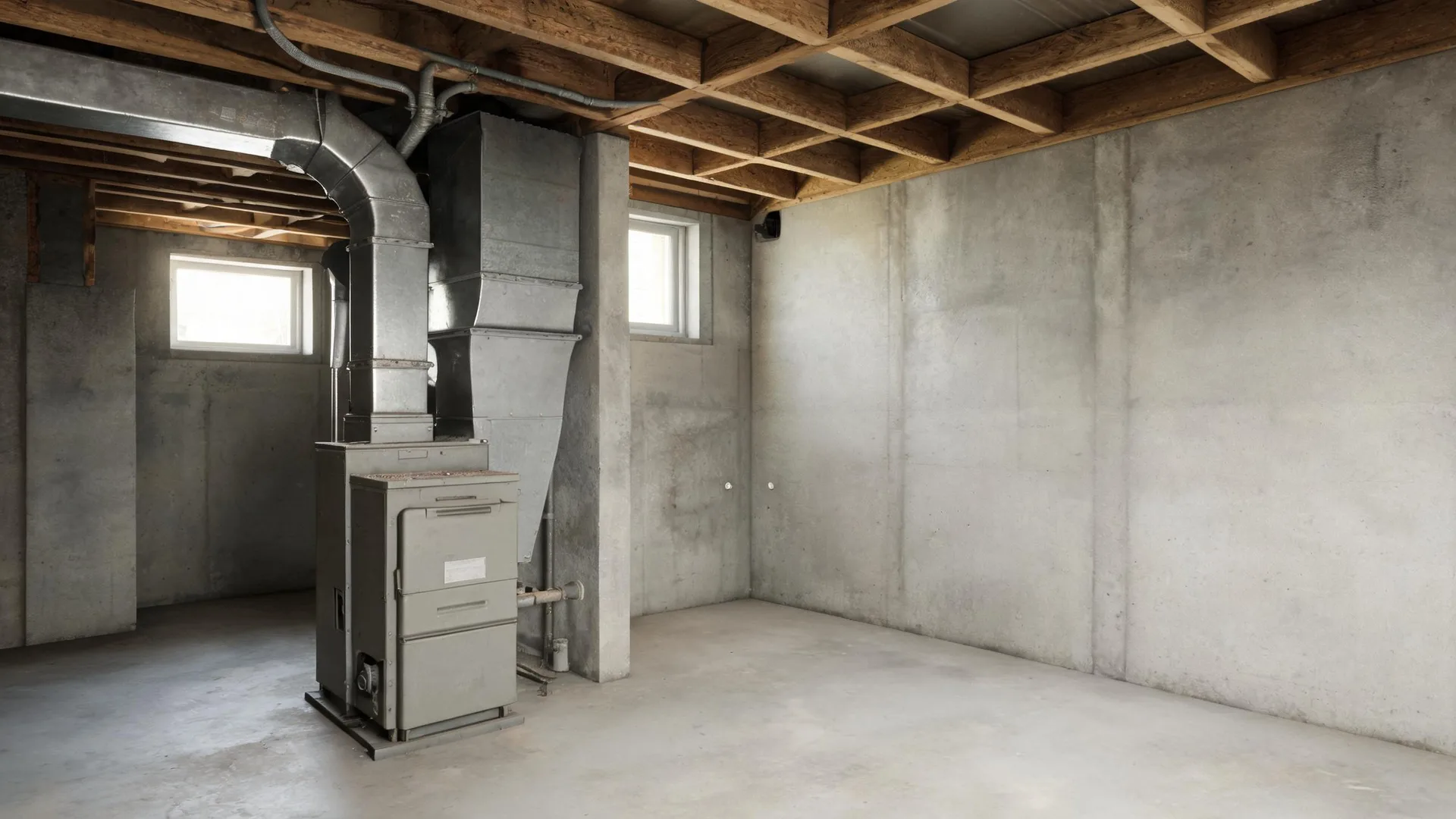
A gray residential gas furnace installed in an unfinished basement, connected to sheet-metal ductwork and PVC pipes.

Size it to the house, not the old unit

That means an older duct run or a return that's already tight for the furnace it's replacing. Ask the contractor to measure the house, the ducts included, before they size the new one. A load calculation tells them what the house actually needs instead of what the last furnace happened to be.

Ask what the warranty actually covers

A furnace warranty usually splits the parts from the labor, and they don't always run the same length. The manufacturer covers the heat exchanger or other parts if they fail, but labor to pull the unit apart and put a new part in is a separate line, sometimes covered by the installer for a shorter stretch. Ask what happens after that labor period ends and who pays to do the work even if the part itself is free.

Ask how they vent it

A furnace at today's minimum efficiency vents differently than one built to the higher standard coming later. The lower-efficiency unit vents through metal pipe into a chimney or straight through the wall, hot enough that it needs clearance from anything that burns. A high-efficiency furnace vents through PVC pipe out the side of the house, cool enough to handle but needs somewhere to drain the condensation it produces. That changes what the installer has to run and where it can go.

A gas furnace and sheet-metal air handler unit installed in an unfinished concrete basement.

A high-efficiency gas furnace would save about $90 a year to run in Mahaska County compared with a gas furnace.

  • A high-efficiency gas furnace$420 a year
  • A gas furnace$510 a year

Estimates for a typical Mahaska County home, from EIA household energy data, Iowa fuel prices and NOAA climate normals. Your home will differ.

Install day starts with the old furnace coming out, not the new one going in. The contractor disconnects the gas line, the duct connections, the vent and the electrical, then takes the whole unit out before anything new comes through the door. That's when problems that didn't show up on paper tend to show up in person, a duct connection that's rusted through or a gas line that needs a fitting the old furnace didn't. Setting the new furnace is the fast part. What takes longer is tying it back into the ducts, running the vent correctly, and getting the gas line and electrical connected and tested. Once it's running, the contractor checks the gas pressure, checks the temperature rise through the furnace, and makes sure the system is pulling and pushing the right amount of air. A furnace that's connected but not tested is just a box that happens to be in the right place.