One clogged line, two failure points
A clogged condensate line backs water up at the trap and at the drain pan both. Finding one wet spot doesn't rule out the other.
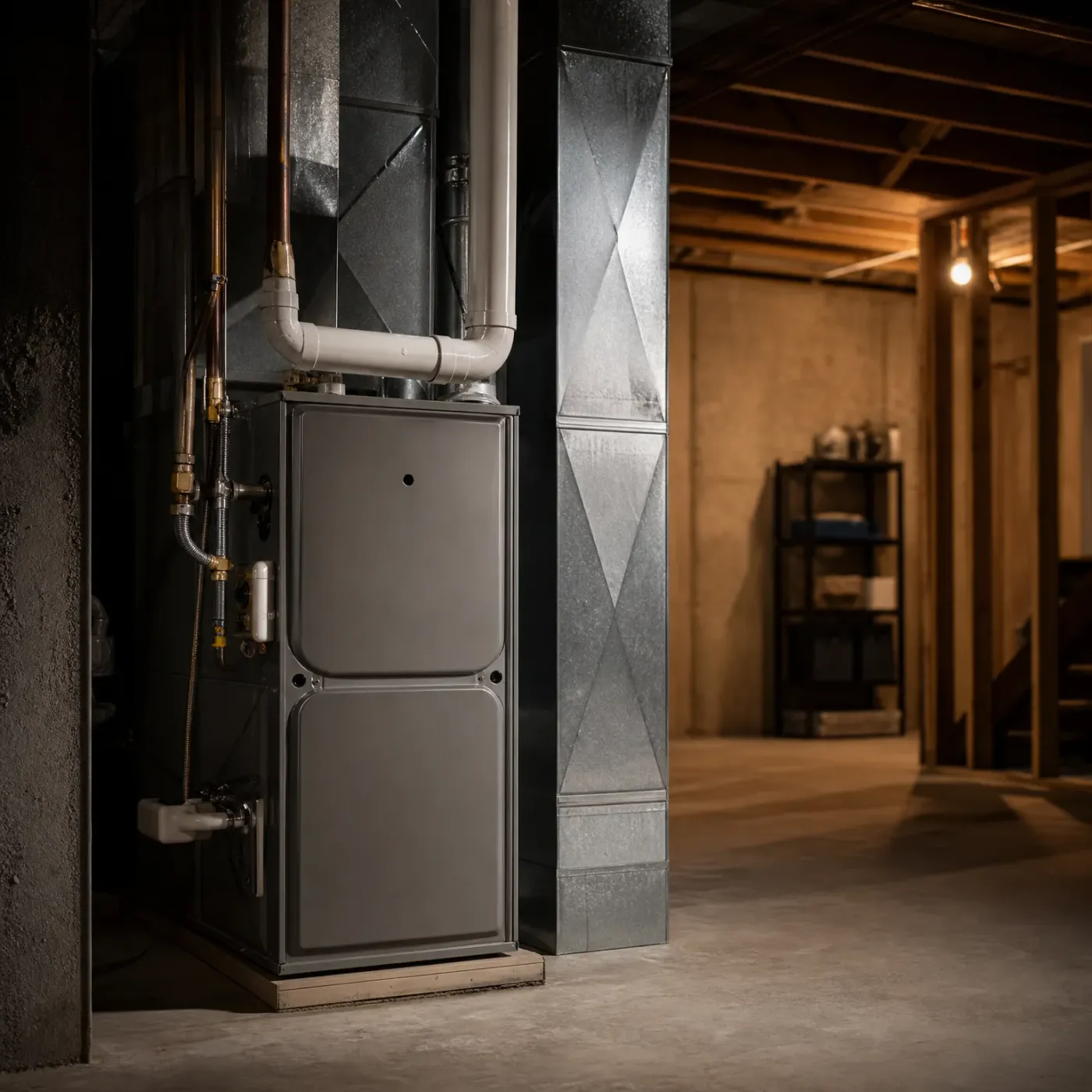
A local pro for your furnace repair
Water pooling under your furnace or dripping from the ductwork means something inside is condensing or draining where it shouldn't. A high-efficiency furnace does this differently than an older one, and a cracked heat exchanger is a different problem than a clogged condensate line. This page gets into what's likely happening and connects you with a contractor near Indianola who can look at your furnace directly, instead of you calling around Warren County trying to find one who's free.
Get a furnace proWater under your furnace usually means condensation isn't draining the way it should. If you've got a high-efficiency furnace, the kind with a second plastic exhaust pipe running out the side of the house, it produces condensate as a normal part of running, and that water travels through a drain line and trap to a floor drain or condensate pump. A clog in that line, a cracked trap, or a pump that's stopped working will back the water up and send it onto your floor instead. Older, standard-efficiency furnaces don't make condensate, so water around one of those often means something else: a leaking humidifier line, a clogged AC drain sharing the same line nearby, or in rare cases a cracked heat exchanger. With winters as hard as they get around Indianola, you don't want to ignore a wet furnace room and risk losing heat on a cold night while it sits unrepaired.


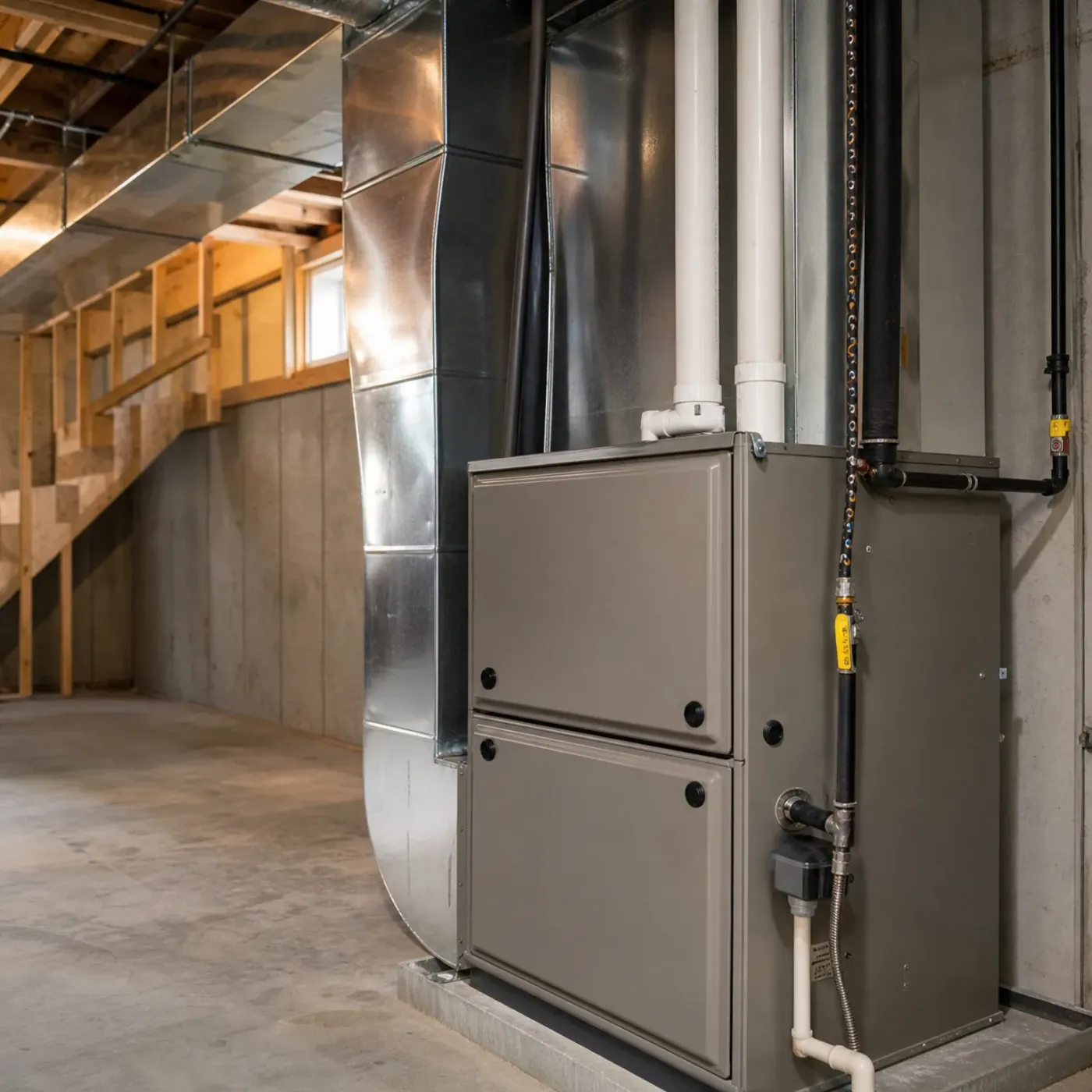
The water your high-efficiency furnace makes has to travel somewhere before it reaches a floor drain or a condensate pump. It starts inside the secondary heat exchanger, drops into a trap, then moves out through PVC pipe. That trap isn't just holding water for no reason. It keeps exhaust gas from getting pulled back out through the drain line, so a technician won't just clear it and move on without checking it's set right. Most leaks start small. Sediment and algae build up inside the PVC over months, narrowing the path until water slows down and starts backing up. It will find the lowest open point along the run and come out there, whether that's a loose fitting or a seam. If your furnace drains into a pump, there's a float switch meant to shut the system down if the pump quits. When that float sticks, the furnace keeps running and keeps draining water wherever it's going, not necessarily where it should. Even a furnace installed last year will leak if the drain line wasn't sloped correctly from the start.




A clogged condensate line backs water up at the trap and at the drain pan both. Finding one wet spot doesn't rule out the other.
More hours running means more condensate produced and more chances for a slow drain or a cracked trap to show up as water on the floor.
Winter nights average 17°F
Overnight lows average 17°F in Warren County through December, January and February, so a furnace that quits on a leak has nothing mild to fall back on.
Heat runs October through May
Heat runs here from October through May, about eight months, so a condensate leak isn't a short-season problem you can put off looking at.
54.3% of homes heat with gas
Gas heats 54.3% of homes in Warren County, and gas furnaces are the ones that produce condensate, which is what a leak like this usually traces back to.
NOAA nClimDiv 1991-2020 · ACS 2020-2024


Condensate forms as flue gas cools inside the secondary heat exchanger.
Water drains downhill into the trap built below the exchanger.
The trap fills and seals, blocking exhaust gas from pushing back.
Water passes out through the trap into the PVC drain line.


Describe what your furnace is doing once, in one form.
Get matched with someone who does this kind of work in Warren County.
No fee to send it, and nothing to sign.
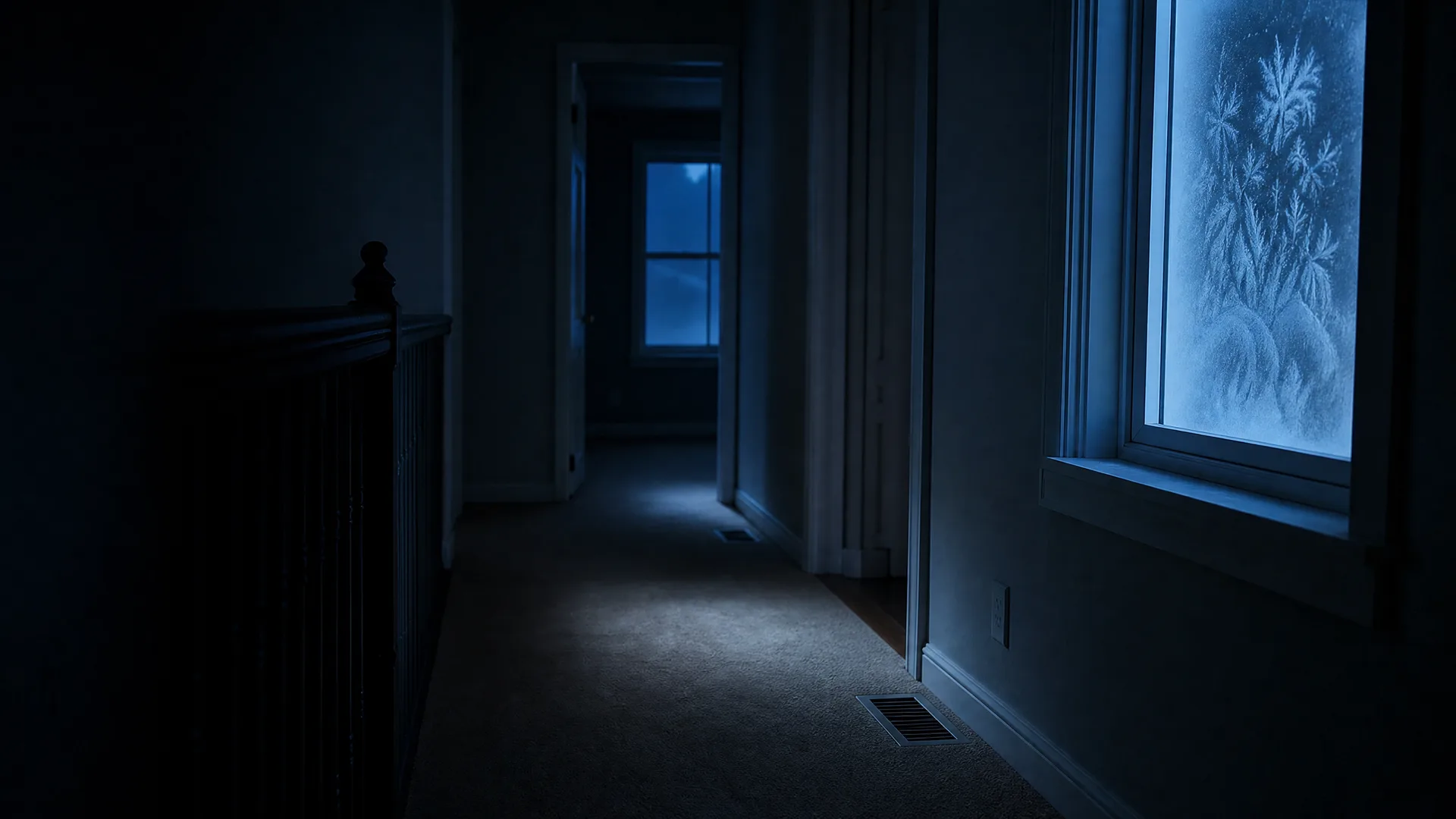
It's two in the morning and the house is quiet except for the cold. You're up for no good reason, maybe the dog, maybe just awake, and you notice the vent at the end of the hallway isn't pushing any air. No hum from downstairs either. The window at the end of the hall has frost creeping up from the sill, and the glass throws back that dim blue light that only shows up this late. Seventeen degrees outside, the thermometer said before bed. You stand there a second, waiting to feel the air move. It doesn't.

A furnace leaking water almost always comes down to the condensate line, the trap, or the heat exchanger itself. You don't have to guess which one. The location of the water, how fast it comes back, and what kind of furnace you have will point to the cause, and a contractor who works on furnaces in Warren County every winter can narrow it down fast once they're looking at it in person.
What you don't have to do is spend your evening calling around Indianola to find out who even handles this. You already know what's wrong enough to act on it. Submit your information once, and a contractor who takes on jobs like yours will reach out to you directly, so you're not explaining the same leak to three different voicemail boxes before anyone shows up.


Get your furnace to the right pro