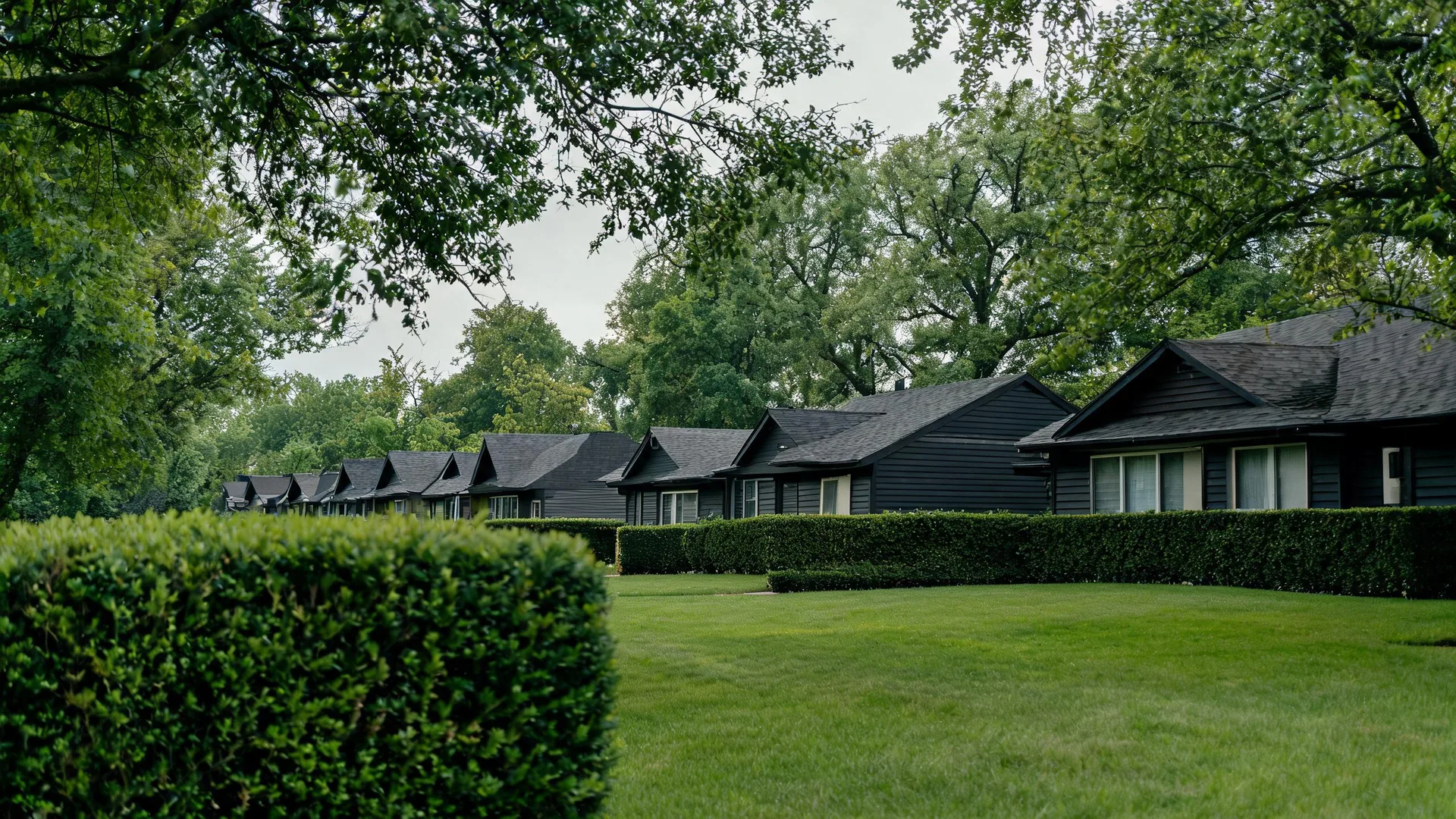




A row of dark-clad single-story cottages with gabled roofs behind trimmed hedges, with a mown lawn in the foreground and large leafy trees under an overcast sky.

Furnace Maintenance in Guttenberg, IA

Tell us about the job

Takes about a minute. No obligation.

Tune-up, service, or cleaningFurnace or heatingClayton County, IA
Step 1 of 2

What ZIP code is the job in?

Furnaces in Guttenberg run from October clear through May, about eight months of the year. That is most of the calendar spent heating a house, not just a few cold snaps in January. Overnight lows average 13°F across December, January and February, so when the furnace does run, it runs hard to keep up. That kind of stretch wears on an igniter or a blower motor faster than a shorter season would. Problems that would take years to show up somewhere milder tend to show up sooner here.

A furnace filter clogged with dust makes the blower work harder to push air through it.

Check yours once a month and swap it when it looks gray, since a clean filter is the one thing between visits that actually protects the blower motor.

Gas heats most of Guttenberg, which means the burner and venting need the same yearly look as the filter

44.3% of homes heat with gas
Heat runs October through May
Winter nights average 13°F

October is when the furnace here stops coasting and starts working for real. By the time cold mornings turn into a solid eight-month stretch, you want to already know the igniter lights clean and the blower is pulling air the way it should. That means the check belongs in September, before the season asks anything of the system. A furnace that gets looked at while it's idle is easier to diagnose than one that's already running every day. Wait until October and you're troubleshooting a system you're also depending on to keep the house warm.

Check it before the season

It works hard here, so worn parts show up fast once the season starts. Get it checked before then.

Find a contractor
A man in a dark long-sleeved shirt and brown pants walks up concrete steps toward a dark blue front door, carrying a canvas tool bag with tools in it, beside a potted shrub.
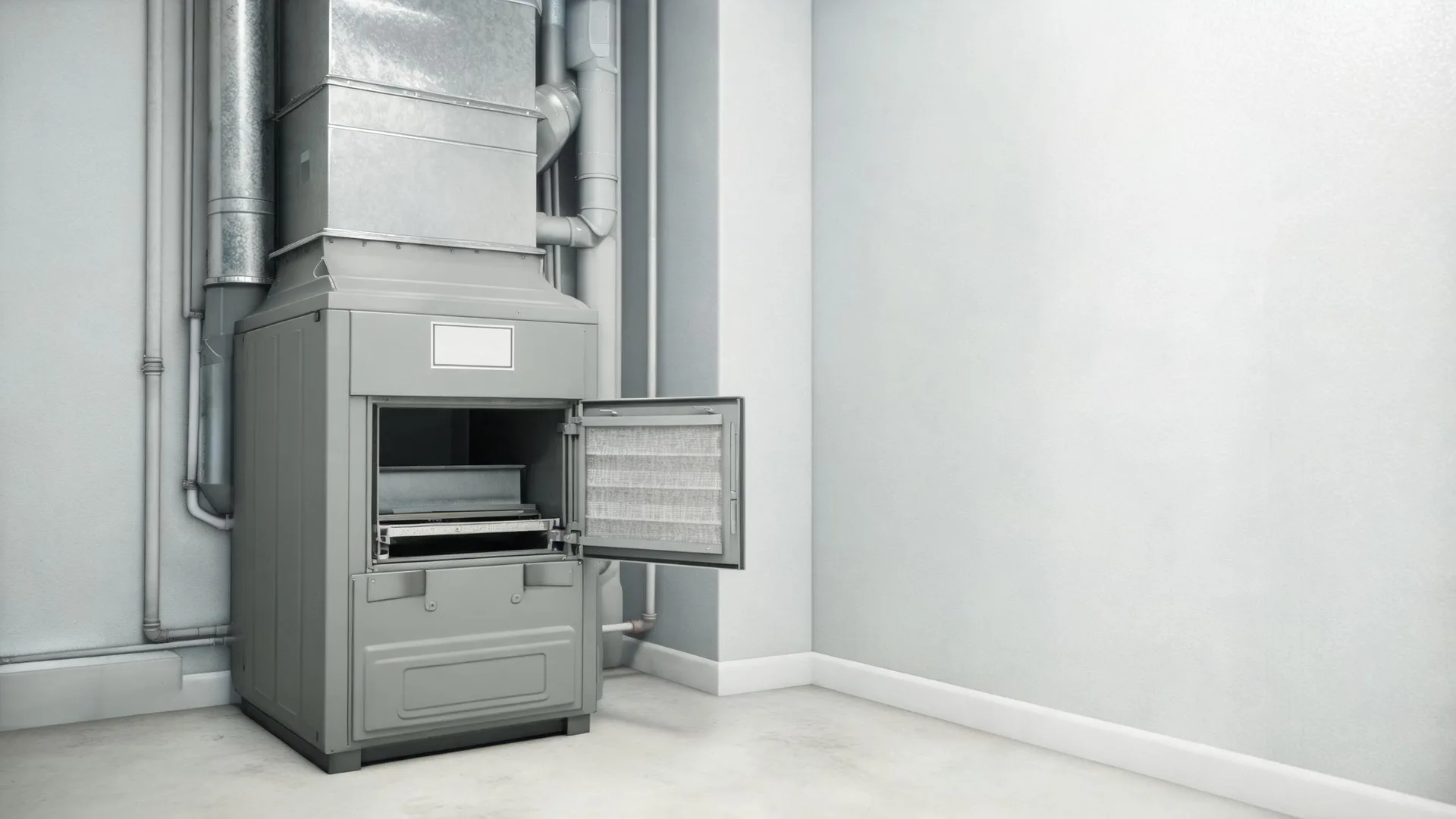
A gas furnace with attached ductwork, gas piping, and condensate lines installed in a concrete-block basement.

Worn parts don't wait for a convenient time

Eight months of heating means eight months where a weak igniter or a tired blower motor gets found out. Have it looked at while the furnace is sitting idle, not after it's running every morning to keep up with a 13°F night.

Dirt builds up where you can't see it

A burner that never gets cleaned collects rust and dust on its own, and the flame it produces starts burning uneven. An uneven flame heats the exchanger unevenly too, and that stress is how cracks start. None of this shows up by looking at the thermostat. It shows up as a furnace that runs longer to do the same job, or shuts off on its own when a safety switch senses something is wrong.
A skipped year doesn't fail quietly

The igniter wears a little every time it fires, the blower motor bearings wear a little every time they turn, and none of that reverses itself. Skip the yearly check and those parts keep wearing exactly the same, except nobody catches the one that's close to done. The furnace still lights every morning until the day it doesn't, usually on a morning you needed it most.

A tune-up opens the cabinet and looks at things the thermostat can't tell you about. A technician pulls the burner and checks the flame, looking for an even blue rather than a flame that's yellow or lifting off the burner. That flame shape says something about how clean the gas is burning, and dirty combustion is how soot builds up inside the heat exchanger. The exchanger itself gets checked for cracks, since a crack there can let combustion gases mix into the air the furnace pushes through the house. A tech also checks the flame sensor, which tells the furnace a flame is actually lit, and cleans it if it's coated with residue that makes it read a flame weaker than it is. None of that is visible from the vent cover, and none of it announces itself until the furnace is already failing to do its job.

The blower gets the same attention as the burner. A technician checks the motor for the grinding or whining that wheel bearings make as they wear, and checks the belt if there is one, though most newer furnaces drive the wheel direct and skip the belt entirely. Amp draw gets tested against what the motor is rated for, since a motor pulling more than it should is working harder than it needs to and won't last as long doing it. The condensate line gets checked too, on furnaces that have one, because a clog there backs up and trips a safety switch that shuts the whole system down. Gas pressure gets tested at the valve, since too much or too little changes how that burner flame burns. Last, the wiring and connections get a look, because a loose connection at the control board can cause a furnace to stop mid-cycle for no reason anyone can see from the thermostat.