Eight months of work
A furnace in Muscatine County runs from October through May. That is most of the year asking the igniter, the blower motor and the heat exchanger to cycle on and off, over and over, without much of a break.
Takes about a minute. No obligation.
A furnace in Muscatine County runs from October through May. That is most of the year asking the igniter, the blower motor and the heat exchanger to cycle on and off, over and over, without much of a break.
Muscatine County saw 25 winter storms between 2015 and 2024, counting heavy snow, ice and blizzards. A furnace that already runs eight months a year gets pushed harder still on those days, and a weak part is more likely to give out right when it's needed most.
Half the homes in Muscatine County were built in 1970 or earlier.
A furnace that old needs its wear checked every year, not guessed at.




A furnace installed when one of these older homes was built has had decades to wear. Parts don't all fail on the same schedule. A heat exchanger can crack years before a blower motor starts to go, and nothing about the house tells you which one is due. An annual check is what catches a cracked exchanger or a worn bearing while it's still a small repair, before it turns into a breakdown on a cold night. If your furnace came with the house, this is the one appointment worth keeping every year, not just when something sounds off.
A furnace that runs eight months a year and fights through two dozen winter storms needs a check before the cold sets in, not after a part fails on the worst night of the year. A tune-up finds the weak igniter or worn bearing while it's still an easy fix.
Find a contractor
A furnace that never gets looked at still runs, right up until the day it doesn't. Dust builds up on the burner and the flame sensor stops reading clean. The igniter weakens a little more with every cycle until one morning it just doesn't glow hot enough to light the gas. None of that shows up as a change you'd notice from the thermostat. The blower keeps blowing, the air keeps feeling warm, and underneath it the motor bearings are drying out and the heat exchanger is picking up hairline stress from years of heating and cooling without anyone checking it. A furnace left alone long enough doesn't fail gently. It fails on the coldest night it's asked to work hardest, because that's when every part is under the most load at once.
A technician checks the flame through the viewing port, looking for a steady blue cone instead of one that flickers yellow or lifts off the burner. The flame sensor gets cleaned so it keeps reading the flame correctly and doesn't shut the burner off on its own. The heat exchanger gets inspected for hairline cracks, since a cracked one can let exhaust mix into the air the blower pushes through the house. Belts, if the blower has any, get checked for tension and wear, and every electrical connection gets tightened so nothing arcs or loosens from the vibration of running.
A furnace that short cycles, turning off before the house reaches temperature, is often struggling with a dirty flame sensor or a clogged filter choking airflow. A burner flame that looks yellow and uneven instead of blue points to a combustion problem worth catching early. A furnace that runs longer than it used to for the same amount of heat is losing efficiency somewhere, often in a part that's still working but working harder than it should. Noticed early, these are adjustments. Left alone, they're the reason a furnace fails on the day it's needed most.
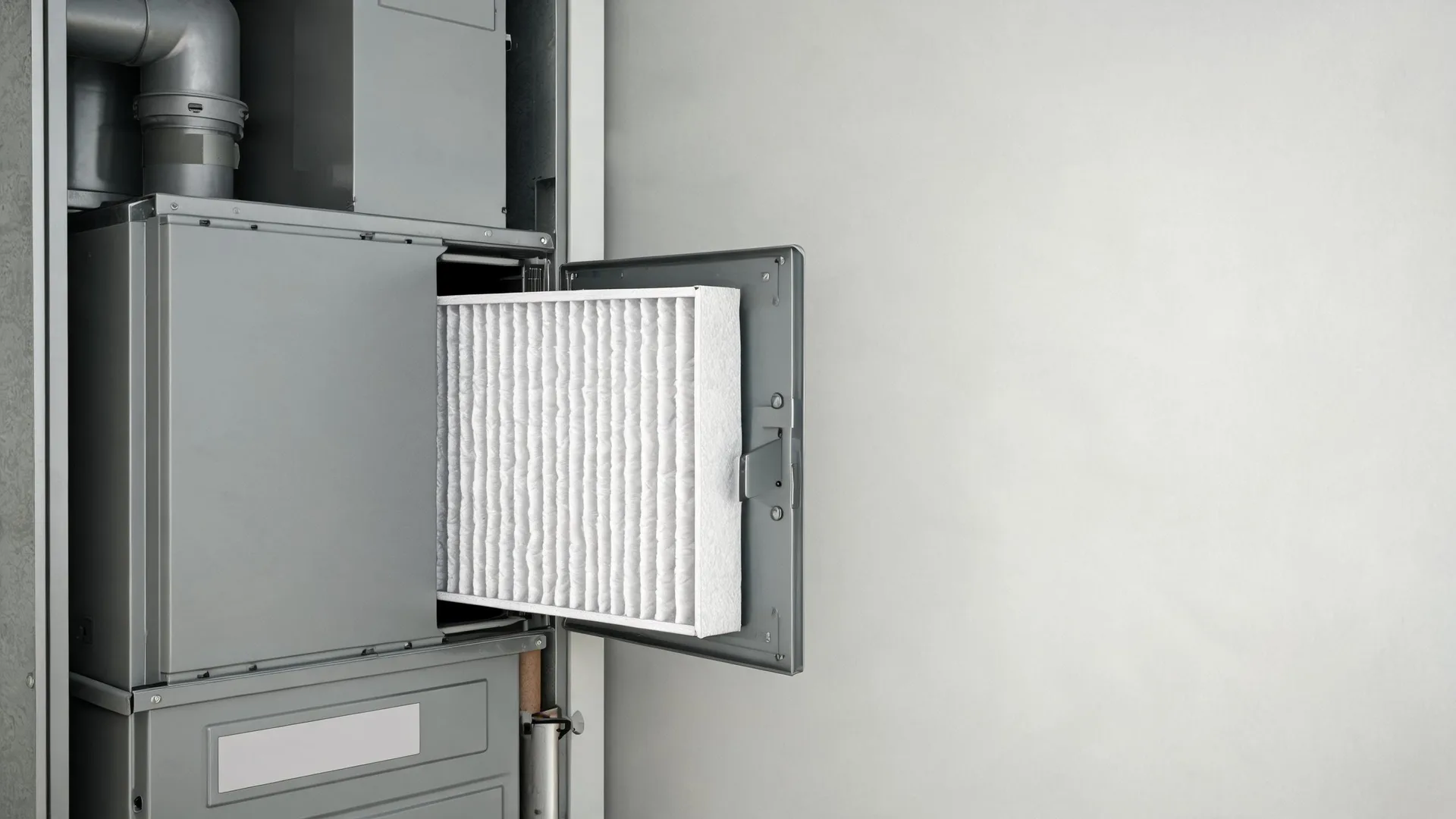
A furnace doesn't have coils or a drain, that's the air conditioner sharing the same cabinet and ductwork. What the furnace does have is a filter, and that filter decides how hard the blower motor has to work to move air through the house. A clogged filter starves the system of airflow, and a furnace that can't breathe runs hotter than it should across the heat exchanger. Over time that extra heat is what stresses the exchanger into the hairline cracks a technician checks for every year. The fix is simple and the filter should be swapped or cleaned on a regular schedule, not left until it's visibly gray. A furnace working against a dirty filter is also pulling more current through the blower motor, which shortens the life of the bearings inside it.
A full tune-up starts before the burner ever lights. The technician pulls the panel and checks the inducer motor, listening for a bearing that whines or drags instead of spinning clean. Gas pressure gets measured at the valve, because too much or too little changes how the flame burns and how hot the exchanger runs. The venting gets checked too, making sure exhaust is actually leaving the house instead of backing up through a cracked seam or a loose joint. Safety switches get tested, including the one that's supposed to shut the furnace down if it overheats. None of this is guesswork. Each check either passes or it doesn't, and a part that's drifting out of range gets caught while it's still a adjustment instead of a replacement.