Eight months of work a year
Furnaces in Washington County run from October through May. That is most of the year asking the igniter, the blower motor and the heat exchanger to do their job, not just a few cold snaps.
Takes about a minute. No obligation.
Furnaces in Washington County run from October through May. That is most of the year asking the igniter, the blower motor and the heat exchanger to do their job, not just a few cold snaps.
Winter overnight lows here average 17°F across December, January and February. A furnace built to cycle on and off instead runs long stretches to hold a house warm, and that steady load is what wears a part down early.
Furnaces in Washington County start running in October.
September is the month to get yours checked, before it's heating the house every day.


Almost half the homes in Washington County heat with utility gas, and another fifth run on LP. A gas furnace draws combustion air in, burns fuel, and sends the exhaust back out through a vent pipe. That venting and the burner itself are what a maintenance visit needs to check, not just the filter. A cracked heat exchanger or a venting problem can let exhaust into the house instead of outside, and that is not something you can see by looking at the filter. The safety controls that shut the furnace down when something is wrong are worth the same attention, especially on a system running as many months as these do.
Your furnace is about to start its eight-month run. Get the igniter, blower motor and burner checked now, while it's sitting idle, instead of finding out what's worn once it's running every day and the house needs it.
Find a contractor
If your furnace came with the house, the house itself tells you something. Half the homes in Washington County were built in 1964 or earlier. A furnace that old would have been replaced long since, but in a lot of these homes whatever is in there now has still logged more years than it would in a newer build, because nobody tore out ductwork or a vent pipe that still worked. More years of running is more chances for a hairline crack in the heat exchanger or a connection that has worked loose. A yearly check catches that while it is still a repair.
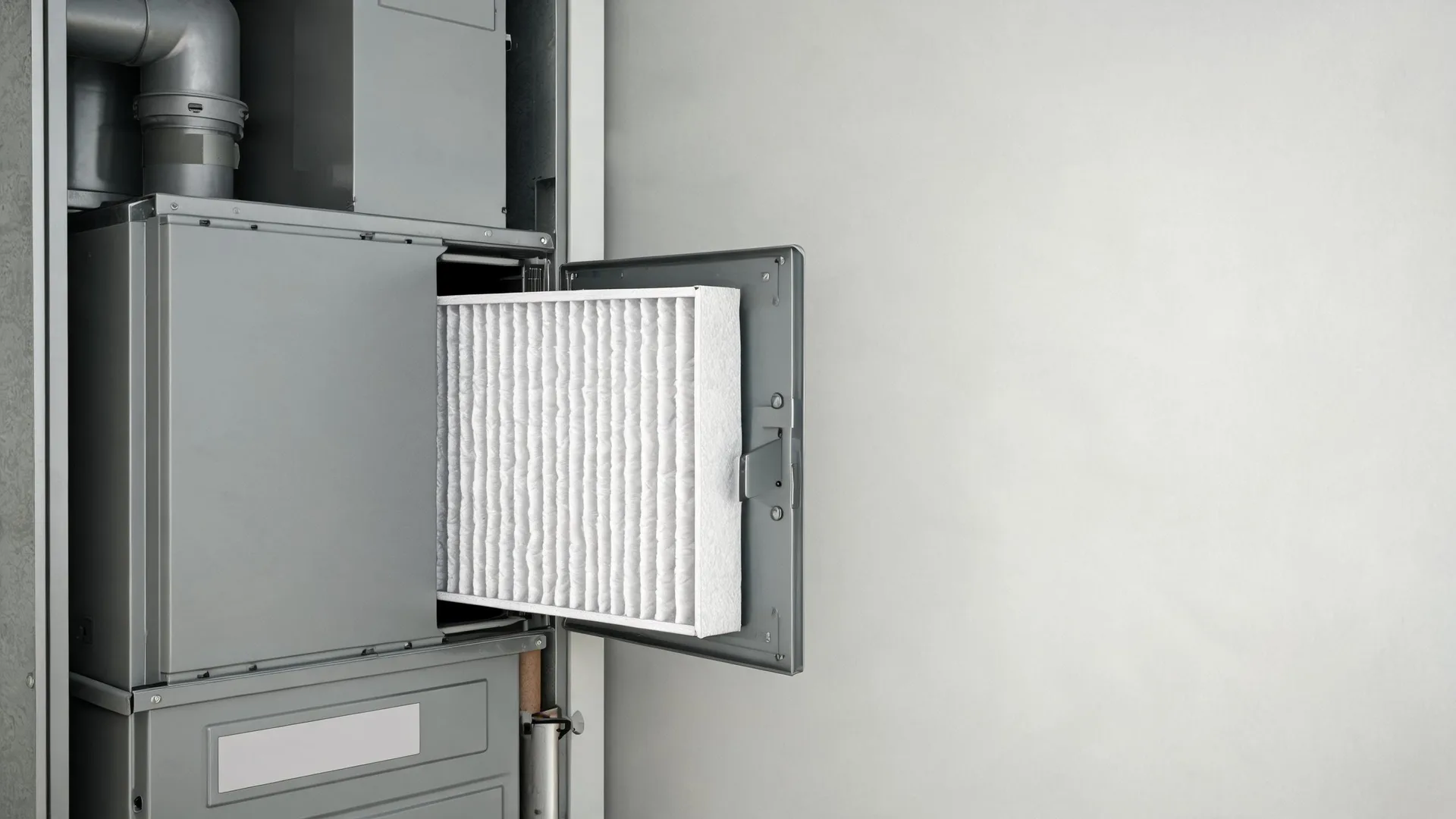
A clogged filter chokes airflow across the heat exchanger. The blower has to push harder to move the same amount of air, and the exchanger runs hotter than it was built to run. That heat has nowhere to go, and over time it can crack the metal. Swapping the filter is simple, and it is also what keeps the heat exchanger from taking on damage it cannot be checked for just by looking.
On a high-efficiency furnace, exhaust gas cools on its way out and forms water that has to clear a drain line. If that line is blocked, the furnace shuts itself down rather than let water back up into the cabinet. The same cabinet often holds the air conditioning coil, and a coil left dirty from summer blocks airflow the same way a clogged filter does. A maintenance visit checks the drain and the coil along with the burner, not just the parts that look like furnace parts.
A furnace that needs a look usually says so before it quits. Listen for a burner that used to light with one soft thump and now takes several tries, or a flame that burns yellow and ragged instead of steady blue. Short cycling, where it fires up, runs for a few minutes, and shuts off before the house warms, often means a flame sensor coated with residue or a limit switch tripping early. A burning or metallic smell in the first minutes of a cycle is normal as dust clears off the heat exchanger, but if it lingers or comes back every cycle, that is not dust anymore. Rooms that used to heat evenly and now run cold in the corners point to a blower losing strength or ductwork no longer moving air the way it did. None of these mean the furnace is done. They mean it is due.
A tune-up is not just a filter swap and a glance at the thermostat. A tech pulls the burner assembly and cleans it, because a burner caked with dust or rust burns uneven and that shows up as a yellow flame instead of a steady blue one. The flame sensor gets cleaned too, since a thin film of residue on it is the most common reason a furnace fires up and quits a few seconds later. The heat exchanger gets inspected for hairline cracks, which is the part of the visit that matters most, because a cracked exchanger can let exhaust mix into the air the blower is pushing through the house. The igniter gets checked for wear, the blower wheel gets checked for dust buildup that throws it off balance, and the wiring and gas connections get checked for anything worked loose. Last, the safety controls get tested, the switches that are supposed to shut the furnace down if something upstream of them is wrong, because a safety control is only worth something if it still works when it is needed.