Most homes here run on gas
Utility gas heats 59.8% of occupied homes in Woodbury County. Electricity heats 32.3%, and a small remainder run on propane or fuel oil.
Takes about a minute. No obligation.
Utility gas heats 59.8% of occupied homes in Woodbury County. Electricity heats 32.3%, and a small remainder run on propane or fuel oil.
A heat pump going into a gas furnace home usually gets paired with that furnace for backup on the coldest days, rather than replacing it outright. A home already heating with electric strip heat or baseboards is a more straightforward swap.

NOAA nClimDiv, 1991–2020 normals
Electricity in Woodbury County runs about 11.49 cents per kilowatt-hour, cheaper than most of the country.
A high-efficiency heat pump still costs more up front, and with power this cheap it takes longer to earn that back.




Half the homes in Woodbury County were built in 1959 or earlier. A house that age usually has ductwork sized for a gas furnace, not for a heat pump that moves more air at a lower temperature. Some have no ducts in the right places at all, or runs that haven't been touched since they went in. None of that rules out a heat pump. It just means the installer has to look at what's actually behind the walls and in the attic before sizing the unit, not just match the number on the old system. A heat pump that ignores the ductwork it's tied to won't heat the house evenly, no matter how good the unit is.
Any split-system heat pump installed here has to clear federal minimums set for this climate: 14.3 for cooling, 7.5 for heating. That's the floor, not a goal to aim for, and it narrows what an installer can put in. A system picked before that gets checked is a system that might have to come back out.
Find a contractorWoodbury County sits in zone 5A, a cool climate where heating carries most of the load. That shows up in how long a heat pump runs each day, not in what size it has to be. The unit cycles through cold mornings and cooler nights alike, spring through fall, and keeps working after dark the way the time-lapse shows. Summers add their own load. The dew point here averages 61°F across June, July and August, heavy enough that the system is pulling moisture out of the air on top of cooling it. None of that calls for a bigger unit or a higher-tier one. It calls for one sized to the house and left to run.
A heat pump carries a cooling rating and a separate heating rating. One tells you how it performs pulling heat out of the house, the other how it performs pulling heat in from outside air. A unit can be strong on one and average on the other. Looking at only the cooling number gives you half the picture for a machine that has to carry both jobs.
The number on the label comes from lab testing under set conditions, not from the ductwork and refrigerant charge an installer leaves behind. A unit with a high rating still needs the right charge, the right airflow across the coil, and ducts that can move the air it pushes. Skip any of that and the system runs below its rating every day it operates, no matter what the label says.
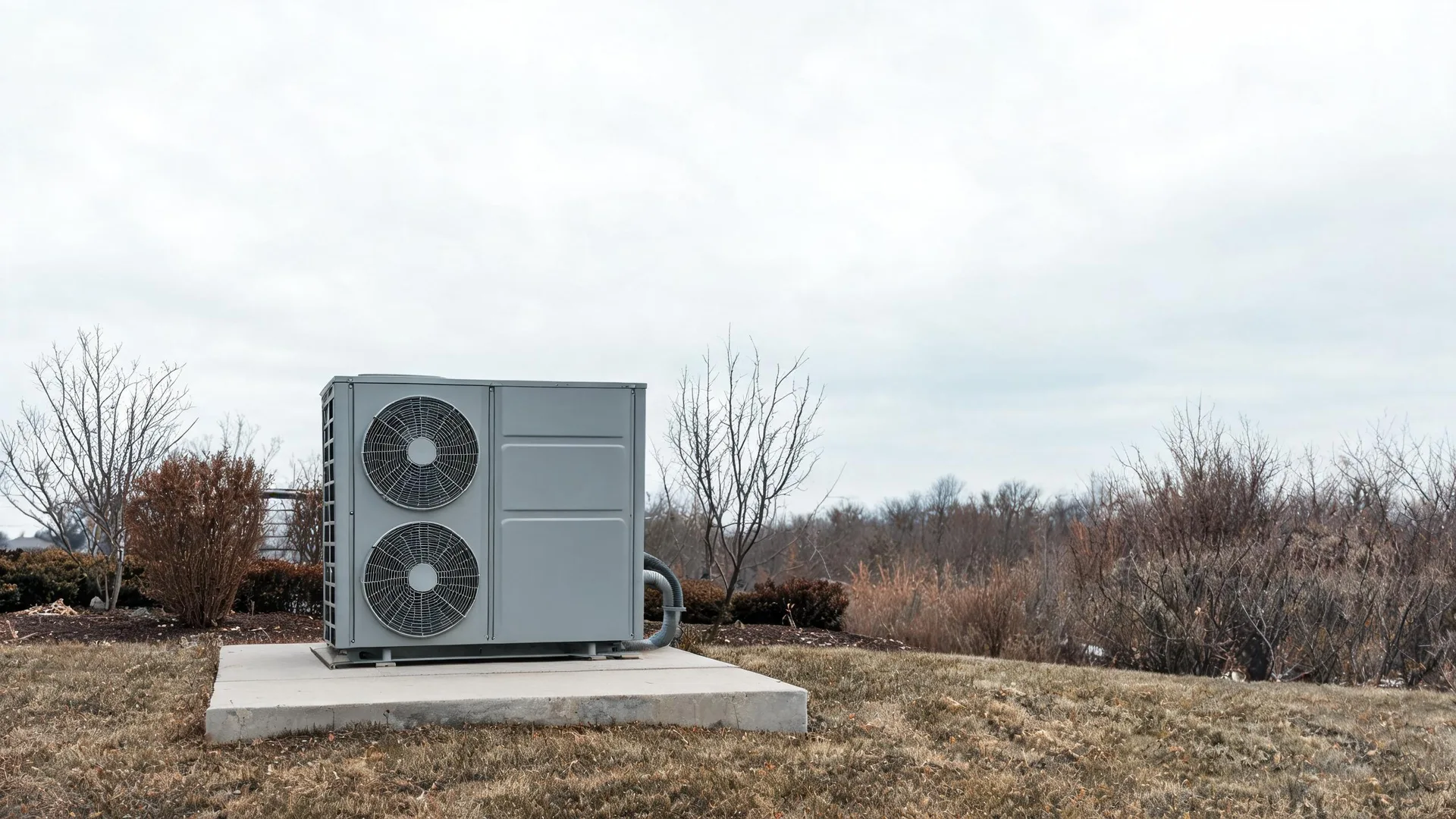
What an installation takes depends on what's already there more than what's going in. A heat pump needs a line set run between the outdoor unit and the indoor coil, a dedicated electrical circuit, and a condensate drain that can get rid of the water it pulls out of the air. If any of that is missing or undersized, putting it in means adding it, not just setting a unit on a pad. Ductwork matters just as much. A heat pump moves more air than a furnace does, so ducts that were fine for one may choke the other, and an installer has to check static pressure before deciding whether the existing runs will work or need changing. Where the outdoor unit goes matters too. It needs clearance on all sides for airflow and a spot where it won't get buried in debris or blocked by something built too close. None of this shows up on the price tag for the unit itself, but skipping it is how a system ends up undersized in practice even when the label says otherwise.
If your house is on the older side here, the ductwork already decides a lot before the installer ever picks a unit. Get the static pressure checked against what a heat pump actually needs to push, not what the old furnace got by on. If a run was undersized or a return was never quite right, this is the point to fix it, before the new unit is sized around a duct system that can't carry what it's rated for. Skipping that step is how you end up with a heat pump that's right on paper and wrong in the back bedroom.