Heat pump making a loud noise in Sioux City, IA

RepairHeat PumpWoodbury County, IA
Step 1 of 2

What ZIP code is the job in?

Why is my heat pump making a loud noise?

A heat pump that suddenly bangs, buzzes, or rattles is hard to ignore, especially when it has to run through a hard Woodbury County winter or a sticky summer without a break. You want to know if this is something minor or if the unit outside is about to fail on you.

The noise points to a specific part, not the whole system

A loud noise almost always comes from one part working loose or wearing out, not the heat pump as a whole. Banging or clanking often means a loose part inside the outdoor cabinet, sometimes a bent fan blade hitting the housing. A high-pitched squeal usually points to the fan motor bearings going bad. Buzzing can mean a failing contactor or a compressor under strain. Rattling is frequently just a panel or screw that worked loose from running all day. In Sioux City, heat pumps run hard both ways, pulling heat out of cold air all winter and pumping it out all summer, so parts take steady wear year round. None of these noises mean stop using it immediately, but none of them go away on their own either.

  1. A loose panel or fan blade starts the rattle or buzz first.

  2. The sound points toward the compressor, fan motor, or reversing valve.

  3. A technician runs the unit to hear when the noise happens.

  4. Electrical parts get checked before any panel comes off.

Why does my heat pump have to work so hard here?

  • Winter nights average 14°F

    Nights this cold put real strain on the compressor and reversing valve, the same parts behind most loud noises.

  • Heat runs October through May

    Eight months of heat means more hours of wear on the parts that can slip, stick, or come loose.

  • Cooling runs June through August

    Three months of cooling still means the reversing valve switches modes often enough for a worn part to start making noise.

NOAA nClimDiv 1991-2020

A gray outdoor air conditioner condenser unit on a concrete pad beside a house with horizontal siding and an electrical disconnect box, surrounded by grass.

A noise that waits for winter

Some heat pumps only start banging or rattling once the temperature drops hard, because cold puts the most load on the compressor and the reversing valve right when you need the system most. If the noise shows up on the coldest nights and quiets down when it warms up a little, that pattern matters. A technician who hears when a sound starts and stops can often narrow down which part is under strain before a panel ever comes off.

A white outdoor heat pump unit on a concrete pad beside a house with horizontal lap siding, with a plain light wall and grass lawn to the left.

A noise that's been there all along

Other noises show up no matter the season, through a Sioux City summer running the compressor nonstop or a mild October day with the unit barely working. A steady rattle or buzz that doesn't change with the weather usually points somewhere else, a loose panel, a fan blade out of balance, a screw that worked itself free. These are often simpler to track down because the sound doesn't depend on load, just on the unit running at all.

A man in a dark blue shirt stands in an open front doorway of a stucco and wood-clad house, facing a blond woman seen from behind in the foreground on a stone walkway.

What that noise means for your house

A heat pump that rattles or bangs doesn't quiet down on its own. Left alone, a loose part works itself looser, and a strained compressor keeps straining until it trips the breaker or stops cold on a night in the teens. That's the night you're stuck without heat and scrambling for a space heater, or without air conditioning when the house is already sticky. The sound is your warning, not your whole problem yet.

It also helps to know what you're dealing with before anyone comes out. A contractor who works on heat pumps all through Woodbury County's winters and summers has heard this exact noise before, in houses like yours, and usually has a good idea what's loose or worn before they even open the cabinet. You'll get matched with one contractor, local, licensed to do the work, who can look at your specific unit and tell you straight what's making the noise and what it takes to fix it.

Interior corner of a dining room with a round wooden table, a ceramic vase holding olive branches, a dark spindle-back chair near a curtained window, and a sideboard with a lamp against beige walls.
A gray-haired man in a dark long-sleeve shirt sits on a gray sofa in a living room, looking toward a sunlit window with sheer curtains.
A gray-haired man in a dark green sweatshirt sits on a sofa in a living room, looking toward a bright window, with a houseplant, lamp, fireplace and framed art behind him.
A gray-haired bearded man in a dark green collared sweater sits on a sofa in a living room with a window, houseplant, floor lamp and bookshelves, looking off to the side.
A gray-haired man in a dark green sweater sits on a sofa in a sunlit living room, looking off to the side, with a framed landscape painting, dining table and shelving behind him.

Get matched with a heat pump pro in Woodbury County

A licensed pro who repairs heat pumps in Woodbury County gets your request.

There's no charge for the request.

What the sound is telling you

  • A reversing valve that sticks mid-cycle makes a sharp click or a metallic buzz as it switches between heat and defrost.
  • A fan blade that's bent or hitting the cage shows up as a rhythmic clicking that speeds up with the blower.
  • Loose mounting bolts on the outdoor unit let the whole cabinet vibrate against the pad, producing a low hum or rattle.
  • A failing compressor often starts with a hard knock on startup before settling into a steady drone.
  • Ice buildup on the outdoor coil can cause a grinding or scraping sound as the fan blade clips the frost.
  • A worn contactor inside the electrical panel buzzes or chatters before it fails outright.

Every noise a heat pump makes points to a specific part doing something it shouldn't. A click or buzz right as the system switches from heating to defrost usually comes from the reversing valve, the part that redirects refrigerant flow so the outdoor unit can heat itself clear of frost. If the clicking speeds up and slows down with the blower, look at the fan blade itself. A blade that's gotten bent, even slightly, will hit the cage it spins inside and knock out a steady rhythm. Low humming or a rattle that seems to come from the whole outdoor cabinet is often nothing worse than loose mounting bolts, letting the unit vibrate against its pad instead of sitting still. A hard knock when the system first kicks on, then a drone once it settles, points toward the compressor, which is the part doing the most work and the most expensive to let go unchecked. Grinding or scraping usually means the outdoor coil has iced over and the fan blade is clipping frost with every rotation. And a buzz or chatter from inside the electrical panel, separate from the outdoor unit's own sounds, usually traces to a contactor that's worn down and about to fail. Each of these has its own fix, and none of them get quieter from waiting.

A gray outdoor heat pump unit on a concrete pad beside a house with horizontal lap siding, with a conduit running to a wall-mounted disconnect box and a green shrub to the left.
A clean outdoor unit with nothing touching the cabinet or fan runs quiet, even on a hard Woodbury County night.
An outdoor air conditioning condenser unit with dusty coils sits on a concrete pad against light horizontal siding, with an electrical disconnect box and refrigerant lines on the wall and a shrub and mulch at left.
A unit left to sit in dirt and debris season after season is the one more likely to bang, buzz, or seize up on you.
An outdoor condenser unit beside a horizontally sided house, encased in thick ice with hanging icicles, on a snow-dusted ground at sunset with bare trees in the background.

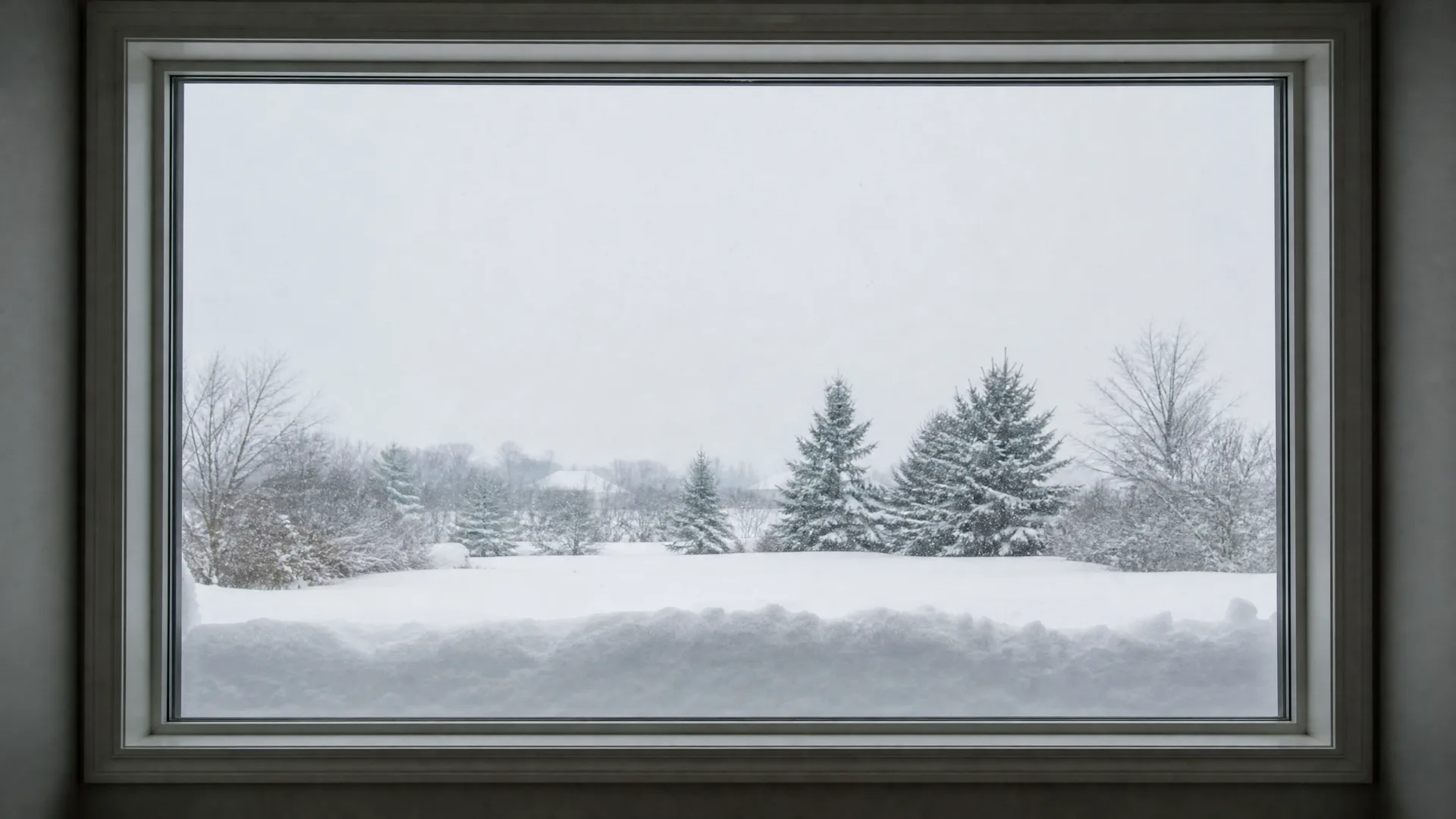
Just after six, dark still, and you go out for the paper and hear it before you see it. The outdoor unit is sitting under a shell of ice, thick over the coils, down over the cabinet edges. It's banging, a hard metallic knock every few seconds, and under that a buzz that doesn't let up. Your breath hangs in the air. Somewhere behind it you hear the fan trying to turn and not quite making it. You stand there a second in your coat, the grass frozen flat around the pad, the rest of the yard quiet, the sky just starting to go gray over the roofline.

What are you hearing right now, exactly

A knock that lands every few seconds usually means something loose is hitting the cabinet or the fan blade. A high buzz that comes and goes with the cycle points to the reversing valve. A grinding or screeching sound is different, that's a motor bearing giving out, and it tends to get louder over days, not quieter. If the noise only shows up when the unit kicks into defrost, or only on the coldest nights, pay attention to when it happens, that detail matters. Left alone, a grinding motor usually fails outright, and a stuck reversing valve can leave you without heat on the night you need it most.

A gray outdoor condenser unit on a concrete pad beside a house with horizontal lap siding, with a wall-mounted disconnect box, conduit and insulated refrigerant lines, a shrub at left and gravel at right.

Running the way it should

This is a heat pump at rest between cycles. The lines and conduit run clean up the wall, the pad is clear, and there's nothing near the cabinet or fan to rattle loose. A unit kept like this can still fail, but noise usually isn't the first sign.

An outdoor air conditioning condenser unit on a concrete pad beside a house with horizontal lap siding, with a green shrub to the left and a wide concrete slab in the foreground.

Nothing to go on but sound

Bare concrete, plain siding, a unit with no obvious damage. This is most heat pumps when something inside starts banging or buzzing. You can't see a bad bearing or a loose mount from here, which is why the sound itself is what a technician goes by.

An outdoor air conditioner condenser unit on a concrete pad beside a house with beige vinyl siding, with a gray electrical disconnect box and insulated refrigerant lines on the wall and river rock to the right.
Before you get your heat pump repair
A gray outdoor condenser unit sits on a concrete pad against a house wall with horizontal siding above a stone veneer base, with an electrical disconnect box and conduit on the wall and a leafy shrub in mulch to the left.
After you get your heat pump repair

Power here costs 11.49 cents per kilowatt-hour

At 11.49 cents a kilowatt-hour, your heat pump stays one of the cheaper ways to run your house through a Woodbury County winter, as long as it's not straining against a bad bearing or a sticking valve. A loud noise usually means it's working harder than it should, and that shows up on the bill before it shows up as a breakdown.

EIA-861 2025

A loud noise from your heat pump is the compressor, the fan, or the reversing valve telling you something is loose, worn, or sticking, and it won't fix itself by running longer. The sound you hear is a real clue. A knock points one way, a buzz another, and a technician who works on these units every winter and summer here can trace it back to the part before the cabinet even comes off. Left alone through a Woodbury County winter, the strain only grows, and a system fighting itself uses more power to do less heating or cooling. Getting it looked at now is simpler than waiting for a night in the teens to make the decision for you. A local, licensed contractor who knows what fails on these units this time of year can tell you what's wrong and what it takes to put it right. That's the next step from here, matched to one contractor suited to your system, not a handful of strangers calling you back.

A woman with shoulder-length dark brown hair in a cream knit cardigan sits in an upholstered armchair beside a window, looking off to the side, with a white bookshelf and potted plant blurred behind her.
A woman with her hair in a bun sits wrapped in a beige knitted blanket on a couch, holding a sleeping child against her chest in a warmly lit room with a lamp and houseplant in the background.

Find a heat pump repair pro in Woodbury County

A heat pump banging or buzzing through a Woodbury County winter needs a local technician who knows what that sound usually means before the panel ever comes off. Guessing at it, or waiting it out, just gives a loose part or a strained compressor more time to get worse. The contractor who takes this on works on heat pumps all season, in this cold, and you're matched with one, not several, so you get a straight answer instead of a pile of callbacks.

Reach a local pro

The pro who gets in touch is licensed in Iowa and works in Woodbury County.

You only hire the pro if you want to.