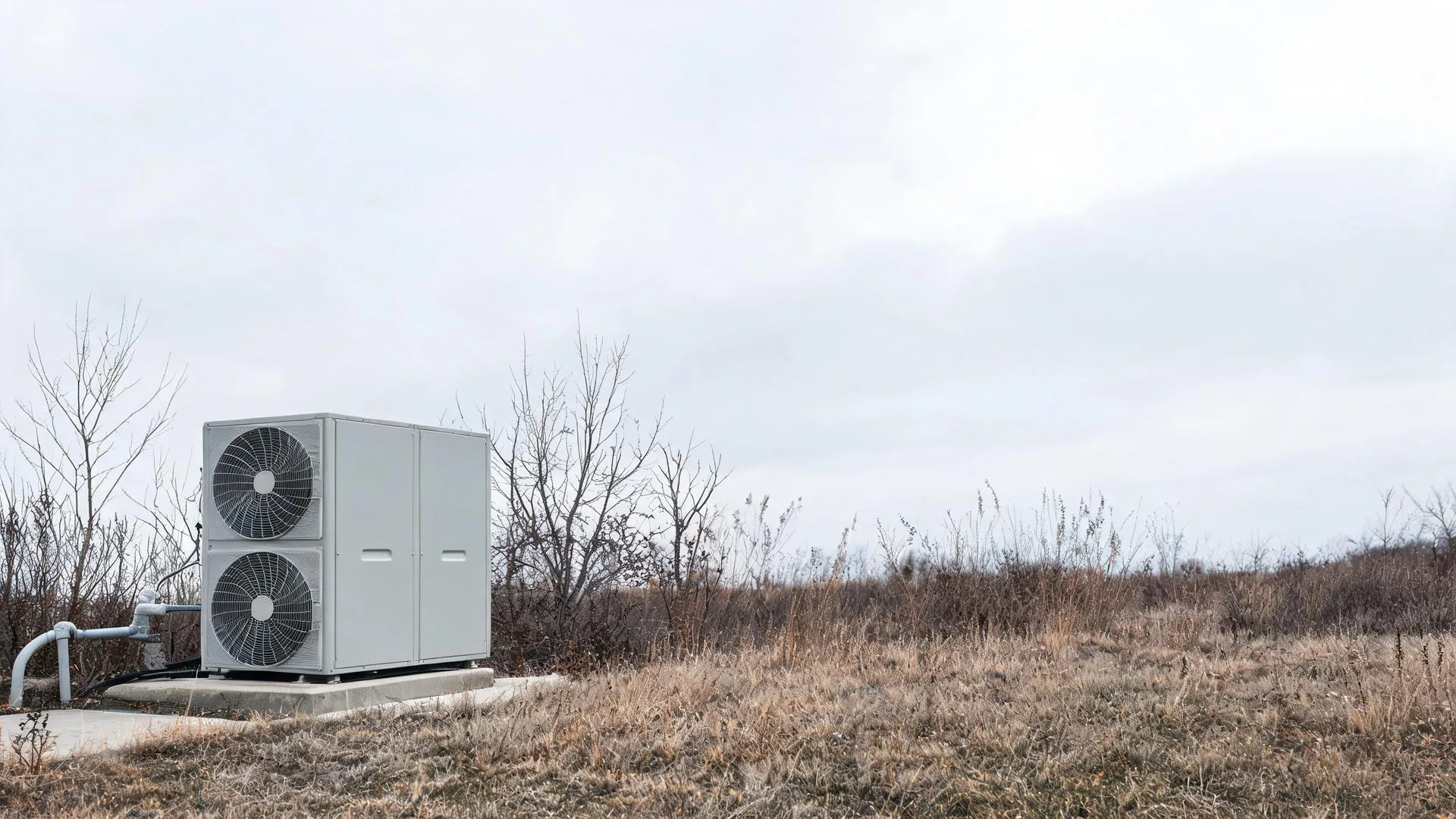
Gas is the default here
Utility gas heats 47.8% of homes in Washington County, more than any other fuel. Electricity and LP gas split most of the rest. A furnace paired with central air is still the setup most homes have.
Takes about a minute. No obligation.
Utility gas heats 47.8% of homes in Washington County, more than any other fuel. Electricity and LP gas split most of the rest. A furnace paired with central air is still the setup most homes have.
If your home runs on gas now, adding a heat pump means weighing it against the furnace you have, not replacing it outright. Some setups pair a heat pump with the existing furnace as backup for the coldest days. A contractor can walk through what that looks like for your system.
NOAA nClimDiv, 1991–2020 normals
Iowa electricity runs 13.40 cents per kilowatt-hour.
A heat pump sized right for your home keeps that cost in check. One sized too big just cycles more and spends more doing it.




What drives the price of a heat pump install is mostly what the house demands before anyone touches equipment. A straightforward swap, same location, same ductwork, same electrical panel with room to spare, is the cheapest version of this job. Add a dedicated circuit because the panel is full, or line sets that have to run further than usual, or ductwork that needs modifying to handle the airflow a heat pump wants, and the labor climbs before the unit itself is even part of the conversation. The equipment matters too. A unit built to perform well in heating mode, which is what this climate asks of it, costs more than one optimized mainly for cooling. Backup heat strips or a paired furnace add their own cost on top. None of that shows up in a quote that's just a number for the box.
Half the homes in Washington County went up in 1964 or earlier. A heat pump going into a house that age has to match what that house actually needs, not a generic number off a spec sheet. That means sizing it to your home, not guessing.
Find a contractor
A contractor sizing your heat pump should be doing a load calculation on your house specifically, not pulling a number off the unit that's in it now. That matters more in a house built in 1964 or earlier, where the walls and windows aren't what you'd find in new construction. Ask to see the calculation before you agree to a size.
SEER2 and HSPF2 are measured in a lab at set conditions, not in your house on the coldest night. A heat pump rated high will still run less efficiently when it's working hardest against the cold. The number tells you how the equipment is built, not exactly what your bills will look like.
A heat pump carries a cooling rating and a heating rating, and they don't move together. A unit can be strong on one and average on the other. Ask a contractor to walk through both ratings for any system you're considering, not just the one printed biggest on the label.
A load calculation looks at the whole house. How much glass, how much wall, which way the house faces, how much air leaks in and out. Square footage alone never gets you there, and neither does matching the unit you're taking out. The old one might have been wrong from the day it went in. Go too big and the heat pump short-cycles, running just long enough to satisfy the thermostat and shutting off before it's settled into a steady rhythm. Go too small and it runs flat out on the coldest days and still falls behind, leaning hard on backup heat to close the gap. Right sized, it runs long and steady, which is exactly how a heat pump is meant to work.
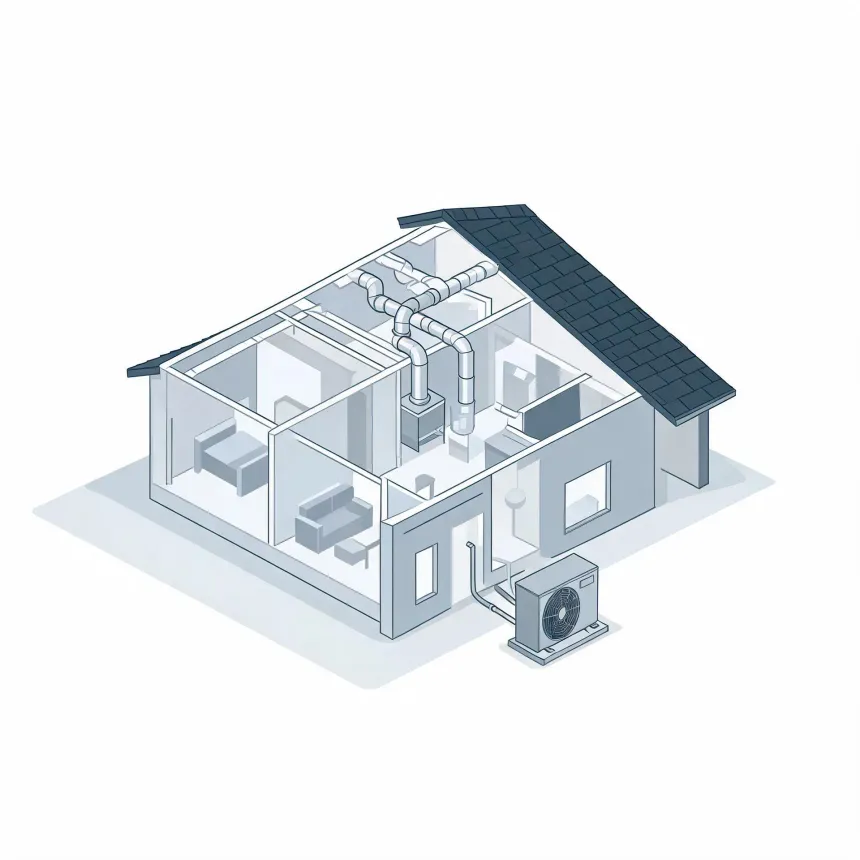
Installation day starts outside, not in the living room. The outdoor unit gets set on a pad, leveled, and connected with refrigerant lines run to an indoor coil, usually set right above or beside the furnace. That coil ties into your existing ductwork, so a tech checks duct connections and airflow before anything gets powered on. Electrical work comes next, since a heat pump runs on its own dedicated circuit separate from the furnace. Once it's wired and charged with refrigerant, the system gets tested in both directions, cooling and heating, and the tech checks that the thermostat is talking to the backup heat correctly if your setup has a furnace paired in. None of this is fast work. A careful install takes the time it takes.