A nighttime view of a tree-lined residential street with illuminated two-story brick houses and street lamps.

Heat Pump Repair in Muscatine, IA

Tell us about the job

Takes about a minute. No obligation.

RepairHeat PumpMuscatine County, IA
Step 1 of 2

What ZIP code is the job in?

The reversing valve sticks

A heat pump switches between heating and cooling with a reversing valve, and that valve is the part most likely to fail. When it sticks, the system keeps running but stops switching modes, so it blows cold air when the house needs heat. A stuck valve usually means a service call, not a reset.


The outdoor coil takes the abuse

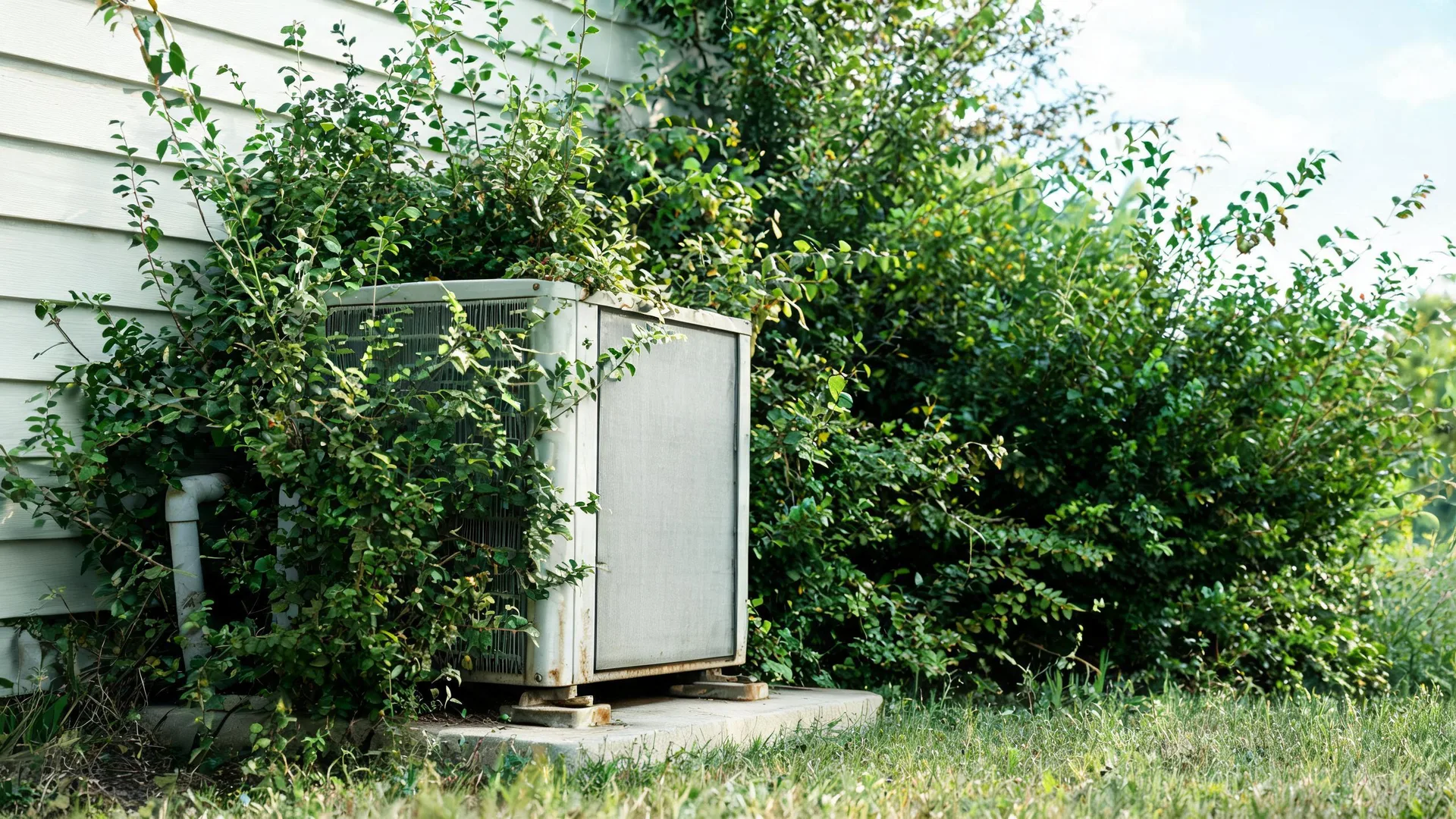
The outdoor coil sits outside through everything the weather brings, and dirt, ice and corrosion all work against it. A coil that can't transfer heat properly forces the compressor to work harder, and a compressor under that kind of strain is what eventually fails for good.

8 months
October through May, your system heats
3 months
June through August, it cools
17°F
the average winter night it heats against
83°F
the average summer afternoon it cools against
Isometric grayscale illustration of a cutaway house showing interior rooms, ducted air handler and duct runs, connected by pipes to an outdoor condenser unit beside the building.
Your system heats October through May and cools June through August.

NOAA nClimDiv, 1991–2020 normals

Muscatine County winters run cold enough that a heat pump leans on its backup heat strip on the coldest nights.

If the system is blowing air that is not warm, check whether backup heat is coming on before assuming the compressor failed.

Wind and hail here are unremarkable. A heat pump failure is still most likely the usual one.

Power costs 13.4 cents a kWh statewide
59 damaging wind events from 2015 to 2024
46 hail events from 2015 to 2024

Muscatine County logged 137 severe weather events between 2015 and 2024, between wind, hail, tornadoes and winter storms. None of that singles out a heat pump for extra wear. Wind and hail go after roofs and siding before they touch an outdoor unit, and the coil is built to sit outside year round no matter what the sky does. What actually brings a heat pump down is simpler. A reversing valve that sticks. A coil caked with dirt. A compressor strained because one of those went unfixed too long. If your system is acting up, check those first.

If your heat pump came with the house, ask how much life it has left

Half the homes in Muscatine County were built in 1970 or earlier. A heat pump doesn't last as long as the house around it, so if yours came with the place, it may be on its last stretch regardless of what's wrong with it now. Before paying for the repair, it's worth asking how much life is left in the system itself.

Find a contractor
A dark gray heat pump unit mounted on a concrete pad next to a house with gray siding and a stone veneer wall.

Ask for the life expectancy, not just the fix

A contractor can tell you how many years a system like yours usually lasts, and where yours sits against that. Ask for that number before you approve the repair, not after. If the unit is old enough that a bigger failure is likely in the next year or two, a quote that weighs repair against replacement is worth more than one that just fixes what's in front of it.

Check the thermostat settings first

Make sure the system is set to heat, not auto, and that the temperature set point is actually above room temperature. A battery that's dying in the thermostat can cause readings to drift or the display to blank out, and that alone can look like a dead system.

Look at the outdoor unit

Walk outside and look at the coil and the fan. If it's packed with ice beyond a thin frost layer, or buried in leaves and debris, airflow is blocked and the system can't do its job. Clear away anything blocking the sides, and check that the fan is actually spinning when the system calls for heat or cool.

Short cycling is one of the easier signs to catch. The system kicks on, runs for a couple minutes, then shuts off before the house actually warms up or cools down, and it repeats that all day. That puts wear on the compressor every time it restarts, so it's not something to wait out. Strange sounds are worth paying attention to too. A grinding or squealing points to a motor bearing going bad, and a hard clanking usually means something has come loose inside the cabinet. If the system runs constantly and never seems to catch up to the thermostat, that's different from short cycling but just as telling. It means the heat pump can't move enough heat to keep pace, whether that's a refrigerant problem or a coil that's lost its ability to transfer heat.

A repair makes sense when the part failing is a part that fails on its own, separate from everything else in the system. A capacitor, a contactor, a blower motor. Fix that one piece and the rest of the system is no better or worse off than it was. Replacement starts to make more sense when the failing part has been putting strain on everything around it for a while, especially the compressor. A compressor doesn't usually fail on its own. It fails because something else made it work harder than it should have for months or years, and by the time it goes, the rest of the system has often been run down the same way. A contractor can tell you which kind of failure you're looking at. That matters more than what the repair costs.