



What the cold does to a heat pump here
Winter here is long and it gets hard cold. The heat runs about eight months a year, October through May, and the overnight low averages 14°F across December, January and February. Of the roughly 245 nights in that stretch, about 145 drop to freezing or below. About 16 drop to 0°F or below.
A standard heat pump starts losing ground before it gets anywhere near that cold. Below 40°F it puts out less heat than its rating says. Below about 35°F it often needs backup heat to keep up. Every single one of those 145 freezing nights here falls under both marks. This isn't a once-in-a-while problem for Benton County. It's most of the season.
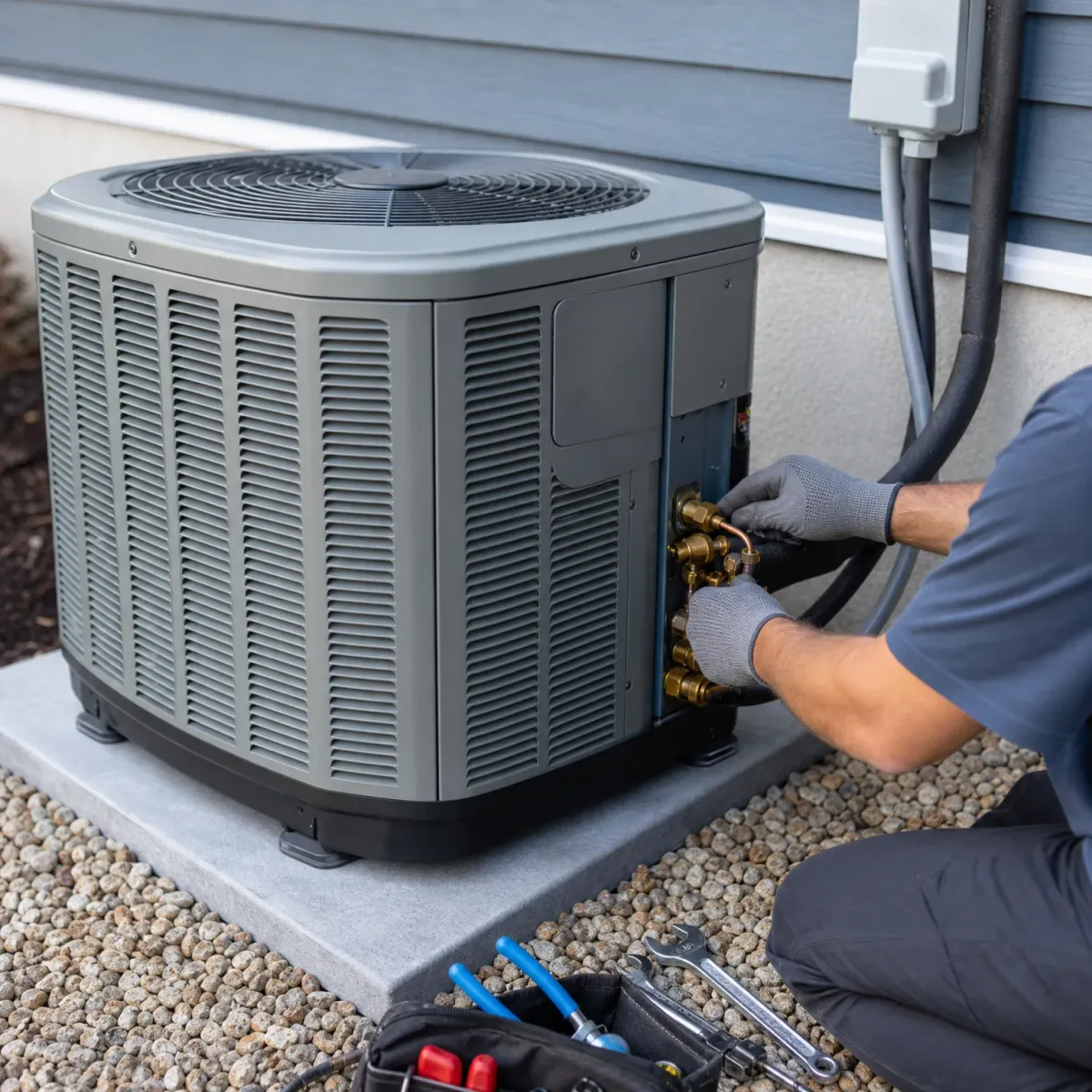
A heat pump built to carry the ENERGY STAR Cold Climate label is a different machine. To earn that label it has to keep making heat efficiently and hold onto at least 70 percent of its rated capacity at 5°F, verified by outside testing. In field tests of prototype cold-climate models, backup heat covered only a small share of the load between 0°F and 35°F, and the units rarely ran on backup alone even above 0°F. So the question for this county isn't heat pump or no heat pump. It's whether the one you're looking at is built for this cold or built for somewhere milder.