A lit residential street at dusk featuring large two-story brick houses with glowing windows, mature trees, and a street lamp.

Heat Pump Repair in Vinton, IA

Tell us about the job

Takes about a minute. No obligation.

RepairHeat PumpBenton County, IA
Step 1 of 2

What ZIP code is the job in?

September is when a weak heat pump shows itself

Heat here runs October through May, about eight months straight. The first real cold snap in September or early October is what finds the part that was already marginal. A heat pump that struggled last spring won't have gotten better sitting idle all summer.

Don't wait once it's struggling

A heat pump that's short cycling, running constantly, or blowing cool air in October is telling you something now, before the coldest months hit. Getting it looked at early means a contractor is diagnosing one problem instead of whatever else failed because the first thing kept running wrong.

8 months
October through May, your system heats
3 months
June through August, it cools
14°F
the average winter night it heats against
82°F
the average summer afternoon it cools against
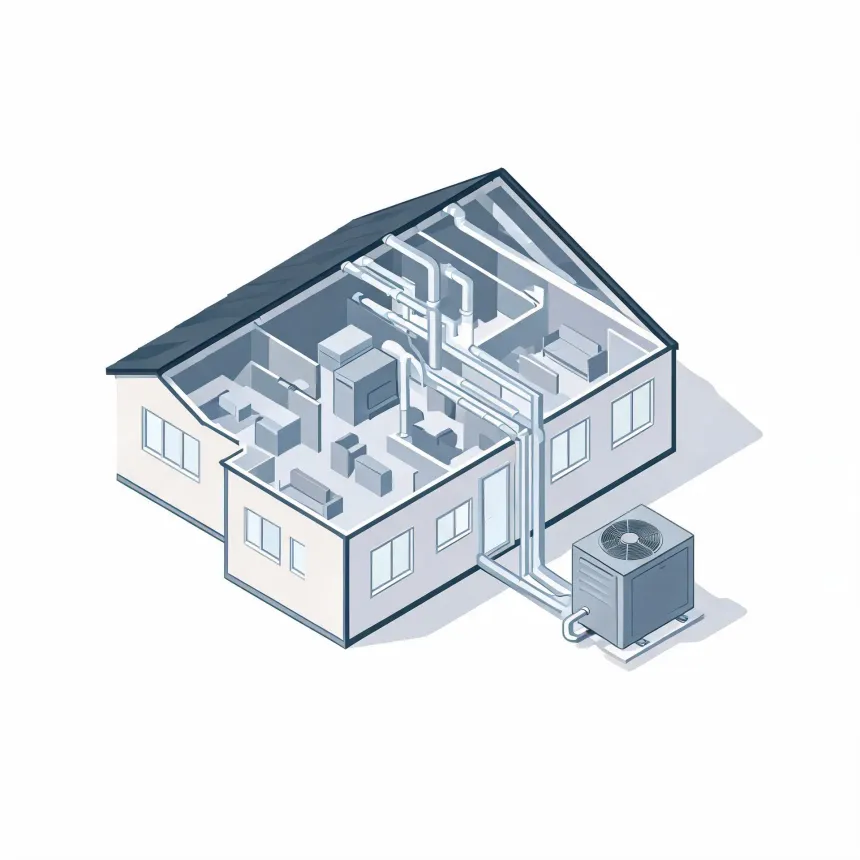
Isometric illustration of a cutaway single-story house showing interior ductwork and vents connected to an outdoor condenser unit beside the building, on a white background.
Your system heats October through May and cools June through August.

NOAA nClimDiv, 1991–2020 normals

Vinton sits in zone 5A, a cool climate where heating carries the bigger share of the year.

A heat pump here works hardest keeping the place warm, so a repair call is more often about the heat side than the cooling side.

A heat pump that's working harder than it should costs you more here, at 13.4 cents a kWh

Power costs 13.4 cents a kWh statewide
52 damaging wind events from 2015 to 2024
64 hail events from 2015 to 2024
A straining heat pump adds up fast at 13.4 cents a kWhHave it looked at before it runs that way all winter.

Half the homes in Benton County were built in 1964 or earlier. A heat pump doesn't last as long as the house it's in, so an old house doesn't mean an old unit, but it's worth finding out which you have. If your heat pump came with the house, or came with whatever system replaced the original, it may be closer to the end of its life than you'd guess. A unit that's getting old tends to show it the way described above, running weak, cycling short, losing the fight once it turns cold. Before paying for a major repair, ask the contractor how much life the unit has left. A compressor or coil repair is a different decision on an old unit than on a new one.

Know the unit's age before you pay for the repair

Find out how old your heat pump actually is before a repair goes any further. That one answer tells the contractor, and you, whether a compressor or coil repair makes sense or whether the money is better spent on a new system.

Find a contractor
A man in a dark cap, gray T-shirt and brown work pants walks up porch steps toward a dark front door, carrying a canvas tool bag filled with tools, with a potted shrub beside the entry.
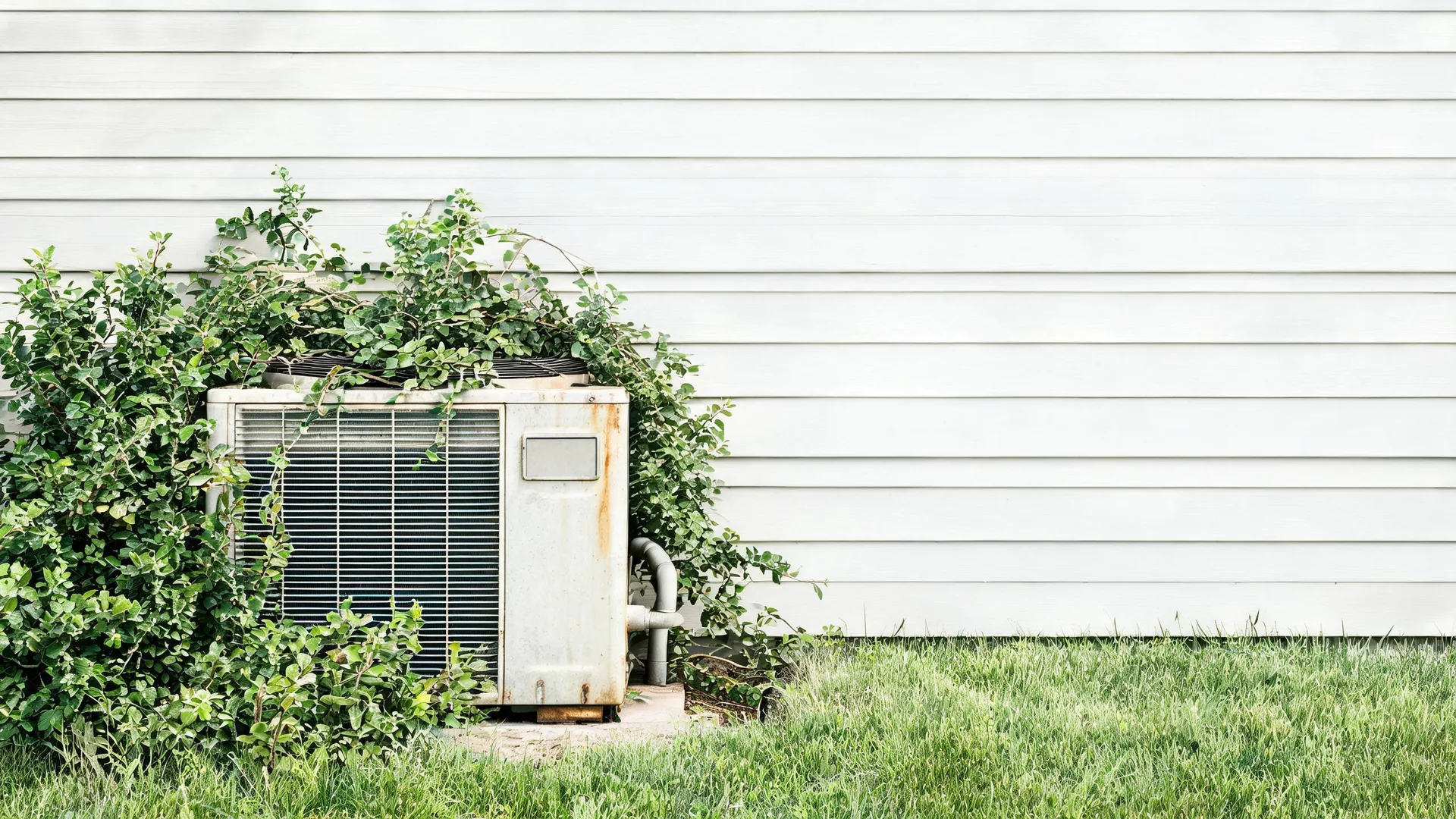
A gray heat pump outdoor unit mounted on a concrete pad next to the stone-accented exterior wall of a house.

The signs show up before the failure does

A heat pump that needs attention doesn't usually quit outright. It tells you first. You'll notice it running when it shouldn't be done yet, or kicking back on a few minutes after it just shut off. That's short cycling, and it wears the compressor faster every time it happens. You might feel air from the vents that's barely warm, like the system is moving air without really heating it. Ice building up on the outdoor unit beyond what defrosts off on its own is another sign, especially if it's still there later in the day. Some homeowners hear it before they see anything. A clanking sound. A hard clicking at startup. A hum that doesn't turn into the unit actually running. Any of these on their own is worth a call. Together, they mean the unit is struggling to do the job and losing ground.

The reversing valve is the part unique to a heat pump

The reversing valve is what lets the unit switch between heating and cooling, and when it sticks, the unit gets stuck blowing the wrong temperature air or stalls between modes. It switches every time the system changes direction, and over the years that wear catches up with it before most other parts.

The outdoor coil takes the abuse the indoor one never sees

The outdoor coil sits through rain, frost and whatever blows through the yard, and a coil caked with dirt or bent fins can't pull heat from the air the way it needs to. Refrigerant leaks tend to start here too, at a joint or a worn spot, and a unit running low on refrigerant will run long and still fall short of the set temperature.

A heat pump that's struggling doesn't fail on its own timeline. It fails faster the longer it's left running that way. Short cycling puts a hard start on the compressor every time it kicks back on, and a compressor only has so many hard starts in it. A coil that's iced over makes the system lean on the backup heat strip to keep up, and that strip isn't built to carry the load alone for long. A refrigerant leak gets worse under pressure, not better, so a unit that's low today will be lower in a month. None of this fixes itself by waiting. The part that's struggling now is the part that quits later, usually on the night it's asked to work hardest.

A contractor can usually tell you fast whether a repair makes sense, because the failure itself is a clue. A bad capacitor or a failed contactor is a straightforward swap on a unit that's otherwise sound. A compressor going out is a different conversation, since the compressor is the most expensive part in the system and replacing it alone can cost most of what a new unit would. Age matters alongside the failure. The same broken part is worth fixing on a unit with years ahead of it and worth questioning on one near the end. A contractor who's honest with you will say so either way, and will tell you when a repair is a real fix versus a patch that buys a season.