






An outdoor HVAC condensing unit on a concrete pad next to a beige single-story house with a dark shingle roof.

Heat Pump Installation in Vinton, IA

Tell us about the job

Takes about a minute. No obligation.

New system or replacementHeat PumpBenton County, IA
Step 1 of 2

What ZIP code is the job in?

Electricity in Benton County runs 15.58 cents per kilowatt-hour on average. A heat pump runs on electricity every time it turns on, whether it's pulling heat out of cold air or pushing heat out of a hot, sticky house. Summer dew points here average 63°F, heavy enough that the system works through the day to keep up. Every kilowatt it pulls costs something, and a unit that's sized right pulls fewer of them than one that's struggling. Over a full year of that kind of use, how efficiently it runs stops being a number on a spec sheet and starts showing up on the bill.

8 months
October through May, your system heats
3 months
June through August, it cools
14°F
the average winter night it heats against
82°F
the average summer afternoon it cools against
Isometric cutaway illustration of a single-story house showing interior rooms, attic ductwork and an air handler, with an outdoor condenser unit connected by lines along the exterior wall.
Your system heats October through May and cools June through August.

NOAA nClimDiv, 1991–2020 normals

A heat pump installed here has eight months of heat and three months of cooling ahead of it before the year is even half over.

Getting it in before September means the first real test it faces is a mild month, not a January night averaging 14°F.

Half these homes were built in 1964 or earlier, and the heat pump has to match the one you've got

Half the homes here were built by 1964
52 damaging wind events from 2015 to 2024
64 hail events from 2015 to 2024
Gas Heats This County. A Heat Pump Changes That MathMost homes in Benton County heat with gas. A heat pump going into one of them takes over a job gas has done here for years.

Benton County sits in zone 5A under the 2021 energy code, a cool zone where heat is the bigger job and cooling the smaller one. Any split-system heat pump installed here, if it was built from 2023 onward, has to clear a federal floor: at least 14.3 Btu of heat moved per watt-hour over the summer, at least 7.5 over the winter. That floor rules out the weakest units before a contractor ever walks through the door. A federal tax credit is also available on a qualifying heat pump, worth weighing against the purchase price. Between the standard and the credit, what gets installed here already has to clear a bar most of the country doesn't set.

Size It Right Once, and the Savings Run All Year

An efficient heat pump, sized for this house, pulls fewer kilowatt-hours to do the same job. In a county where power costs what it does here and the unit runs most of the year, that difference shows up on every bill it sends. Getting the sizing and the equipment right at installation is what decides which kind of bill you get.

Find a contractor
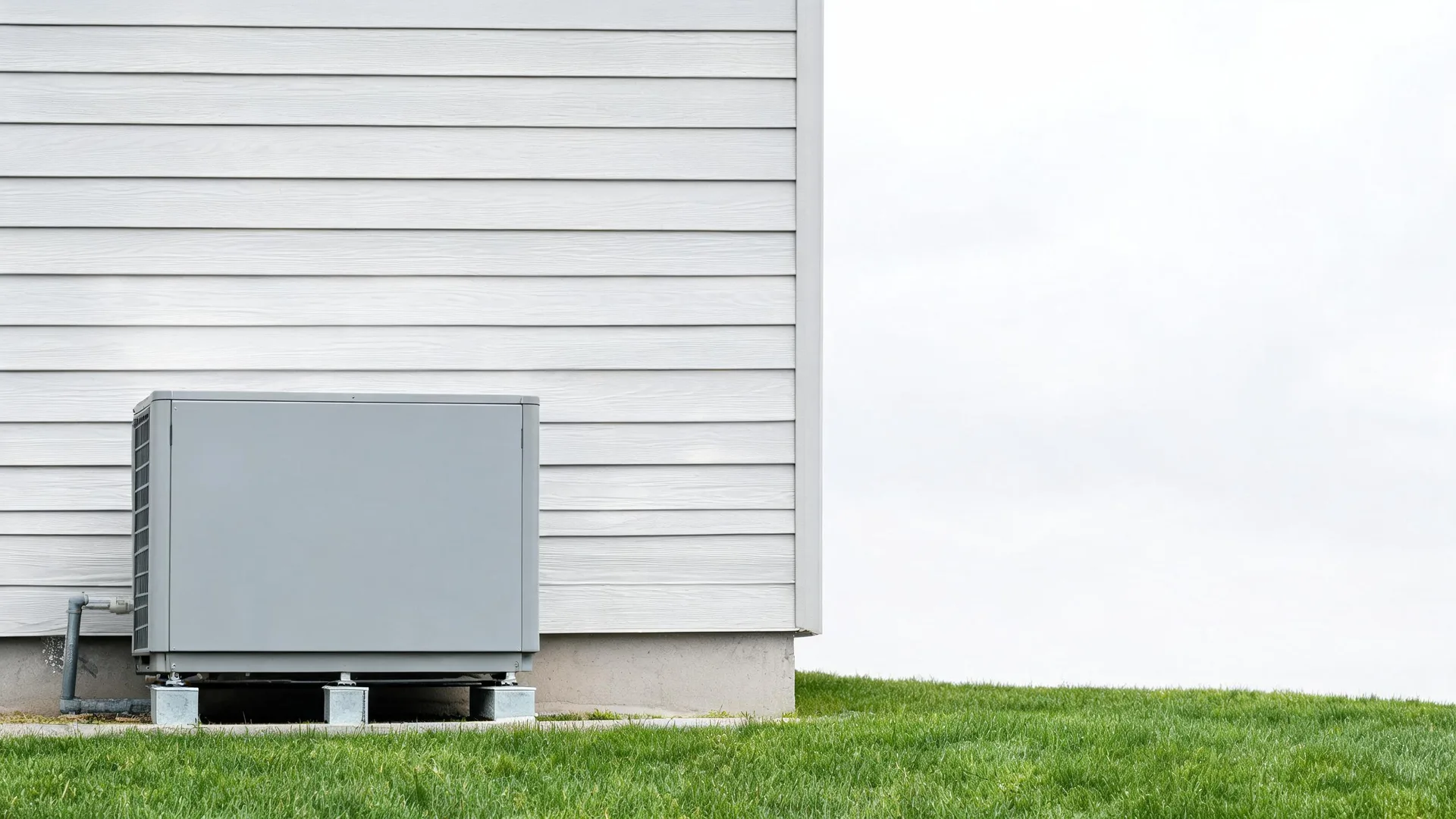
A residential heat pump outdoor unit mounted on a concrete pad next to a house with gray vinyl siding.

It Runs Day and Night. Make Sure It's the Right One

This time-lapse runs a full day into a full night, and across a Vinton winter this machine does that around the clock. The question at installation is which unit is doing that work. A heat pump sized for an older, leakier house runs long hours pulling heat out of cold air, and it has to be matched to whatever that house needs to stay warm, not to a number on a brochure. Get the sizing wrong and the system you watched running in this clip is either short-cycling or running flat out all night to keep up.

The Old Equipment Doesn't Just Get Unplugged

Taking out a furnace or an old heat pump means disconnecting gas lines, electrical circuits, refrigerant lines and venting, then capping or removing each one properly. A gas furnace has a flue that has to come out clean so nothing is left open to the house. An outdoor heat pump or AC unit has refrigerant in its lines, and that refrigerant has to be recovered, not vented, before the lines are cut loose. None of this is optional work tacked onto the new install. It has to happen first, and it has to happen right, or the new system goes in on top of a mess.
What Gets Reused and What Doesn't

A heat pump swap sometimes keeps the ductwork and the electrical disconnect box, but the indoor coil, the outdoor unit, the thermostat and often the line set all come out together. If the old system was a furnace with no outdoor compressor, there's new electrical work to run, since a heat pump draws power the furnace never needed. A contractor checks what's worth keeping before tearing anything out, because reusing a part that's still good costs less than replacing it for no reason, and forcing a new system onto a part that's not up to the job causes problems later.

The efficiency rating on a heat pump's label tells you how much heat it moves for the electricity it uses, and that ratio holds whether the unit is barely running or working hard. A higher rated unit moves more heat per watt-hour than a lower rated one, every time the compressor kicks on. That rating comes from lab testing under set conditions, so it's a way to compare one unit against another, not a promise of what any one house will see on a bill. Two units with the same rating can still perform differently once installed, because ductwork, refrigerant charge and sizing all affect how close a system gets to its rated number. A unit that's too big or too small for the house it's heating won't hit its rating no matter what the label says, since it'll short-cycle or run flat out instead of settling into the steady operation the rating assumes. The number on the label is a starting point for comparing equipment, and what a contractor does with the installation decides how much of that rating actually shows up in how the system runs.

Install day starts with a load calculation walkthrough if the contractor hasn't already done one, confirming where the indoor coil and outdoor unit will sit and how the line set will run between them. The outdoor unit needs a level pad and clearance on all sides so air can move through the coil. Once the old equipment is out and the electrical and refrigerant lines are capped, the new line set gets run, brazed and pressure tested before anything is charged with refrigerant, because a leak found after the charge means doing that work twice. The indoor coil goes in, the air handler or furnace connects to the ductwork, and the electrical disconnect gets wired to the new unit's actual draw. Once everything is connected, the system gets charged to the exact weight the manufacturer specifies, then run through its paces: checking airflow at the vents, checking temperature split across the coil, and checking that the thermostat is actually talking to the unit before anyone calls it done.