



A row of dark-sided single-story houses behind a long trimmed hedge, with mown lawn, a paved path and large leafy trees under an overcast sky.

Furnace Installation in Vinton, IA

Tell us about the job

Takes about a minute. No obligation.

New system or replacementFurnace or heatingBenton County, IA
Step 1 of 2

What ZIP code is the job in?

Half the homes in Benton County were built in 1964 or earlier. A furnace going into a house that age is working with whatever ductwork and venting came before it, not a blank slate. The old equipment may have been replaced once or twice already, but the ducts and the gas line usually haven't changed since the house was built. A new furnace has to match that layout, not fight it. Getting the sizing and setup right matters more in a house like this than in one built last year.

8 months
October through May, your furnace is on duty
14°F
the average winter night it heats against
55%
of homes here heat with gas, so most furnaces here burn gas
80% AFUE
the federal minimum any new unit must meet
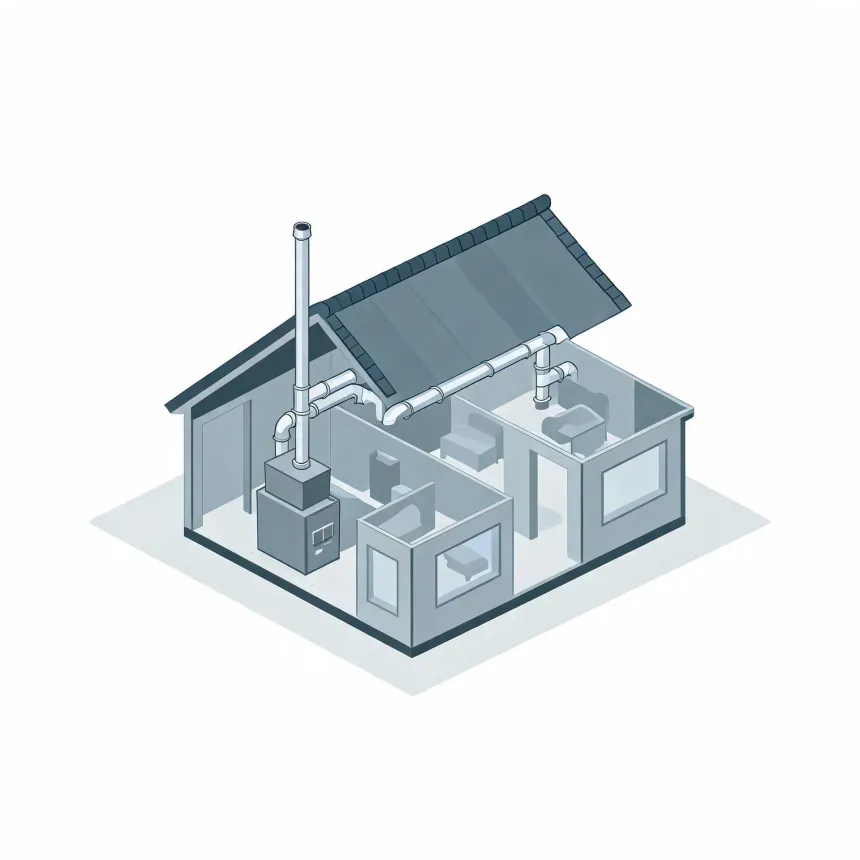
Isometric grayscale illustration of a cutaway house showing an interior furnace with a tall flue pipe and ductwork running to rooms under a partially lifted roof.
Your furnace works hardest from November through March.

NOAA nClimDiv, 1991–2020 normals

A furnace in Benton County runs about eight months out of the year, October through May.

A new system here will log more hours every winter than one installed almost anywhere else, so sizing it right from the start matters.

Eight months of heat a year wears a furnace down faster. Here, replacing it early beats replacing it in a January breakdown.

Heat runs October through May
Winter nights average 14°F
Climate zone 5A

Benton County falls under zone 5A, a cool, humid climate where the heating load drives the code. Any furnace going into a home here has to meet a federal minimum efficiency rule, not a local one. Units built from November 2015 on must turn at least 80 percent of the gas they burn into heat over the winter. That floor rises to 95 percent for furnaces built from December 2028 on, so what counts as a legal minimum is about to change. A furnace bought today still has to clear the 80 percent bar, and a federal tax credit is available for qualifying high-efficiency equipment.

Eight months a year of run time means sizing it right now, not later

A furnace here works harder every winter than one installed in most other places. Getting the size and setup right at install time is what keeps it that way for all eight months of the season ahead.

Find a contractor
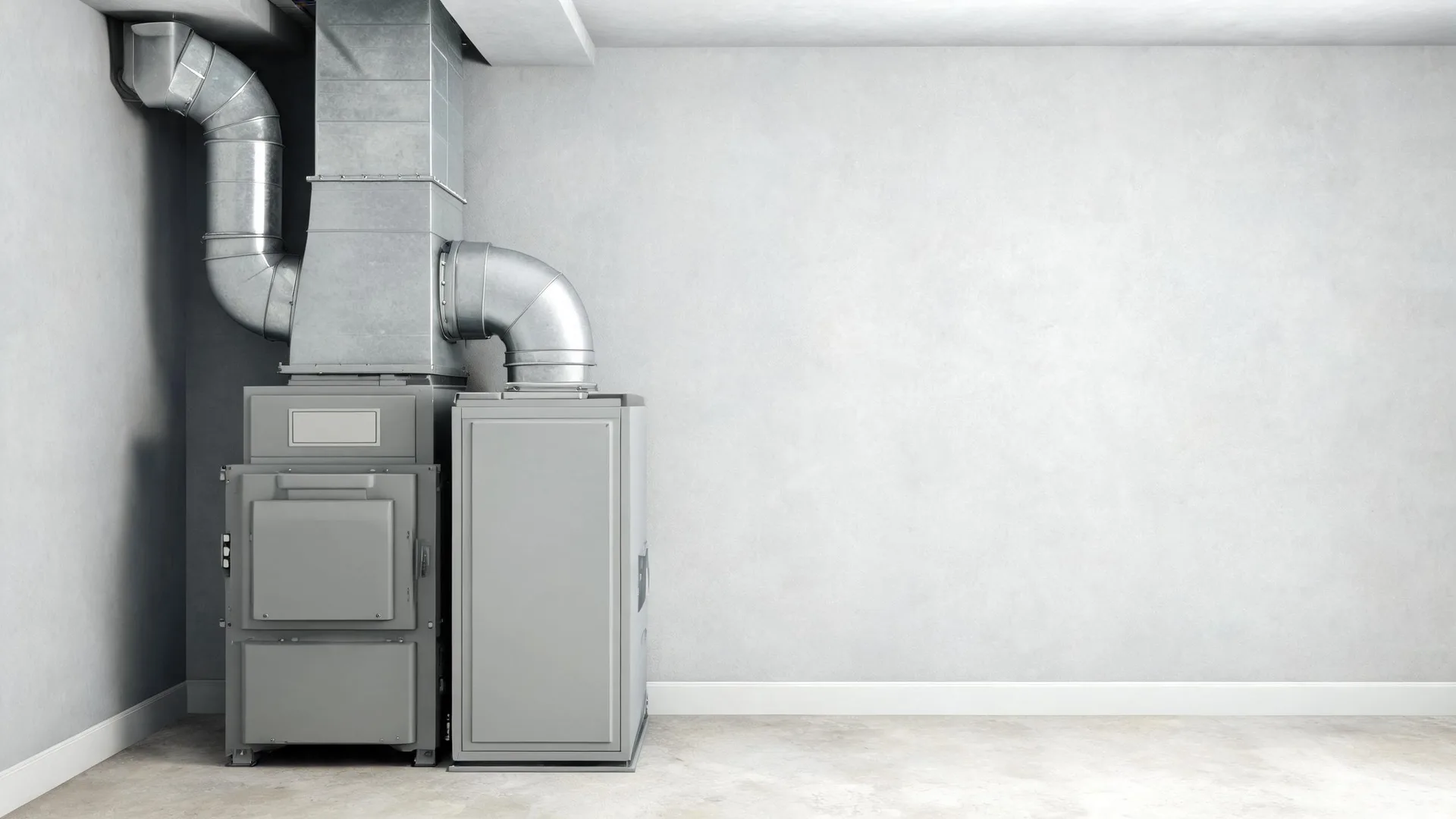
A gray high-efficiency gas furnace installed in an unfinished basement, surrounded by gas lines, a condensate drain, and sheet-metal ductwork.

An older house needs a furnace sized to match it

A house built in 1964 or earlier is working with whatever ductwork and gas line came with it. Match the new furnace to that layout and it heats the house evenly for years. Size it off a spec sheet without checking the ducts first and it will short cycle or leave rooms cold no matter how good the unit is. Ask whoever installs it to check the existing ductwork against the new furnace's output before it goes in, not after.

The old furnace gets disconnected and hauled off

Once the new furnace is set and running, the installer disconnects the gas line, the venting, and the return and supply ducts from the old unit and removes it from the house. The gas line gets capped or connected fresh to the new furnace, and the old venting is checked since a new high-efficiency furnace often vents differently than what was there before. The old unit itself is scrapped. None of its parts carry over, even if the blower motor or igniter was replaced recently.

A newer furnace changes what the venting has to do

An older furnace that vented through a metal flue and chimney doesn't need that path anymore once it's gone. A high-efficiency replacement vents through plastic pipe out a wall or the roof instead, so the old chimney connection either gets capped off or stays in use for a water heater that still needs it. Whoever installs the new furnace has to work out where that old vent goes, because an abandoned flue can't just be left open to the house.

A gray forced-air furnace with ductwork stands in an unfinished concrete basement surrounded by storage items and clutter.

A high-efficiency gas furnace would save about $90 a year to run in Benton County compared with a gas furnace.

  • A high-efficiency gas furnace$460 a year
  • A gas furnace$550 a year

Estimates for a typical Benton County home, from EIA household energy data, Iowa fuel prices and NOAA climate normals. Your home will differ.

Installation day starts with the old furnace still running, so the house has heat while the crew sets up. The new furnace gets set in place, leveled, and connected to the ductwork, the gas line, and the vent. Each joint in the supply and return ducts gets sealed so air isn't leaking out before it reaches the rooms it's meant for. The gas line gets pressure tested before the burner ever lights, and the vent run gets checked for the right slope and clearances along its whole length. Once it's all connected, the installer fires it up, checks the flame, checks the temperature rise across the heat exchanger, and watches it cycle through a full run before calling it done. A furnace that passes all of that on day one is a furnace that's set up to run the way it's supposed to for years.