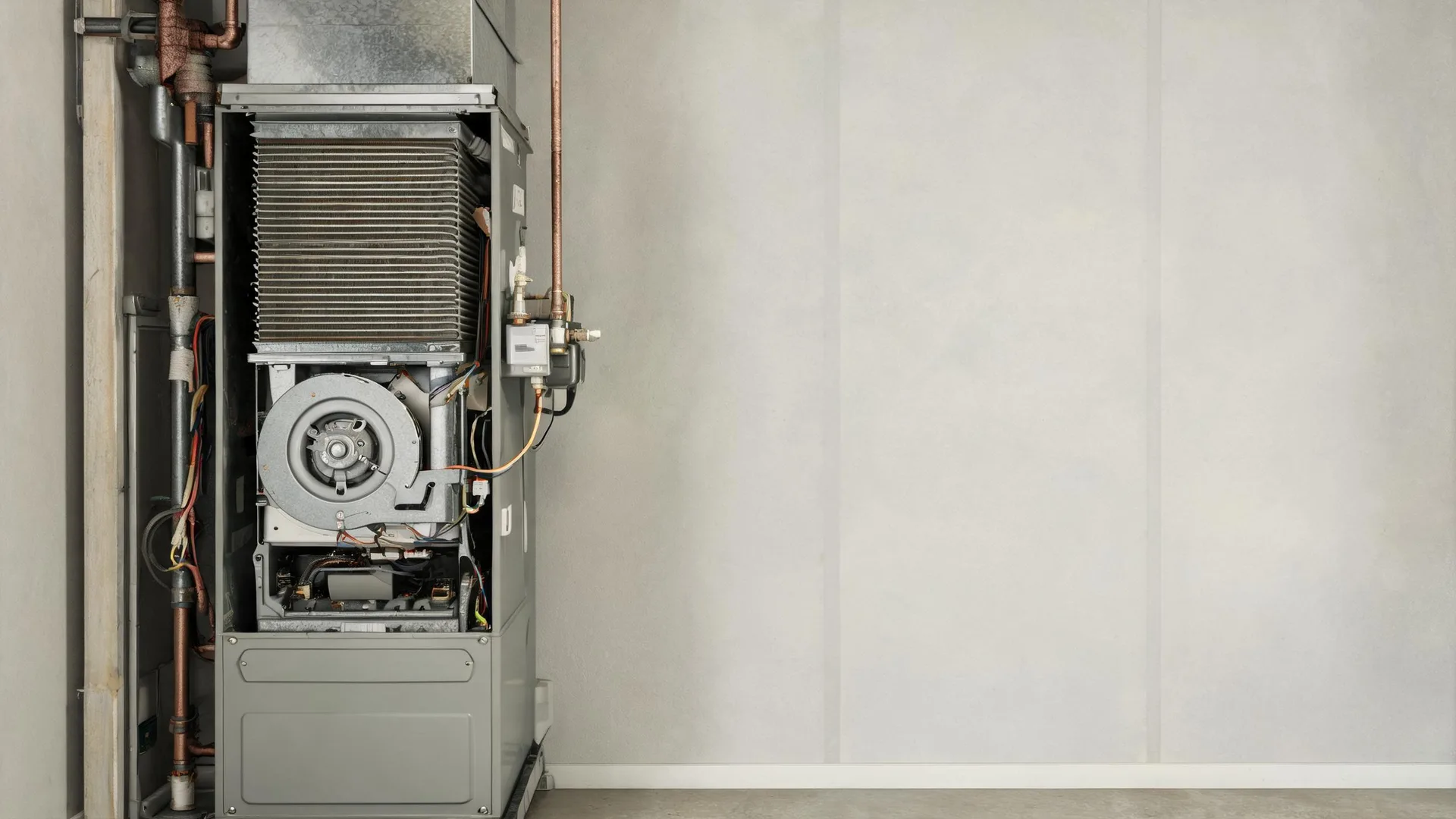
Gas is the common fuel here
Utility gas heats 62.6% of occupied homes in Story County. Most furnace installs in Ames are gas furnaces, and most contractors working here size and vent them every day.
Takes about a minute. No obligation.
Utility gas heats 62.6% of occupied homes in Story County. Most furnace installs in Ames are gas furnaces, and most contractors working here size and vent them every day.
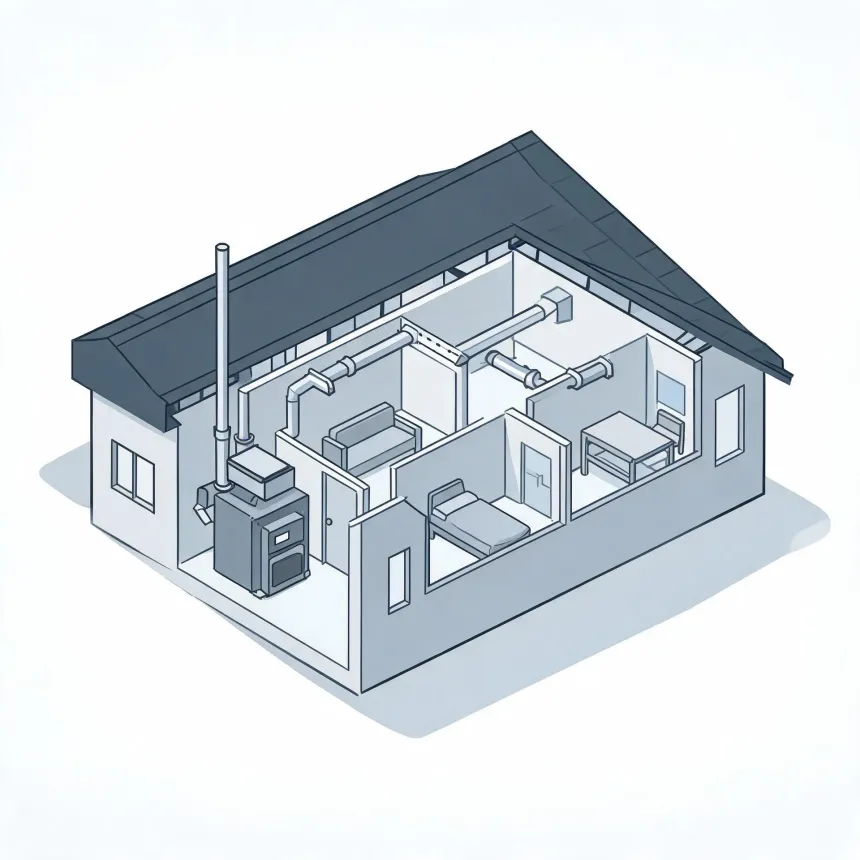
If your home already runs on gas, a new gas furnace uses the gas line and vent that are already there. Switching fuels means new venting or new wiring, and that's a different job entirely.
NOAA nClimDiv, 1991–2020 normals
Furnaces in Story County run eight months a year, October through May.
Nights here average 14°F in January, so a new furnace needs to be sized to hold a house through real cold, not just mild cold.
Story County sees its share of rough weather, wind, hail, the occasional tornado. None of that changes how a furnace should be sized or installed. A standard gas furnace, put in the way contractors here do it every day, holds up fine through all of it. The one thing weather does affect is the power, since a gas furnace still needs electricity to run its blower and controls. About 15% of Iowa households lost power for a full day or more last year. Worth asking your contractor about when you're picking a model, not a reason to size up or spend more on the furnace itself.
A new system here will work harder than most, every year. Size it right and don't buy on price alone.
Find a contractorThat workload is why sizing matters more here than somewhere mild. A contractor should run a load calculation on your house, not just install the same size that's coming out. Too small and it runs flat out trying to keep up on the coldest nights. Too big cycles on and off and never heats the house evenly. Ask what the calculation showed, not just what size they're quoting.
A furnace install includes the unit, but also the labor to set it, connect it to the ducts and vent, and wire it into the thermostat. Venting work, duct changes and electrical hookups often add more to the job than the furnace itself.
If the ductwork fits the new furnace and the vent is the right type for it, the job is straightforward. If the ducts need modifying or the vent material doesn't match what the new furnace needs, that's additional work a contractor has to price in.
Estimates for a typical Story County home, from EIA household energy data, Iowa fuel prices and NOAA climate normals. Your home will differ.
Installation day starts with the old furnace coming out. Ducts, gas line and vent all get disconnected before the new unit comes in. The contractor sets the new furnace in place, connects it to the existing ductwork, runs the gas line, and vents it to the outside. Then comes the electrical, power to the unit and a wire to the thermostat. Once it's hooked up, a tech fires it and runs it through a cycle. They'll check the gas pressure, the temperature rise across the furnace, and the airflow at the ducts. A good contractor checks the vent for proper draft too before calling the job done. Skip any of that and the furnace will run, but not as well as it should.