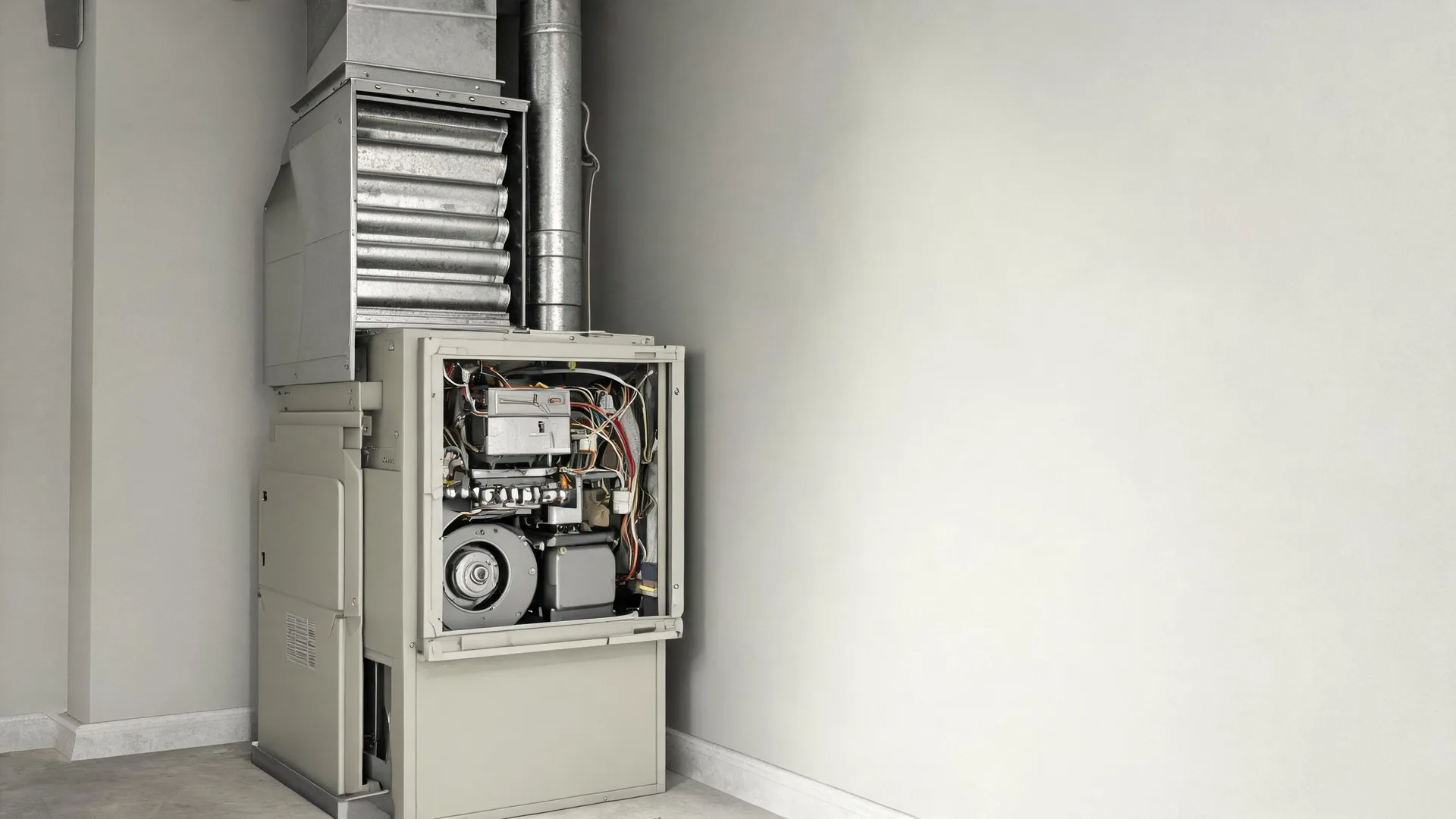
An unfinished basement containing a gray HVAC furnace with ductwork, exposed wooden joists, a concrete floor, and miscellaneous clutter in one corner.

Furnace Installation in Boone, IA

Tell us about the job

Takes about a minute. No obligation.

New system or replacementFurnace or heatingBoone County, IA
Step 1 of 2

What ZIP code is the job in?

Eight months of heat a year

Furnaces in Boone County run from October through May. That's most of the year the system is either on or waiting to kick on, and overnight lows averaging 14°F through December, January and February mean it's rarely idling. It runs long and it runs hard.

Size this one right

A furnace sized for a milder climate will struggle here, and one sized too big for your house wastes fuel and wears out the same parts faster. The right size depends on your house, not the lowest bid. Get that number right before anything else.

8 months
October through May, your furnace is on duty
14°F
the average winter night it heats against
57%
of homes here heat with gas, so most furnaces here burn gas
80% AFUE
the federal minimum any new unit must meet
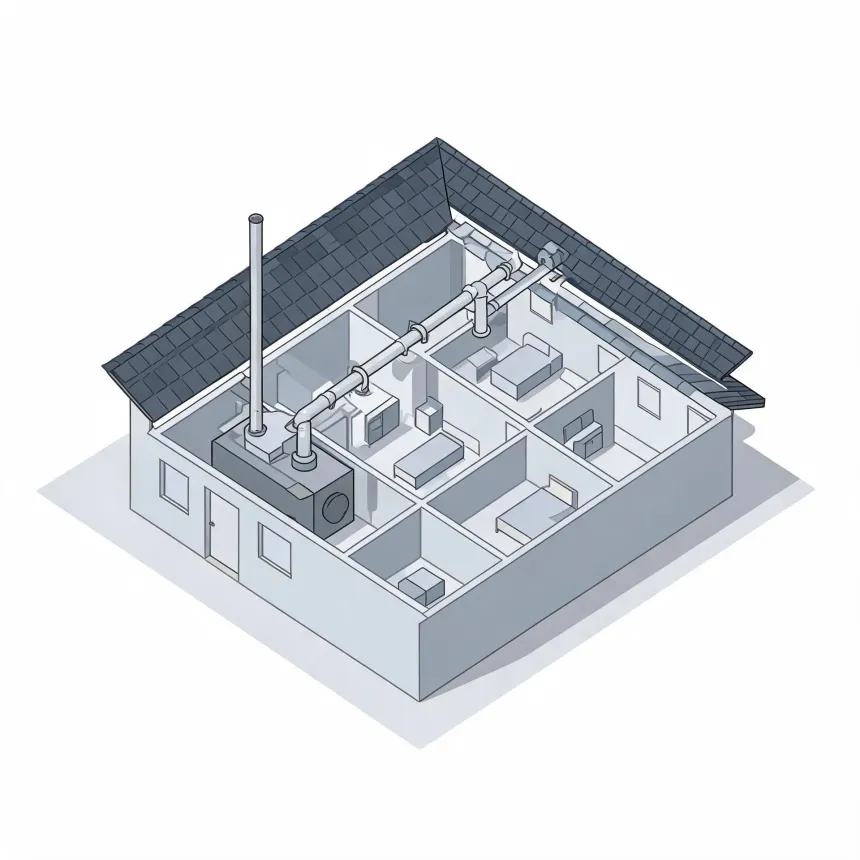
Isometric cutaway illustration of a single-story house showing interior rooms, furniture, a dark furnace unit with a tall vertical flue pipe, and ductwork running under the pitched shingle roof.
Your furnace works hardest from November through March.

NOAA nClimDiv, 1991–2020 normals

Half the homes in Boone County went up in 1960 or earlier.

A furnace built for that house may not match the one you need today.

Gas here runs $9.69 per million Btu, cheap enough that a high-efficiency model takes longer to earn back the difference

Heat runs October through May
Winter nights average 14°F
Climate zone 5A
Gas is the default here57.3% of homes in Boone County heat with utility gas.

Boone County sits in zone 5A, a cool climate where heating does most of the work, and that sets a floor under what can go into your house. Any non-weatherized gas furnace built after November 2015 has to hit at least 80 percent AFUE, so that's the baseline no matter who installs it. Standards are set to rise again in a few years, pushing that minimum toward 95 percent, so a furnace bought now should still make sense under the next set of rules. Whatever goes into your house needs to be rated for this kind of winter, not a milder one.

Replace it in September, before you need it in October

Heat starts in October here. September is what you have before that, and it's enough time to size the system right and get it installed before you need it running, instead of mid-cold snap with whatever's on the truck.

Find a contractor
A gas furnace with attached ductwork, gas piping, and condensate lines installed in a concrete-block basement.

Built for a season that doesn't let up

Watch this unit across the day and the night. It doesn't get much rest between October and May. The old furnace's label is not a load calculation. Ask whoever quotes the job to run one on your house, not on the unit it's replacing. That number, not the lowest bid, is what should decide the size that goes in.

The ductwork decides more than the furnace does

A furnace moves air through the ducts already in the house. If they're too small or too leaky for the new unit's output, the installer has to modify or add ductwork before the furnace can do its job right. That work can cost more than the furnace itself in some houses and nothing at all in others, depending on what's already there.

Matching cabinets are not the same furnace inside

A furnace that only runs full blast or off costs less than one that modulates and holds a steady temperature. The burner, the control board, and the blower all get more complex as the furnace does more to manage its own output. Efficiency rating and features move the price on their own terms, not together.

A gray forced-air furnace with sheet-metal ductwork stands in an unfinished basement with exposed wooden joists, concrete walls, and a hanging incandescent bulb.

A high-efficiency gas furnace would save about $90 a year to run in Boone County compared with a gas furnace.

  • A high-efficiency gas furnace$450 a year
  • A gas furnace$540 a year

Estimates for a typical Boone County home, from EIA household energy data, Iowa fuel prices and NOAA climate normals. Your home will differ.

Installation day starts with the old furnace coming out, not the new one going in. The line gets disconnected, the old unit gets disconnected from the ductwork and the vent, and it gets hauled out before anything new comes in. Expect the gas to be shut off at some point during the work and the house to be without heat for stretches of the day. The new furnace gets set in place, connected to the ductwork, wired in, and the vent or flue gets run according to what that model needs. Once it's hooked up, a tech will fire it, check the flame, check the gas pressure, and run it through a full cycle before calling it done. A combustion analyzer reading at the end tells you it's burning clean, not just that it turned on.