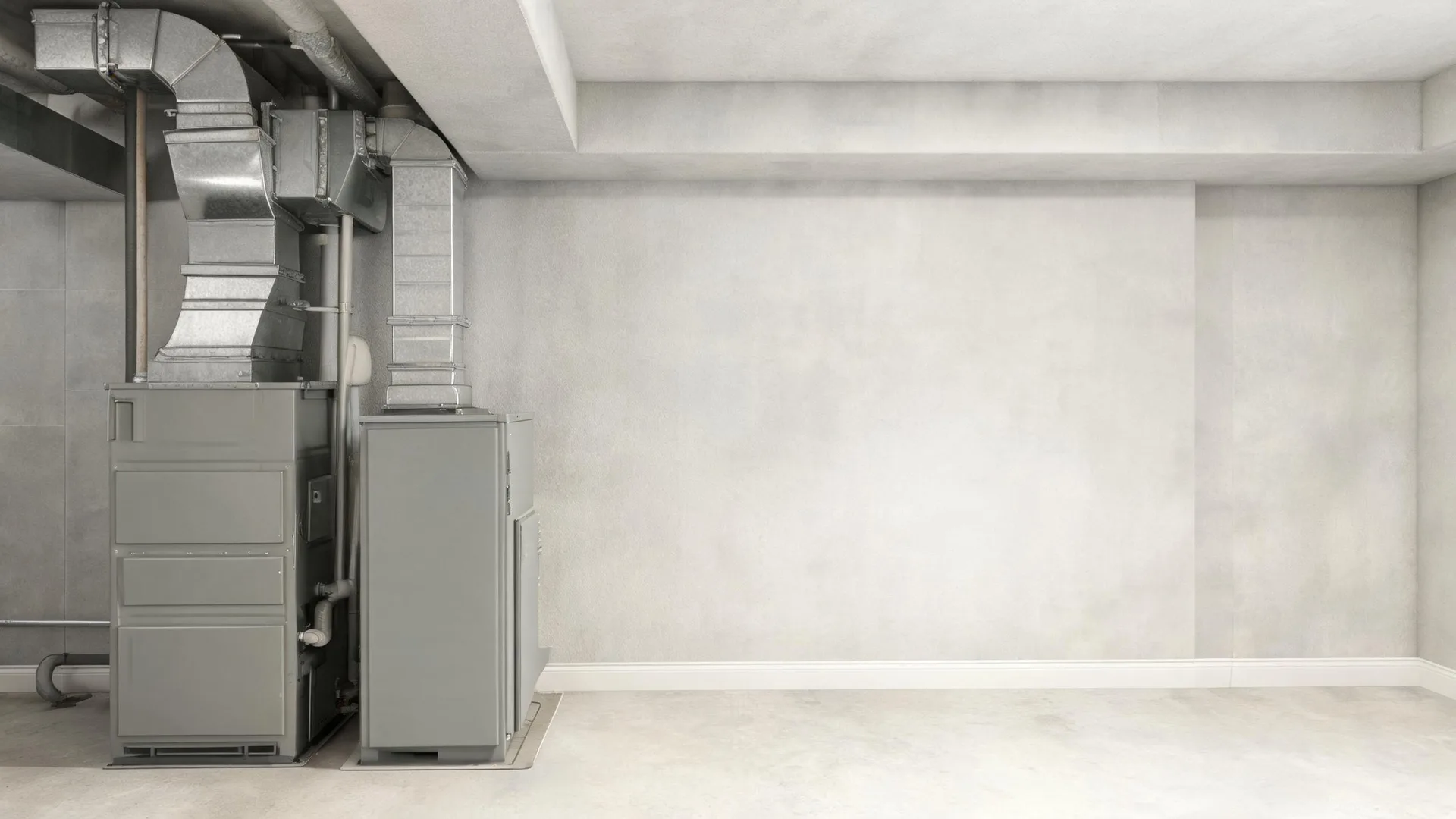
An unfinished basement containing a forced-air furnace with metal ductwork, exposed wooden ceiling joists, a hanging Edison bulb, and bare concrete floors.

Furnace Installation in Burlington, IA

Tell us about the job

Takes about a minute. No obligation.

New system or replacementFurnace or heatingDes Moines County, IA
Step 1 of 2

What ZIP code is the job in?

Half these homes were built in 1959 or earlier

Des Moines County splits right down the middle that way. A furnace going into a house that old wasn't sized for it by anyone working from today's windows, insulation, or layout. Whoever installs the new one needs to run a load calculation on the house as it stands now.
An old furnace was probably a guess

If the system being replaced is original to the house or close to it, it may have been sized by rule of thumb rather than measured for the rooms it's heating. That gets fixed at replacement, not by matching the new unit to the old one's size.

8 months
October through May, your furnace is on duty
19°F
the average winter night it heats against
68%
of homes here heat with gas, so most furnaces here burn gas
80% AFUE
the federal minimum any new unit must meet
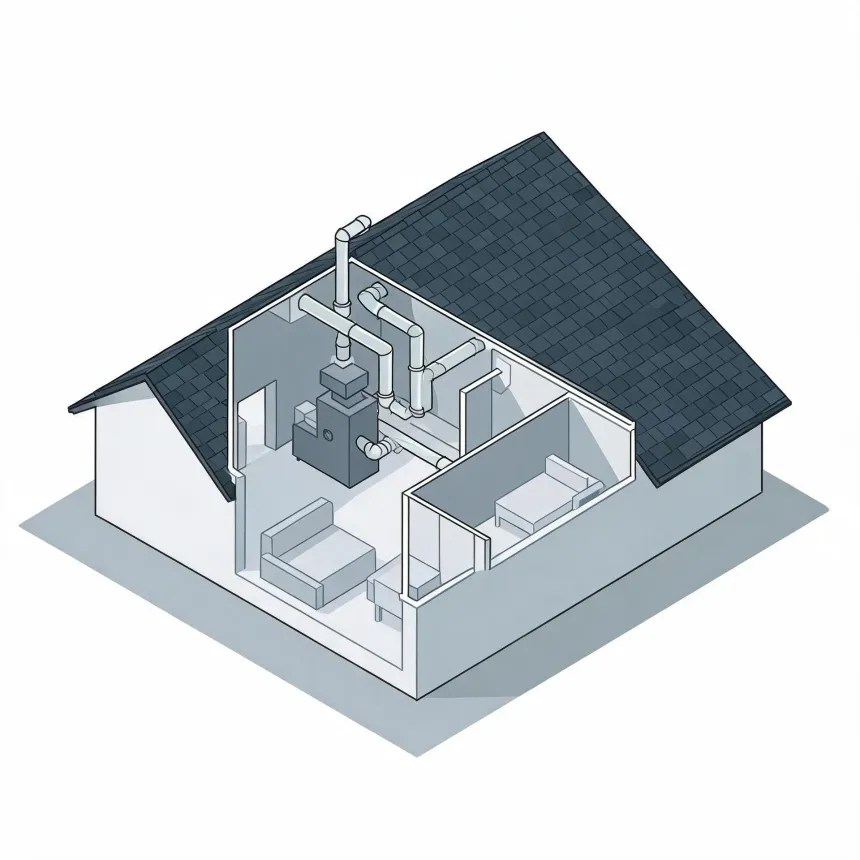
Isometric cutaway illustration of a single-story house with a dark shingled roof, showing interior rooms with furniture and a furnace connected to ductwork.
Your furnace works hardest from November through March.

NOAA nClimDiv, 1991–2020 normals

A furnace too big for the house cycles on, heats fast, and shuts off before it pulls moisture out of the air or warms the far rooms evenly.

The right size comes from a load calculation on the house as it is now, not the tonnage of the unit being pulled out.

Gas here runs $9.69 per million Btu, cheap enough that the payback on a high-efficiency furnace stretches out. Pick one for the winters, not the utility bill.

Heat runs October through May
Winter nights average 19°F
Climate zone 5A
Built for Burlington wintersFurnaces here run eight months a year, with overnight lows averaging 19°F in December through February.

Gas heats 67.5% of occupied homes in Des Moines County. If that's what's already running to the house, a gas furnace is the straightforward replacement. The gas line, the vent, the thermostat wiring are already in place, sized for what's there now. Switching fuel types means opening up the house to run new lines or new venting, work the load calculation won't tell you anything about. Staying with gas means the installer's time goes into sizing the unit right, not routing new infrastructure around it.

Zone 5A sets the floor for what can go in

Burlington falls in climate zone 5A, where heating carries most of the load. A non-weatherized gas furnace built today has to hit at least 80 percent AFUE, a number set to jump to 95 percent for units manufactured from December 2028 on. A furnace installed now falls under the current standard, with a federal tax credit available for units that qualify.

Find a contractor
A man in a dark shirt and khaki pants, seen from behind, carries a worn leather bag as he climbs wooden porch steps toward a dark front door, with a potted shrub beside the entry.
A gas furnace with attached ductwork, gas piping, and condensate lines installed in a concrete-block basement.

September is the month to get this done

Furnaces here start running in October and go through May, about eight months straight. September is the last easy month to get a new one in. Once the cold sets in and the old one quits, you're picking from what's in stock and scheduling around whoever else's furnace died that week too. Doing it in September means the installer has time to run the load calculation right, order the unit that fits, and get it in before you need it.

The number on the label isn't the whole story

The efficiency rating tells you how much of the fuel burned turns into heat in the house versus going out the flue. It says nothing about whether the furnace is sized right for the rooms it's heating or whether the ducts can carry what it produces. A high-efficiency furnace pushing air through ductwork that's too small or too leaky loses what the rating promised before the air reaches the far rooms.

The venting changes with the rating

A furnace efficient enough to condense its exhaust needs a plastic vent pipe and a line to drain off the water that forms, run through a wall or the roof. A furnace below that line vents through a metal flue instead. That difference decides where the unit can sit and what the installer has to run to get it there, separate from anything about how the house itself is built.

An unfinished concrete basement containing a metal HVAC air handler, exposed wooden ceiling joists with sheet-metal ducts, a hanging bare bulb, copper pipes, and stacked cardboard boxes.

A high-efficiency gas furnace would save about $80 a year to run in Des Moines County compared with a gas furnace.

  • A high-efficiency gas furnace$400 a year
  • A gas furnace$480 a year

Estimates for a typical Des Moines County home, from EIA household energy data, Iowa fuel prices and NOAA climate normals. Your home will differ.

Installation day starts before anyone touches the old furnace. The installer shuts off gas and power, then pulls the unit and whatever vent pipe and ductwork connections come out with it. If the new furnace sits in a different spot or changes vent type, that's where the real work is, not in setting the cabinet down. Supply and return ducts get connected or modified to fit the new unit, the gas line gets hooked up and checked for leaks, and the vent gets run according to what that furnace needs. Once it's set and connected, the installer fires it up, checks the gas pressure, confirms the flame looks right, and lets it run through a full cycle while checking temperatures coming out of the vents. A combustion analyzer gets used to confirm the furnace is burning clean before anyone calls the job done.