






A lit residential street at dusk featuring large two-story brick houses with glowing windows, mature trees, and a street lamp.

Furnace Installation in Carroll, IA

Tell us about the job

Takes about a minute. No obligation.

New system or replacementFurnace or heatingCarroll County, IA
Step 1 of 2

What ZIP code is the job in?

October through May, the furnace is on. That's eight months of the year carrying the load, more than most places ask of a system. A furnace sized and installed right handles that without strain. One that's undersized, or just the cheapest unit on the quote, will run close to constant trying to keep up, and every part in it wears down faster for the effort. Here, getting the size and installation right matters more than it would somewhere the furnace only runs half the year.

8 months
October through May, your furnace is on duty
14°F
the average winter night it heats against
58%
of homes here heat with gas, so most furnaces here burn gas
80% AFUE
the federal minimum any new unit must meet
Isometric cutaway illustration of a single-story house with a dark shingled roof, showing interior rooms with furniture, ductwork, a flue pipe, and a furnace unit.
Your furnace works hardest from November through March.

NOAA nClimDiv, 1991–2020 normals

Half the homes in Carroll County were built in 1964 or earlier.

A furnace going into a house that old has to be sized for that house, not for a plan on paper.

Eight months of heat is a long time to find out it failed in January

Heat runs October through May
Climate zone 5A
Winter nights average 14°F

Gas heats more homes in Carroll County than anything else, 58 percent of them. If your house is one of those, a straight gas furnace swap is the sensible replacement. The gas line, the vent, the layout around the old unit, all of it is already built for this fuel. Switching to something else means rerunning lines and rethinking venting, work that adds cost and time most homeowners don't need to take on. Staying with gas means the new furnace fits the house as it already stands.

Get the new furnace sized for the house you actually have

A furnace going into a house built decades ago has to be matched to that house. That means a contractor measuring the rooms, the ductwork, and the layout before quoting a size, not pulling a number off a chart. If yours is original to the house, or you're not sure how old it is, say so when you get quotes. It changes what the job involves.

Find a contractor
A man in a cap, dark shirt and tan work pants walks up porch steps toward a dark blue paneled front door, carrying a canvas tool bag, with a potted shrub beside the entry.
A gray high-efficiency gas furnace installed in an unfinished basement, surrounded by gas lines, a condensate drain, and sheet-metal ductwork.

Eight months of runtime is no place to guess at a size

Eight months a year is a long stretch to find out the sizing was wrong. A furnace that's too small for the house spends that whole stretch trying to catch up, and the parts inside it, the igniter, the blower motor, the heat exchanger, all take the wear that comes with running that hard that often. Get quotes that start with a load calculation on your house, not a number pulled from a chart. If two contractors hand you two different sizes, ask what they measured to get there.

The AFUE number is about fuel, not comfort

AFUE tells you how much of the gas burned actually turns into heat in the house, versus what goes out the flue. It has nothing to do with how fast the furnace heats a room or how long it runs. A unit with a higher AFUE isn't stronger or faster, it just wastes less gas doing the same job. Don't confuse it with sizing. A high-efficiency furnace that's the wrong size for the house still won't keep up.

A higher rating changes how the furnace vents

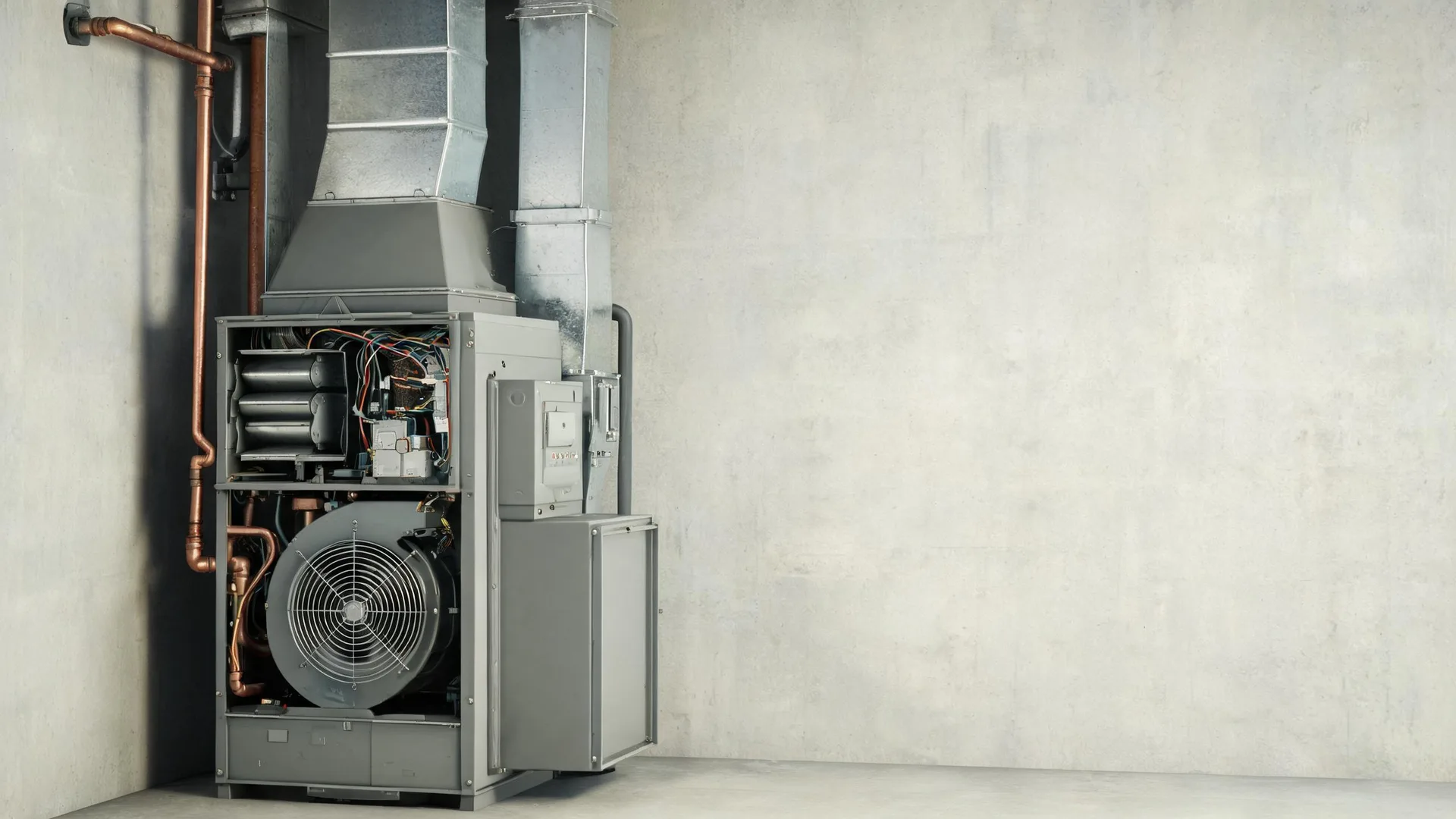
Furnaces with a lower AFUE vent like a traditional chimney flue, hot exhaust rising out through metal pipe. Higher-efficiency furnaces cool that exhaust down first and push it out through PVC pipe, often straight through a sidewall, with a drain for the condensation that forms. That's a different venting setup, not just a different label on the box. If you're changing efficiency tiers from the old furnace, the install has to account for where that new vent and drain can go, not just where the old flue used to be.

An unfinished basement containing a gray HVAC furnace with ductwork, exposed wooden joists, a concrete floor, and miscellaneous clutter in one corner.

A high-efficiency gas furnace would save about $90 a year to run in Carroll County compared with a gas furnace.

  • A high-efficiency gas furnace$460 a year
  • A gas furnace$550 a year

Estimates for a typical Carroll County home, from EIA household energy data, Iowa fuel prices and NOAA climate normals. Your home will differ.

Installation day starts with the old furnace coming out, not the new one going in. A contractor disconnects the gas line, the ductwork, the vent, and the wiring, then removes the unit before anything new is set. The new furnace gets set in place and leveled, because a unit sitting even slightly off can cause drainage or vibration problems down the road. From there it's connecting the ductwork to the cabinet, running the gas line and checking it for leaks, wiring the furnace to the thermostat, and tying in the vent pipe. Once it's hooked up, the contractor fires it on and lets it run through a full cycle, checking the flame, the airflow coming out of the vents, and the temperature rise across the unit. They should test the safety controls before they leave, not just confirm the burner lights. A furnace that lights but hasn't been checked for proper airflow and venting isn't a finished job yet.