

An unfinished basement featuring concrete block walls, exposed floor joists, and a metal forced-air furnace with ductwork near a central pillar.

Furnace Installation in Fort Dodge, IA

Tell us about the job

Takes about a minute. No obligation.

New system or replacementFurnace or heatingWebster County, IA
Step 1 of 2

What ZIP code is the job in?

Your furnace here runs from October through May, about eight months of the year. Overnight lows average 13°F in December, January and February, and that cold sits for weeks at a time, not just a night or two. Winter storms hit this county often, heavy snow, ice, blizzards, the kind that keep a furnace running nonstop to hold the house at temperature. A system sized wrong for this kind of winter will struggle through all of it, not just the worst week. Get the sizing right and the installation done by someone who knows what this county asks of a furnace.

8 months
October through May, your furnace is on duty
13°F
the average winter night it heats against
63%
of homes here heat with gas, so most furnaces here burn gas
80% AFUE
the federal minimum any new unit must meet
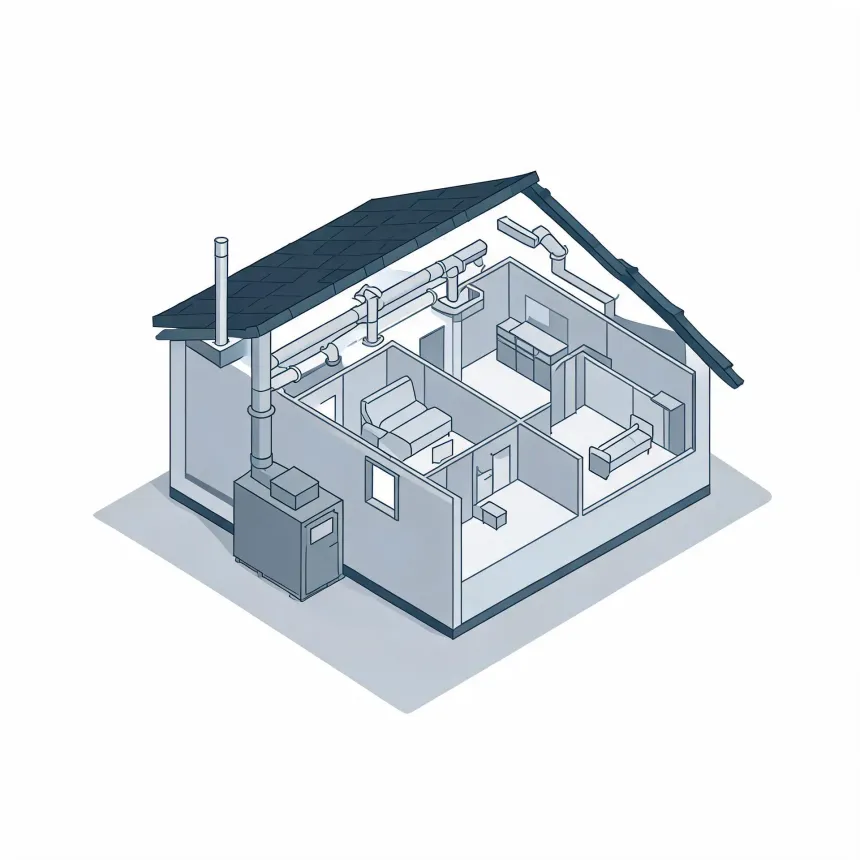
Isometric line illustration of a cutaway single-story house showing interior rooms with furniture, ceiling ductwork, a chimney flue, and a furnace unit outside the exterior wall.
Your furnace works hardest from November through March.

NOAA nClimDiv, 1991–2020 normals

Half the homes in Webster County were built in 1957 or earlier.

An install in a house that age means sizing the furnace to match the house, not just swapping in new equipment.

September is the month to get this done, not October

Heat runs October through May
Winter nights average 13°F
31 winter storms from 2015 to 2024

Gas heats 63.2% of homes in Webster County, more than electricity and propane combined. If that's what you have, replacing it with another gas furnace is the straightforward call, and most installers here work on gas units all the time. Electric furnaces and heat pumps make up a smaller share of the county, around one in five homes. Whatever fuel your current system uses, matching it keeps the gas line, electrical hookup or propane tank already in place doing the same job it does now.

Size it for how hard it works here

A new system here will work harder than most, every year. Size it right and don't buy on price alone.

Find a contractor
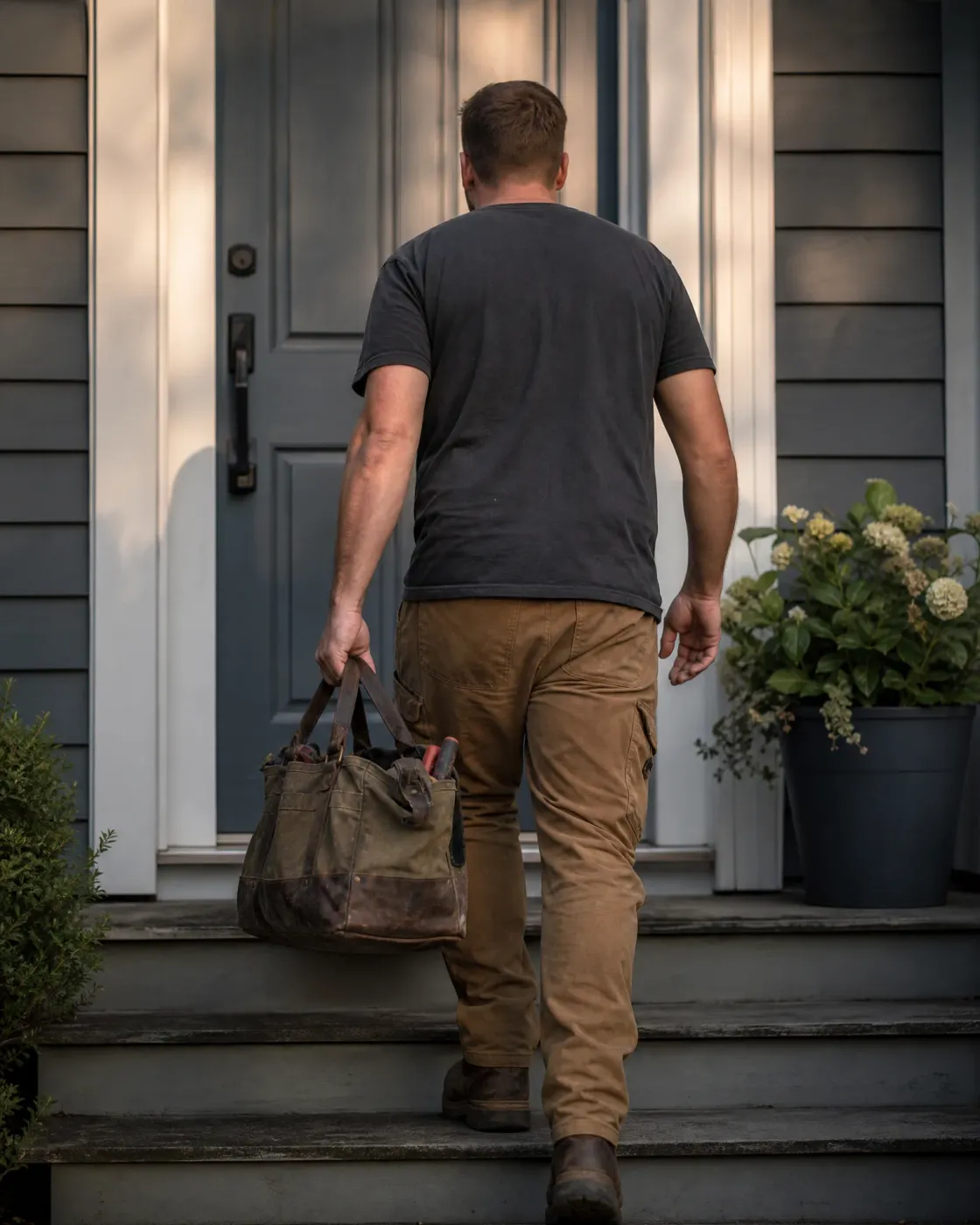
A man in a dark t-shirt and tan work pants, seen from behind, carries a worn canvas and leather tool bag up concrete steps toward a dark gray front door, with a potted flowering plant to the right.
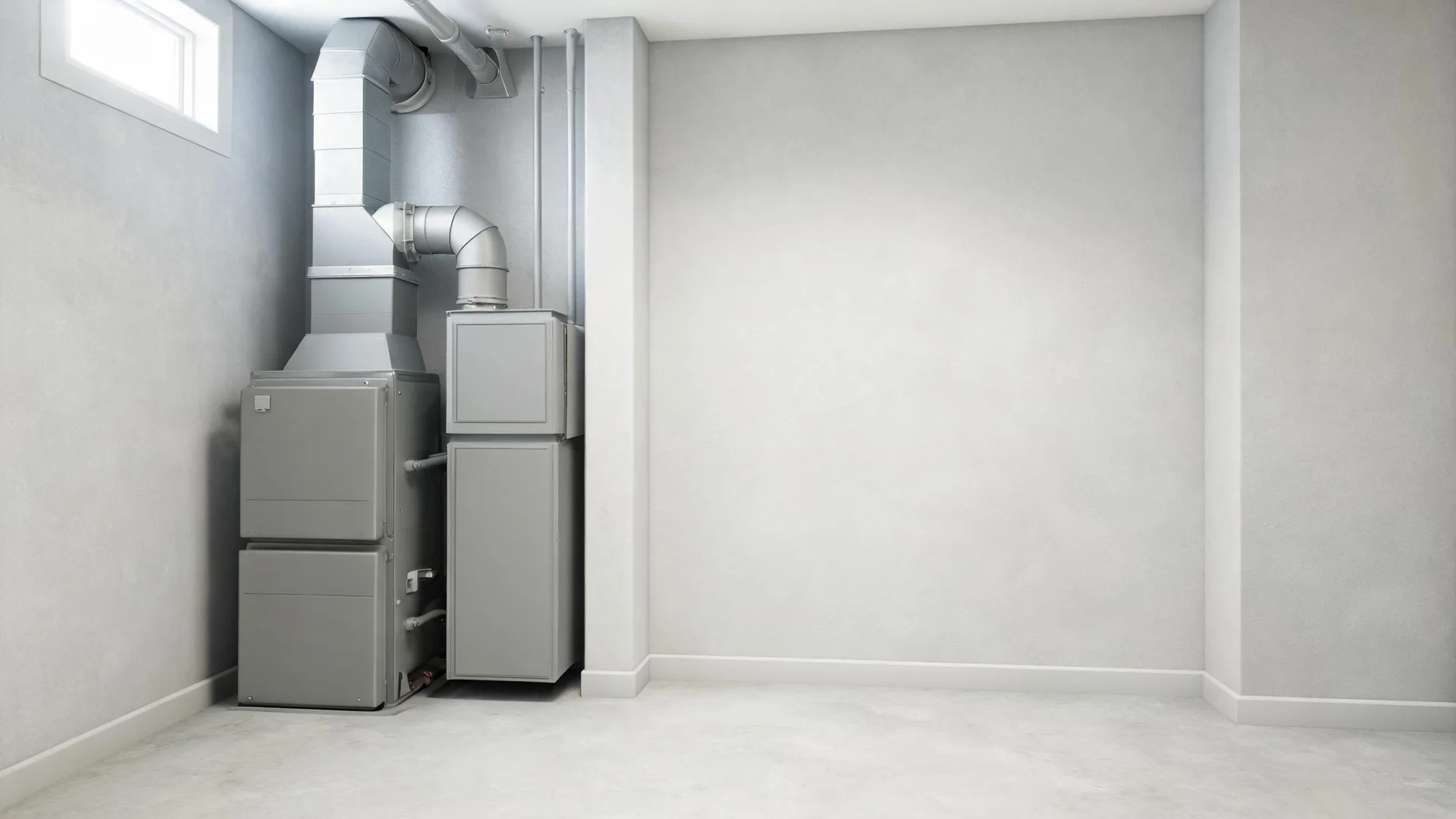
A gray residential gas furnace installed in an unfinished basement, surrounded by ductwork, a metal flue pipe, and a gas supply line.

Eight months of load, every year

Get a load calculation done on your house. Not a guess based on what the old unit was. A furnace sized too small runs flat out trying to keep up on the coldest weeks. One sized too big short cycles, switching on and off instead of holding steady, and that wears parts sooner too. Ask whoever quotes the job to show you the numbers behind the size they're recommending.

Ask what the AFUE rating actually means for your house

A higher AFUE furnace pulls more heat out of the same fuel, but it also costs more up front and sometimes needs a different vent setup than the system you're replacing. Ask what venting changes come with the rating they're quoting, not just the rating itself.

Ask how the burner is staged

A single-stage furnace runs full blast or not at all. A staged or modulating furnace holds a lower flame most of the time and only runs full output in the coldest stretches. Ask which type they're quoting and why, since that decision affects how steady the heat feels room to room, not just what's on the nameplate.

An unfinished basement interior showing a gray furnace unit beneath a bare incandescent bulb, surrounded by exposed joists, concrete walls, cardboard boxes, and utility pipes.

A high-efficiency gas furnace would save about $100 a year to run in Webster County compared with a gas furnace.

  • A high-efficiency gas furnace$470 a year
  • A gas furnace$570 a year

Estimates for a typical Webster County home, from EIA household energy data, Iowa fuel prices and NOAA climate normals. Your home will differ.

A load calculation looks at more than floor space. It accounts for ceiling height, window count and placement, how much wall faces north, and how air moves from room to room. Houses the same size can need different sized furnaces if one has more glass or a layout that traps cold in certain rooms. That's why a contractor measures rather than matches the old nameplate. The unit being replaced may have been sized wrong from the start, or sized for a house that's since had windows or insulation changed. Getting the size right means the furnace cycles on, runs long enough to heat evenly, and shuts off, rather than short cycling or running constantly to keep up.