






A gray forced-air furnace with sheet-metal ductwork stands in an unfinished basement with exposed wooden joists, concrete walls, and a hanging incandescent bulb.

Furnace Installation in Iowa City, IA

Tell us about the job

Takes about a minute. No obligation.

New system or replacementFurnace or heatingJohnson County, IA
Step 1 of 2

What ZIP code is the job in?

Gas heats 63.3% of homes in Johnson County, the fuel most furnaces here are built around. Electricity comes in second at 27.6%, and LP gas heats another 6.5%. If your house already has a gas line run to it, a new furnace replacing the old one is the straightforward job. The venting, the gas line and the return air are already sized for that kind of system, so installation means matching the new unit to what's there rather than rethinking the setup.

8 months
October through May, your furnace is on duty
16°F
the average winter night it heats against
63%
of homes here heat with gas, so most furnaces here burn gas
80% AFUE
the federal minimum any new unit must meet
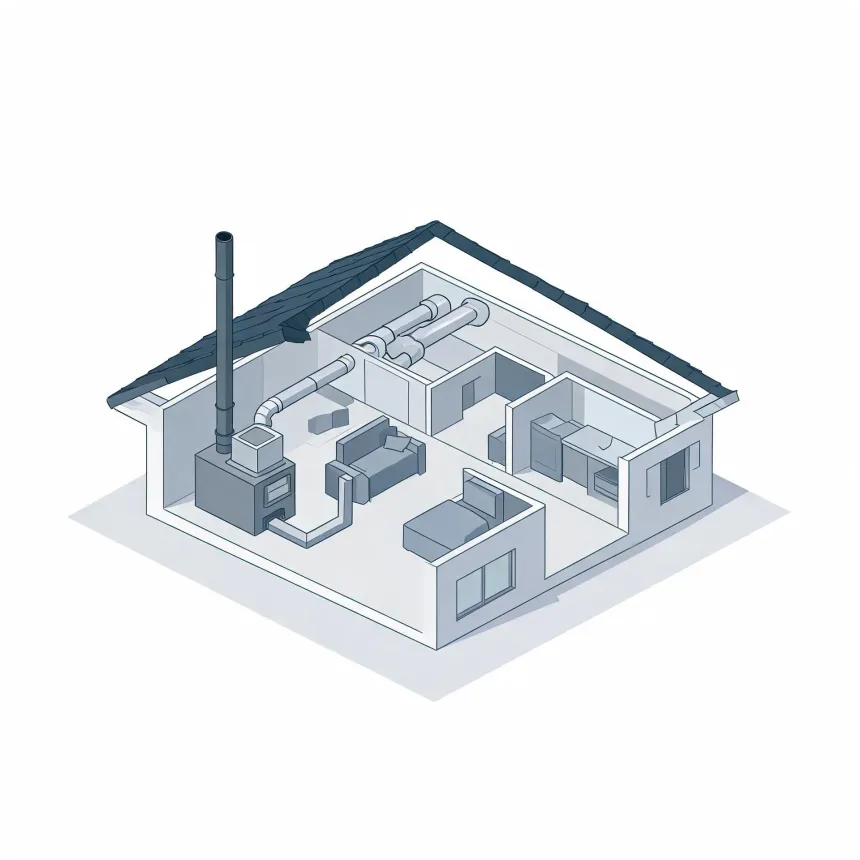
Isometric line illustration of a cutaway single-story house showing interior rooms with furniture, a furnace unit with a tall flue pipe, and connected ductwork running under the pitched roof.
Your furnace works hardest from November through March.

NOAA nClimDiv, 1991–2020 normals

The AFUE number on the label says how much of the fuel it burns turns into heat in your house.

A couple points higher can be worth paying for, since that's fuel burned for nothing walked right out the flue.

Johnson County weather is rough on power lines, not on furnace sizing

198 severe weather events from 2015 to 2024
15% of homes statewide lost power a day or more in 2024
87 damaging wind events from 2015 to 2024
Cheap gas changes the math on efficiencyGas runs $9.69 per million Btu here, so a high-AFUE furnace takes longer to pay back.

Furnaces in Johnson County start working in October and run through May, about eight months straight. September is the one month to get ahead of it. If your furnace is old enough that you're weighing replacement, the week it finally quits is the worst time to pick one out. You're stuck with whatever a contractor can install that day, not what actually fits your house. Doing it in September means the sizing gets checked properly and the unit gets picked for your house, not just swapped in because the old one failed on the coldest night of the year.

Go with the standard fit

A standard size and efficiency fit fine here. There's no local reason to go bigger or pricier.

Find a contractor
A man in a cap, gray shirt and tan work pants walks up steps toward a dark front door, carrying a worn canvas and leather tool bag, with a potted shrub to the right.
A gray high-efficiency gas furnace installed in an unfinished basement, surrounded by gas lines, a condensate drain, and sheet-metal ductwork.

Sizing is a calculation, not a guess

Size comes from how much heat the house loses on the coldest day, not from whatever furnace is already sitting there. A contractor works that out room by room, using the walls, the windows, the ceiling height and how much of the house faces each direction, then adds it up to a number the furnace has to match. Too big and the furnace blasts the house up to temperature and shuts off before it has pulled the chill out of the walls and floors. The air feels warm but the room never quite does, and the burner is cycling on and off all day instead of running a long steady stretch. Too small and it runs flat out trying to keep up, never quite getting there on the coldest nights. Either way the wear lands on the same parts. The igniter, the heat exchanger and the blower motor all end up cycling more than they should or straining longer than they should. A furnace sized right runs long, steady cycles and heats the house evenly from one end to the other.

The old furnace leaves the house for good

Whoever installs the new furnace disconnects the old one from the gas line, the vent and the ductwork and hauls it away. There's no reason to keep it around once the new unit is in, and no part of it gets reused.

Removal isn't where the sizing gets decided

Taking out the old furnace and capping off its connections is a mechanical job, separate from figuring out what size the new one should be. The load calculation that answers that question looks at the house itself, the walls and windows and ductwork, not at whatever furnace happened to be sitting there before.

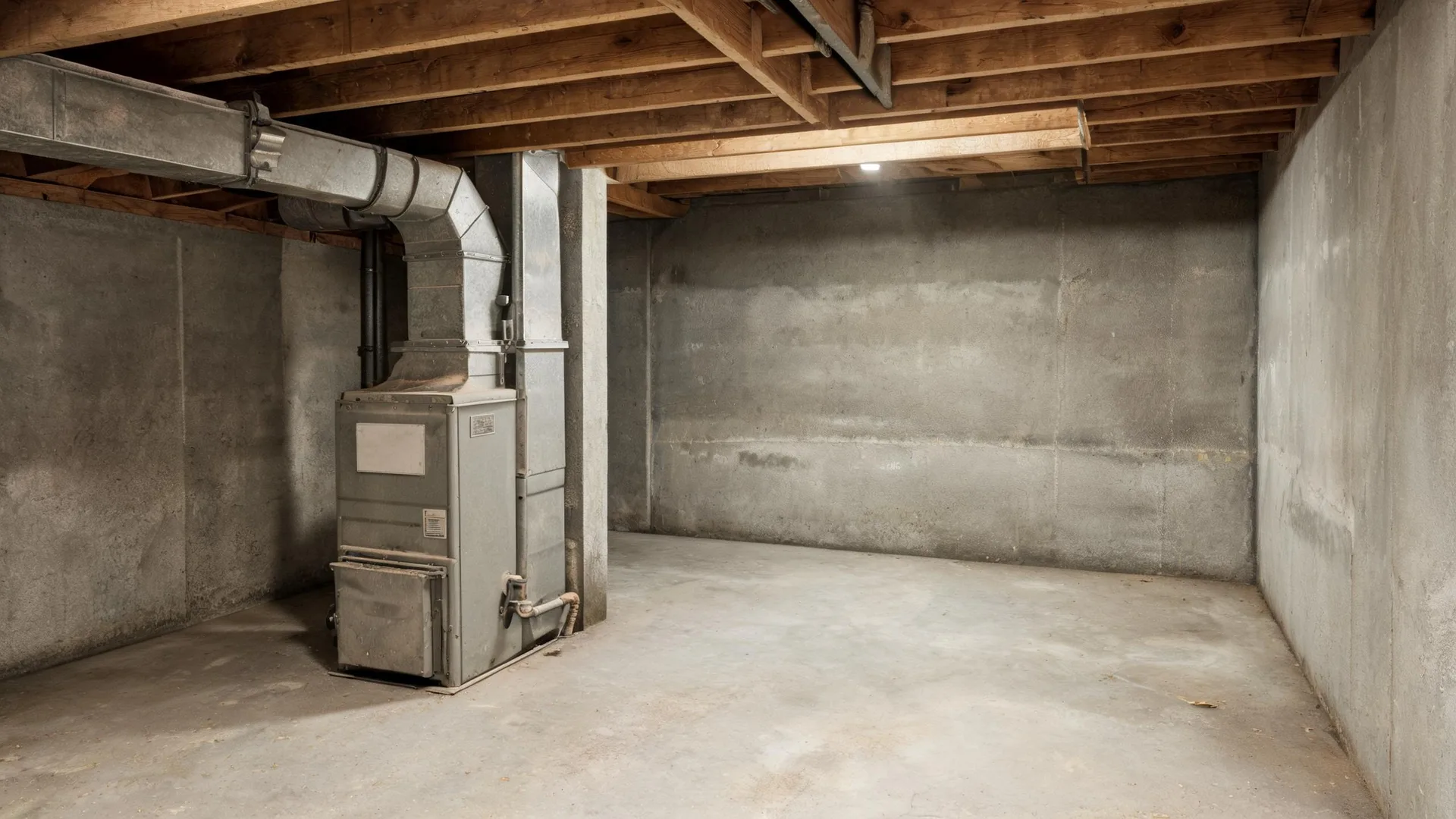
An unfinished basement featuring exposed ceiling joists, a metal HVAC unit with round ductwork, a hanging light bulb, and scattered boxes and debris along the left wall.

A high-efficiency gas furnace would save about $90 a year to run in Johnson County compared with a gas furnace.

  • A high-efficiency gas furnace$430 a year
  • A gas furnace$520 a year

Estimates for a typical Johnson County home, from EIA household energy data, Iowa fuel prices and NOAA climate normals. Your home will differ.

The old furnace comes out first. The gas line gets shut off and capped before anything else happens. Once the new unit is set in place, the gas line, the vent, the ductwork and the electrical all get connected, then checked one at a time rather than hooked up all at once. A combustion analyzer checks the burn once the furnace fires, because a furnace can sound and look fine while still burning gas wrong. Airflow gets checked too, out at the vents and not just at the furnace itself. A furnace installed right gets run through a full cycle before the contractor calls the job done.