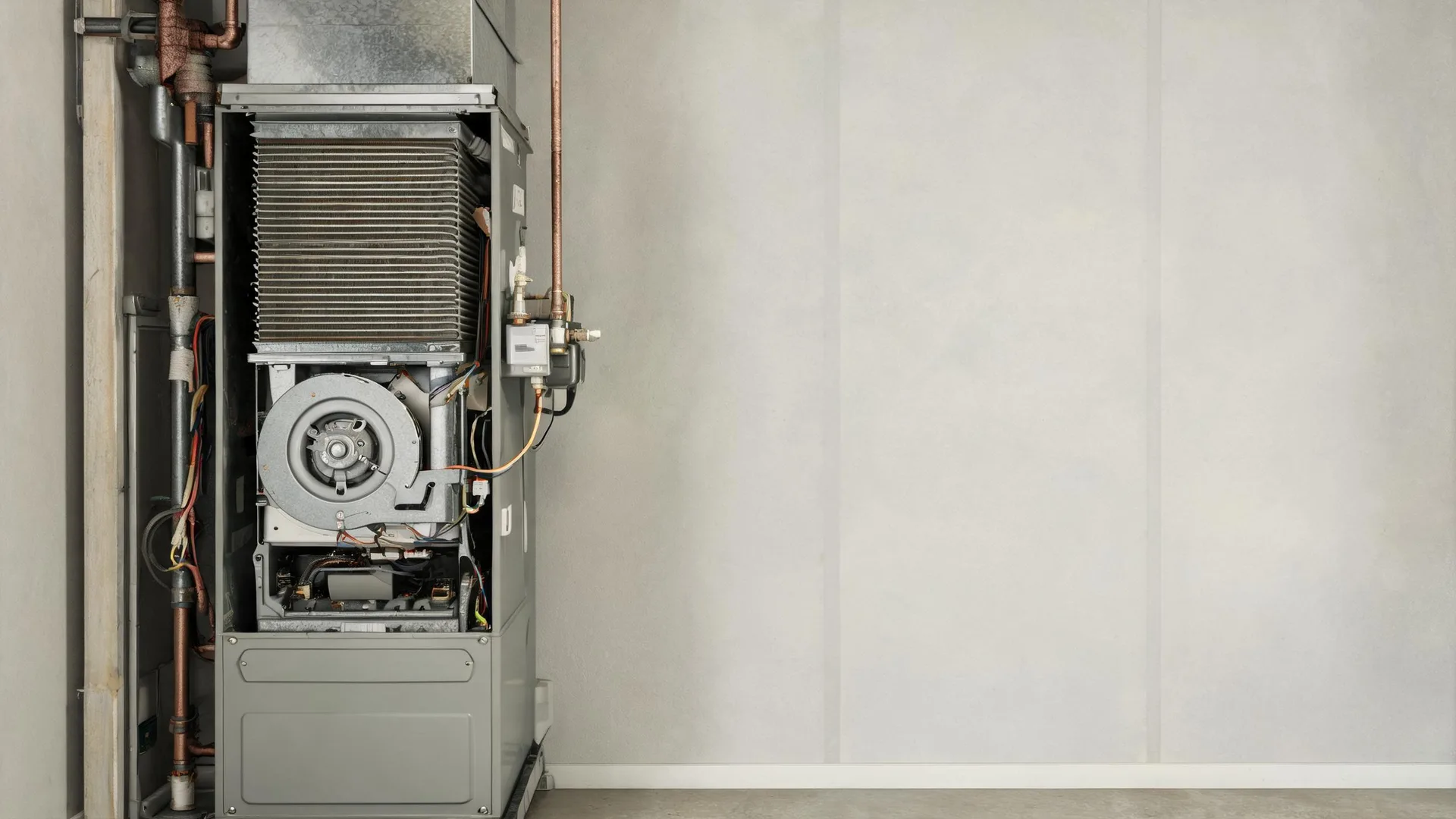
Half these homes were built in 1970 or earlier
In Jackson County, half the homes go back to 1970 or before. A furnace going into a house that age is working with whatever ductwork and venting came with it, not a clean slate.
Takes about a minute. No obligation.
In Jackson County, half the homes go back to 1970 or before. A furnace going into a house that age is working with whatever ductwork and venting came with it, not a clean slate.
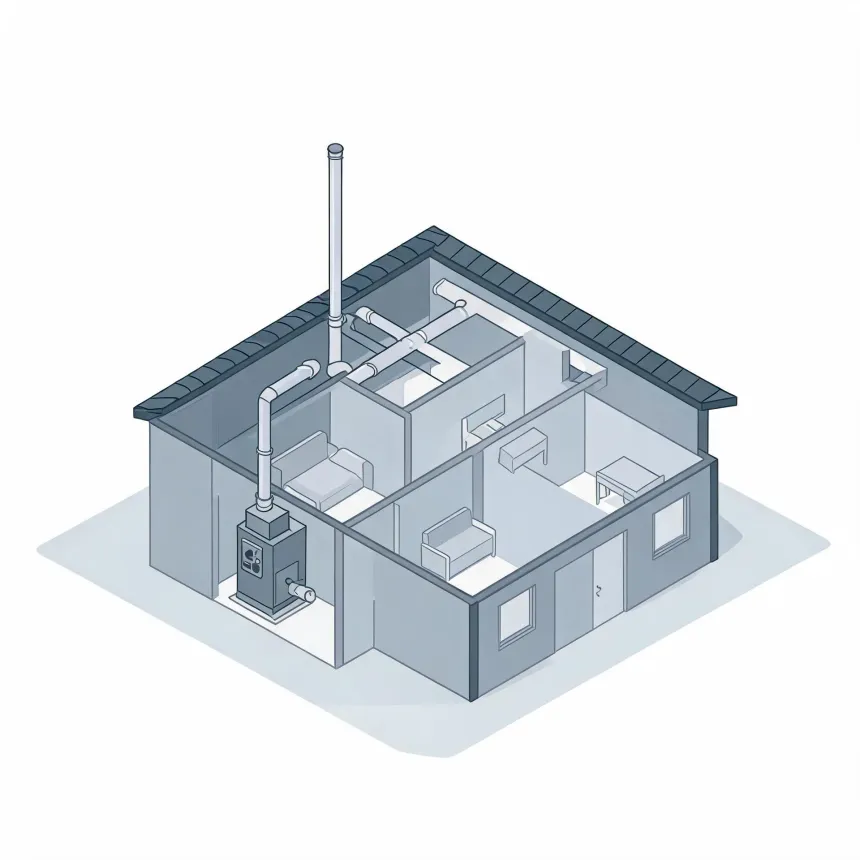
Sizing a furnace right depends on the house around it, not just the unit being replaced. An install that doesn't account for that can leave you with a furnace that short cycles or never quite keeps up.
NOAA nClimDiv, 1991–2020 normals
A furnace's efficiency rating tells you how much of the gas it burns turns into heat instead of going out the flue.
Ask for that rating in writing, not a sales pitch about how efficient a furnace is.

Gas heats 54.1% of homes in Jackson County, more than half. If your house is already set up for it, gas furnace is the straightforward replacement. The gas line, the vent, the thermostat wiring are all there, sized for the kind of system you already have. Switching to something else means adding what your house doesn't have, and that's a different job than installation. Staying with gas means the new furnace is working with a layout already built for it.
If you're replacing a system in an older house, the new one has to fit the house you have.
Find a contractorAsk for a load calculation on the house as it stands, not a furnace sized to match the one coming out. Houses built in 1970 or earlier weren't built around a specific system, they got whatever furnace and ductwork fit at the time. A contractor working off square footage alone can still get the size wrong on a house like that. Ask what the new furnace is being sized to before it goes in.
A furnace that's oversized for the house doesn't heat it better. It heats the air fast, shuts off, and starts again soon after. That short cycling wears the igniter and the blower motor harder than a furnace running a full, steady cycle, and the house ends up with warm rooms near the vents and cold ones everywhere else.
A load calculation looks at the walls, the windows, the insulation, and how the rooms are laid out, then works out how much heat the house actually loses on a cold day. That's different from matching the old furnace or going by square footage alone. Houses of the same size can need different sized furnaces depending on what's in the walls and how many windows face the weather.
Estimates for a typical Jackson County home, from EIA household energy data, Iowa fuel prices and NOAA climate normals. Your home will differ.
Install day starts with the old furnace coming out, along with the flue pipe and sometimes the gas line fittings if those are being swapped too. The new furnace gets set in place. From there the work is connecting the gas line, wiring the thermostat and controls, sealing the duct connections, and venting it to the outside. A tech runs the furnace through a full cycle before calling it done, checking the flame, the airflow, and the gas pressure against what the manufacturer specifies. Sealing the ducts matters as much as the furnace itself. Gaps at the connections leak heated air into places it was never meant to go, and that's heat the furnace made that never reaches a room. The last step is usually checking carbon monoxide levels at the furnace and anywhere exhaust could get pulled back into the house.