


A row of dark-painted single-story houses with gabled shingle roofs behind a trimmed hedge and mown lawn, surrounded by large leafy trees under an overcast sky.

Furnace Installation in Newton, IA

Tell us about the job

Takes about a minute. No obligation.

New system or replacementFurnace or heatingJasper County, IA
Step 1 of 2

What ZIP code is the job in?

Furnace here runs about eight months a year, October through May. Overnight lows average 16°F through December, January and February, and the furnace has to cover that gap every night it happens. That's a long season with a hard low point, and the unit you pick has to be sized for both. Go too small and it runs flat out all winter trying to keep up. Go too big and it short cycles, wearing out parts faster than it should. Get the sizing right from the start.

8 months
October through May, your furnace is on duty
16°F
the average winter night it heats against
56%
of homes here heat with gas, so most furnaces here burn gas
80% AFUE
the federal minimum any new unit must meet
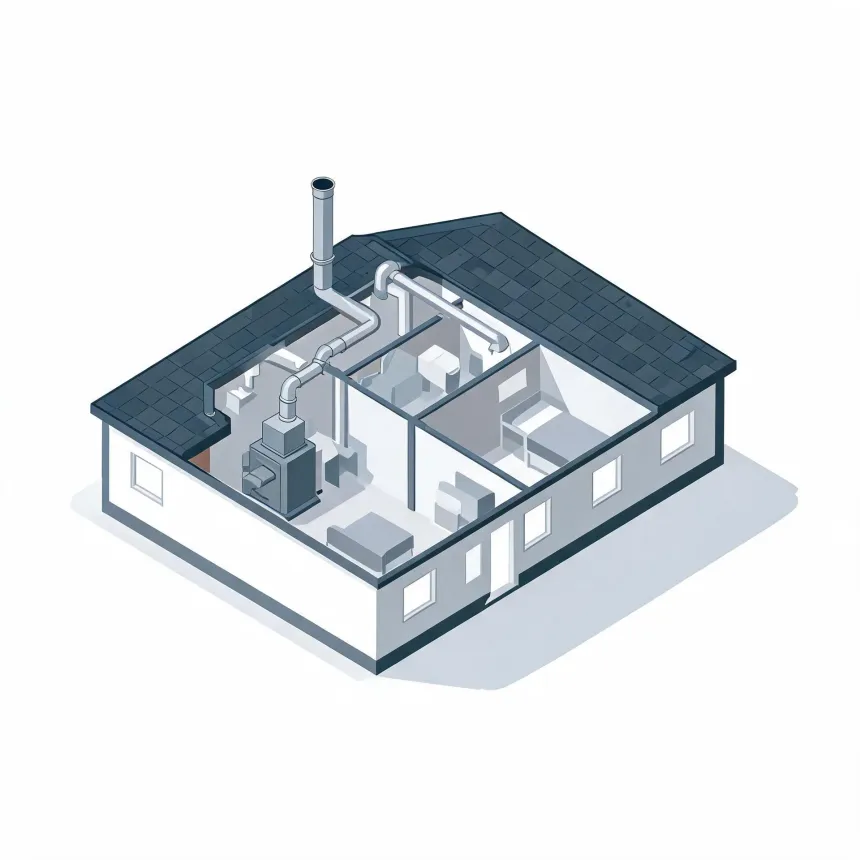
Isometric cutaway illustration of a single-story house with a dark shingled roof, showing interior rooms with furniture and a furnace connected to ductwork and a flue pipe extending above the roof.
Your furnace works hardest from November through March.

NOAA nClimDiv, 1991–2020 normals

Half the homes in Jasper County were built in 1965 or earlier.

A furnace going into a house that old has to be sized to that house, not to a spec sheet.

Gas is cheap here, so pick the furnace that lasts, not the one with the best efficiency rating

Heat runs October through May
Winter nights average 16°F
Climate zone 5A
Have it done before OctoberFurnace season runs eight months here. September is the month to get it in.

Gas heats 56% of homes in Jasper County, more than electric and propane combined. That's why gas furnaces dominate here, and why most contractors sent out to Newton homes are pulling an old gas furnace and setting a new one in its place. If your house already has a gas line run to it, replacing like for like is usually the straightforward path. It also means parts and service for gas furnaces are what local contractors see most, day in and day out.

Size it for how hard it works here

A new system here will work harder than most, every year. Size it right and don't buy on price alone.

Find a contractor
A man in a dark cap, gray T-shirt and brown work pants walks up porch steps toward a dark front door, carrying a canvas tool bag filled with tools, with a potted shrub beside the entry.
A gray high-efficiency gas furnace installed in an unfinished basement, surrounded by gas lines, a condensate drain, and sheet-metal ductwork.

Size it to your house, not the old furnace

A contractor sizing your furnace needs to do a load calculation on your house, not pull a number off the old unit's nameplate. That's the only way to know what an old house like yours actually needs, whatever's been done to it over the years. Ask for the load calc before you sign anything.

The math behind the number

A load calculation looks at the walls, the windows, the ceiling height, how much of the house faces the wind, and how the rooms connect. Square footage alone never tells a contractor what a furnace has to do. Houses the same size can need different size furnaces depending on what's between the studs and which way the windows face.

What the wrong size wears out

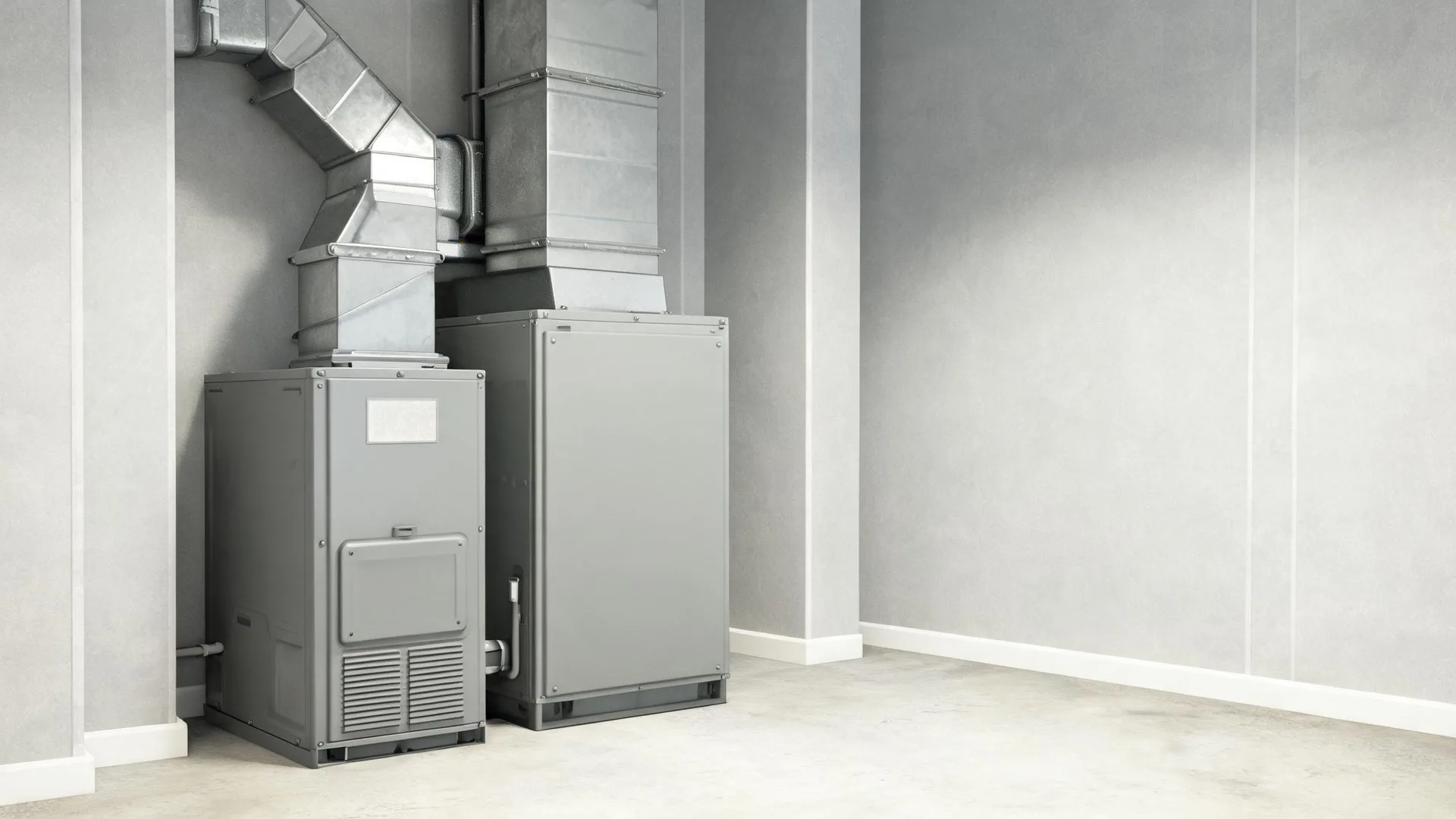
An oversized furnace heats the house fast, shuts off, then fires again soon after. That short cycling puts more wear on the igniter and the blower motor than steady runtime does. An undersized furnace just runs long and hard trying to close a gap it can't close, which wears the same parts from the other direction.

An unfinished basement containing a metal furnace with ductwork, exposed wooden joists on the ceiling, cardboard boxes, a coiled cable, and a single hanging incandescent bulb.

A high-efficiency gas furnace would save about $90 a year to run in Jasper County compared with a gas furnace.

  • A high-efficiency gas furnace$430 a year
  • A gas furnace$520 a year

Estimates for a typical Jasper County home, from EIA household energy data, Iowa fuel prices and NOAA climate normals. Your home will differ.

Installation day starts with the old furnace coming out, along with the flue pipe and any ductwork that doesn't meet code anymore. The contractor checks the gas line and the electrical before setting the new unit. Both have to match what the new furnace needs, not what the old one used. Expect a static pressure test once the ductwork is connected. That test catches a duct system that's too restrictive for the new blower, and it's something you want to know on day one, not partway through the season. The last steps take the longest and matter the most. The gas pressure gets set, the temperature rise gets checked against the manufacturer's range, and the flue gets checked to see that it's drawing properly. A furnace that's wired up and blowing air isn't done yet. It's done when those numbers are checked against the spec and written down.