





A quiet residential street at dusk lined with illuminated two-story brick houses and mature trees.

Furnace Installation in Storm Lake, IA

Tell us about the job

Takes about a minute. No obligation.

New system or replacementFurnace or heatingBuena Vista County, IA
Step 1 of 2

What ZIP code is the job in?

Half the homes in Buena Vista County were built in 1964 or earlier. A furnace going into a house that age is going into whatever ductwork, venting and insulation came with it, not a blank slate. That matters at installation time more than most people expect. The wrong size unit, or one matched to assumptions about a newer build, won't perform the way the brochure says in a house from that era. A contractor sizing your replacement needs to look at the house you actually have, not just the old furnace coming out.

8 months
October through May, your furnace is on duty
12°F
the average winter night it heats against
55%
of homes here heat with gas, so most furnaces here burn gas
80% AFUE
the federal minimum any new unit must meet
Isometric line illustration of a cutaway house showing interior rooms with furniture and a furnace with ducting and a flue pipe extending through the roof.
Your furnace works hardest from November through March.

NOAA nClimDiv, 1991–2020 normals

Furnaces here run eight months of the year, October through May.

A new system needs to be sized for that load, not for a mild climate on a spec sheet.

Most of this county already picked its fuel, and it wasn't by accident

54.8% of homes heat with gas
Heat runs October through May
Winter nights average 12°F
Get it in before OctoberFurnaces here start up in October. September is the month to have the new one in.

Buena Vista County falls in climate zone 5A, a cool zone where heating carries most of the work a furnace does all year. Any furnace installed here now has to turn at least 80 percent of the gas it burns into heat, the federal minimum for units built since November 2015. That floor is changing. Furnaces built from December 18, 2028 onward have to hit 95 percent, which means more of the gas you pay for turns into heat in the house instead of going out the vent. A furnace put in today runs at the old minimum for its whole life, not the new one. There's also a federal tax credit available right now for higher-efficiency units, worth checking before you settle on a model.

Size it for the house you have

Get the sizing done before the contractor picks a unit. Your new furnace still has to match the ductwork, venting and insulation already in your house, not the house a spec sheet assumes. That's the same work no matter when you do it, so there's no advantage in putting it off.

Find a contractor
A man in a dark shirt and tan pants carries a canvas tool bag up stone steps toward a dark blue front door, with a potted shrub beside the entry.
A gray residential gas furnace installed in an unfinished basement, connected to sheet-metal ductwork and PVC pipes.

A furnace here doesn't get much time off

Eight months of heating means close to eight months of runtime on the blower motor, the igniter, the heat exchanger. The other four don't give the system a real rest either, not with 31 winter storms hitting this county between 2015 and 2024. Every one of those is a stretch where the furnace runs nonstop, no cycling off for hours when the house warms up on its own. A unit built for that load, sized to the house and not just swapped in to match the old one, holds up to it. One sized for an easier climate shows its weak points sooner, and you'll see that in parts wearing out ahead of schedule rather than in some sudden failure.

Ask what the AFUE number actually buys you

Two furnaces can carry different price tags and different efficiency ratings, and the only way to compare them is to ask what each one does with the gas it burns. A higher-rated unit turns more of that gas into heat in the house rather than sending it out the vent. Ask what rating each system you're considering carries, and ask the contractor to show you the math on the difference, not just quote the sticker price.

Ask how they arrived at the size

A contractor should be able to walk you through why they landed on a given size, not just tell you the number. That means a load calculation on your actual house, the ductwork, the insulation, the windows, not a match to the furnace coming out. If a contractor skips straight to a model number without asking about your house, ask them to explain the sizing before you sign anything.

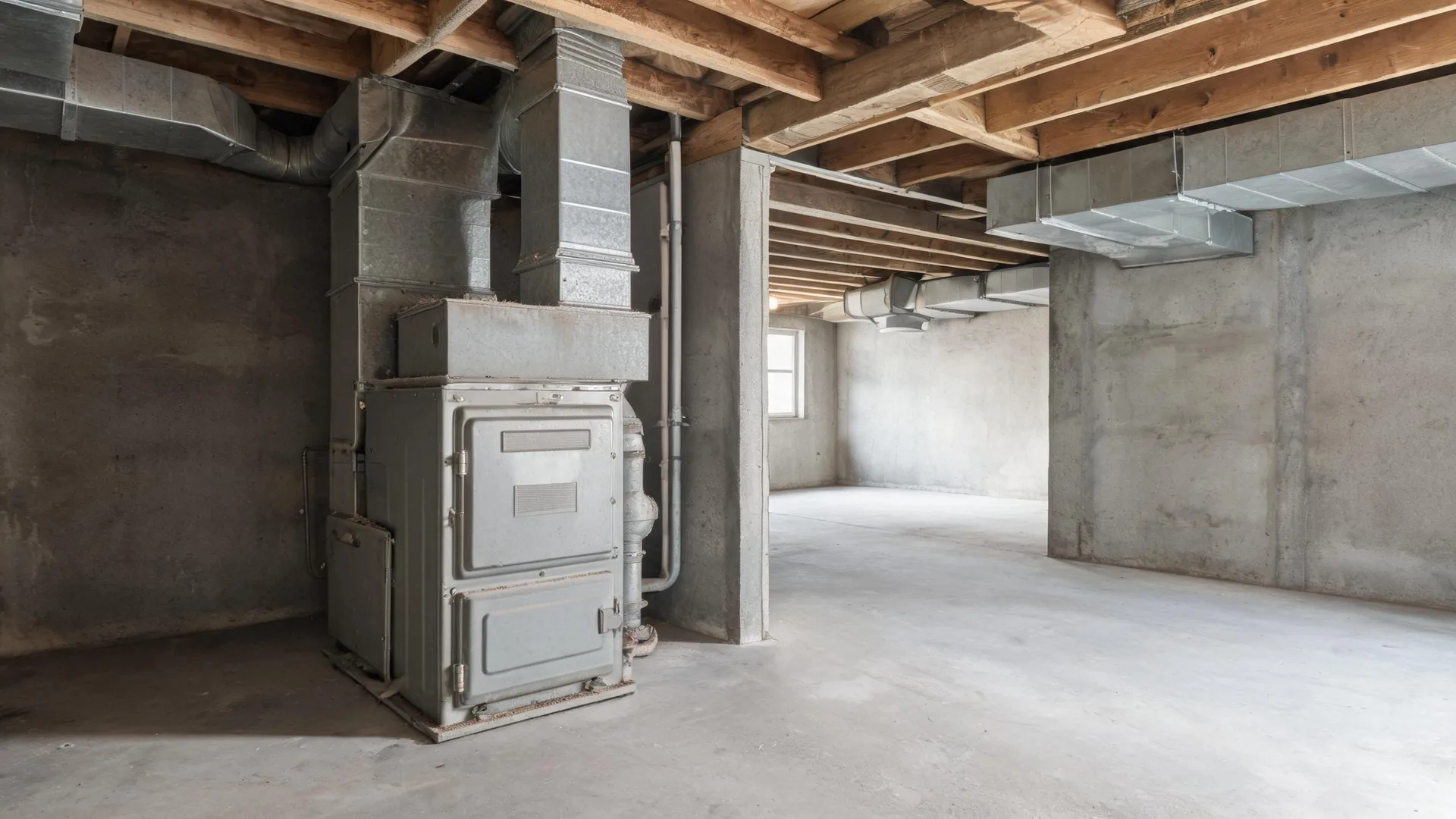
An unfinished basement featuring concrete block walls, exposed floor joists, a bare concrete floor, and a forced-air furnace with a large metal exhaust duct in the corner.

A high-efficiency gas furnace would save about $110 a year to run in Buena Vista County compared with a gas furnace.

  • A high-efficiency gas furnace$480 a year
  • A gas furnace$590 a year

Estimates for a typical Buena Vista County home, from EIA household energy data, Iowa fuel prices and NOAA climate normals. Your home will differ.

Installation usually takes a full day, sometimes two if ductwork needs changes along with the furnace itself. The old unit comes out first, along with the old venting if it doesn't match what the new furnace needs. A gas furnace with a higher efficiency rating often vents differently than an older one, sometimes through a wall instead of a chimney, so don't be surprised if you see new pipe going in where there wasn't any before. The contractor will connect the gas line, the ductwork, the venting and the electrical, then test the system through a full cycle before calling the job done. Part of that test includes checking the heat exchanger and the flue for a proper seal, since a bad seal there is a safety issue, not just a performance one. Expect some noise and some time without heat while the work is underway, and expect the contractor to walk you through the thermostat and the basic controls before they leave.