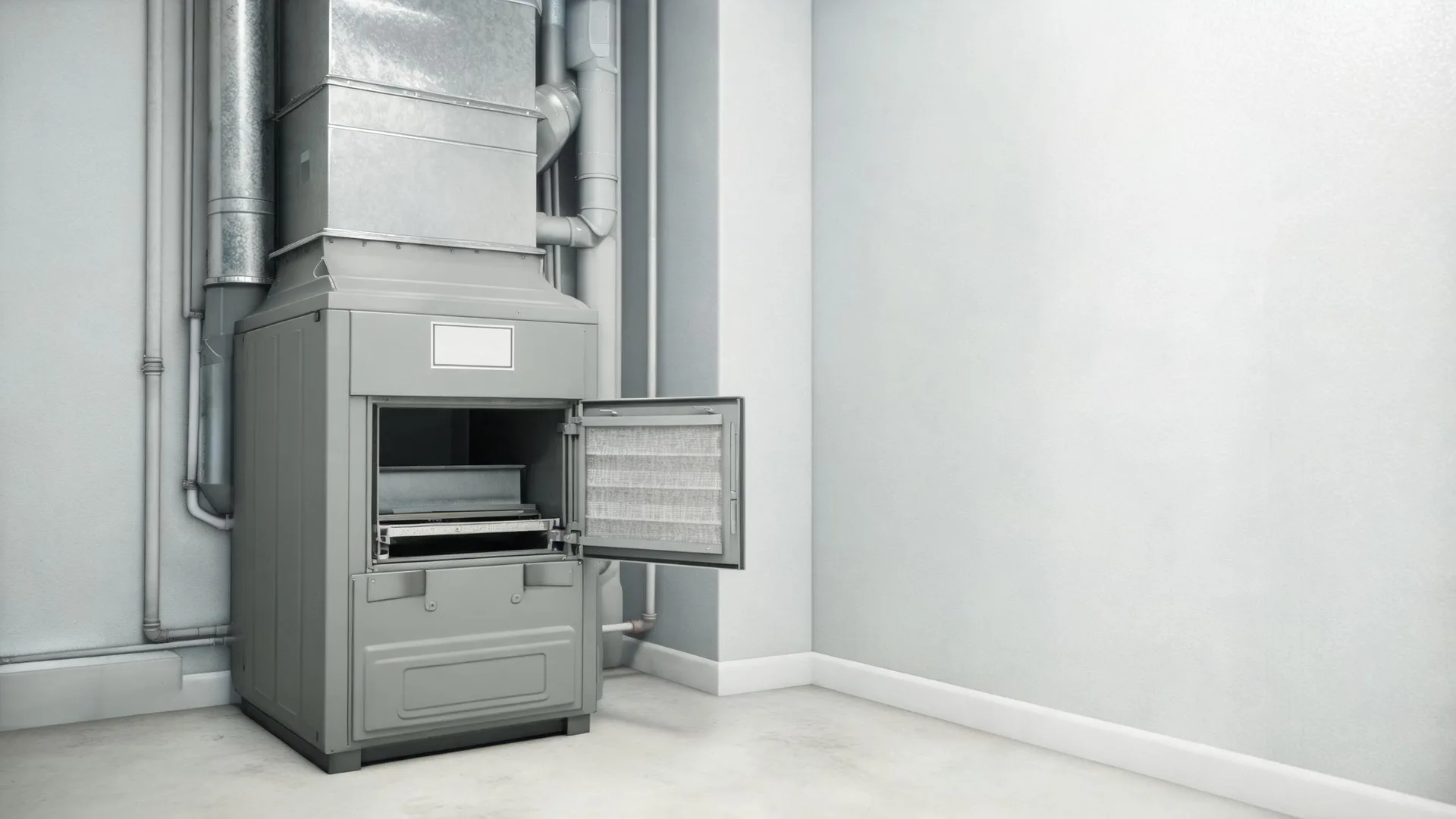
Eight months of heat
Furnaces in Story County run from October through May. That is most of the year, not just a few cold weeks, and this one will cycle on and off the whole stretch.
Takes about a minute. No obligation.
Furnaces in Story County run from October through May. That is most of the year, not just a few cold weeks, and this one will cycle on and off the whole stretch.
December through February, the overnight low here averages 14°F. A furnace working against that kind of cold runs longer each cycle, and the igniter, blower and heat exchanger all feel it sooner than they would somewhere milder.
Most homes in Story County heat with gas, 62.6 percent of them.
A gas furnace needs the burner, the vent and the safety controls checked every year, not just a fresh filter.


October is when this furnace starts working for real, and that is the wrong time to find out something is wrong with it. Have it checked in September instead. A tech can catch a cracked heat exchanger or a weak igniter while the furnace is still sitting idle, not after it has been running hard for weeks. Wait until October and you are booking the check at the same time everyone else in Story County is, often after the first cold snap has already found the problem for you.
It works hard here, so worn parts show up fast once the season starts. Get it checked before then.
Find a contractorHave the furnace looked at before October. A tech can test the igniter and check the heat exchanger while it is still sitting idle, not after weeks of running against nights averaging 14 below. That is when a worn part still just needs a look, not an emergency call on the coldest night of the year.
A furnace that hesitates before lighting, or runs a long time before it shuts off, is telling you a sensor or an igniter is wearing out. The flame sensor reads the burner and shuts the gas off if it does not see a flame. Once that sensor gets a thin coat of residue on it, it starts reading the flame as weaker than it is and can shut the burner down mid cycle.
Listen for a bang when the burner lights, or a screech from the blower, or a smell that is sharp instead of the usual faint gas smell for a few seconds. Any of those means a part is already failing, not about to fail. A furnace that used to run quiet and now does not needs a tech's eyes on the burner and blower before it gets worse.
A furnace that never gets looked at still runs, right up until the part that was already wearing out finally gives up. Dust and lint build up on the burner over time and change how clean the flame burns. A flame sensor coated with residue gets slower to detect the flame each season, until one day it does not detect it fast enough and the furnace shuts itself down. Bearings in the blower motor dry out the same way, quietly, until they seize or start grinding loud enough to notice. None of this shows up on a day the furnace is sitting idle. It shows up on the coldest night, because that is when every part is working its hardest and has nothing left to give.
A tune-up is not a filter swap. A tech pulls the burner assembly and cleans it, because dust changes how the flame burns and a dirty burner can carbon up the heat exchanger over time. The flame sensor gets cleaned too, since that thin coat of residue is exactly what makes a furnace shut down mid cycle months later. The igniter gets tested under load, not just looked at, because an igniter can glow fine sitting still and still fail to light the burner. A tech checks the heat exchanger for cracks, which matters more than almost anything else on the list since a cracked exchanger can let exhaust mix into the air moving through the house. The blower gets checked for wear in the bearings and the belt, if it has one, and the whole system gets a draft check to make sure exhaust is actually leaving through the vent instead of backing up.