Eight months of heat
Furnaces in Burlington run from October through May, with overnight lows averaging 19°F in December, January and February. That is a long stretch of hard running, not a few cold snaps here and there.
Takes about a minute. No obligation.
Furnaces in Burlington run from October through May, with overnight lows averaging 19°F in December, January and February. That is a long stretch of hard running, not a few cold snaps here and there.
A furnace running eight months a year shows its weak spots early. An igniter or a blower motor that might limp along somewhere milder gets found out fast here, often right when the cold sets in for good.
Half the homes in Burlington were built in 1959 or earlier.
A furnace that old house has usually been replaced at least once, and whatever is running now still needs a yearly look to catch wear before it quits.



A tune-up also checks what the furnace can't tell you by sound or smell. The heat exchanger gets inspected with a light or a camera, looking for hairline cracks that let combustion gas mix into the air moving through the house. That kind of crack doesn't show up as a noise or a smell most of the time, and it only gets worse with another winter of heating and cooling cycles. The tech also checks the venting, making sure the flue is drafting properly and nothing is blocking it, since a vent that's come loose or corroded through sends exhaust somewhere it shouldn't go. None of this shows up from the living room. It only shows up when someone opens the cabinet and looks.
Heat starts running here in October and stays on through May. September is the month to get the furnace checked, before it's carrying the full weight of winter.
Find a contractorOnce the weather turns, a furnace check has to compete with every other furnace in Burlington that quit the same week. Get it looked at before October, while there's still room to order a part or schedule a second visit if something looks wrong. Wait for the first cold snap and you're on the same schedule as everyone else.
A burner flame that's turned yellow instead of blue. A blower that's gotten louder than it used to be. A burning dust smell that doesn't clear after a few minutes of running. Short cycles where the furnace shuts off before the house warms up. Any one of these is worth a call before winter, not after.
A heat exchanger can crack, a flame sensor can coat over with residue, a pilot assembly can drift out of adjustment. The furnace keeps heating the house through all of it, with nothing to smell or hear from the vent. A yearly check is what catches that kind of wear while it's still small.
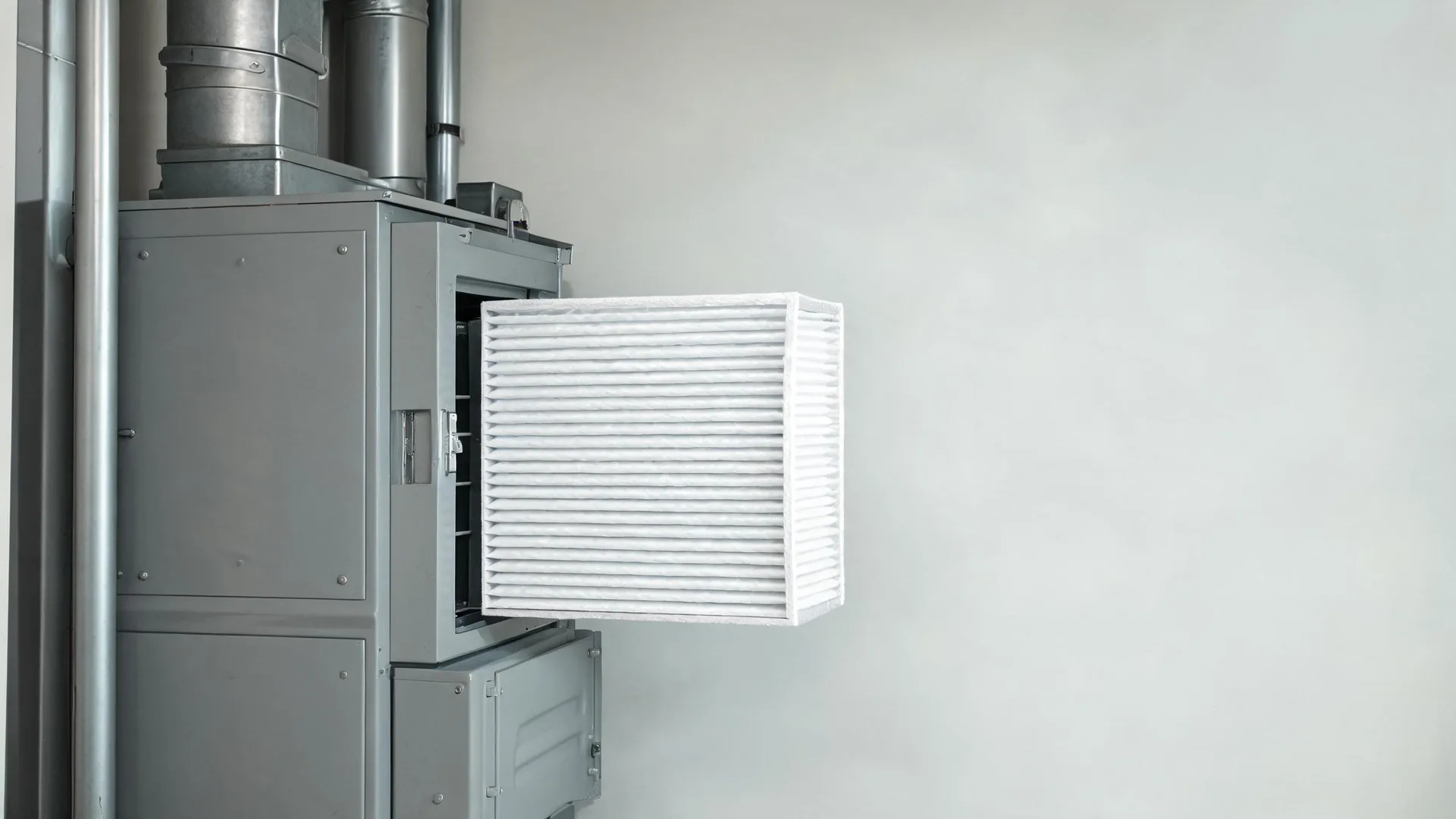
Between visits, the filter is the one thing worth checking yourself. A dirty filter chokes the airflow across the heat exchanger, and the furnace has to work harder to push the same heat through the house. Look at it monthly during the stretch when the furnace runs every day, and hold it up to a light. If you can't see light through it, swap it. Keep the area around the furnace clear too, nothing stacked against the cabinet, no boxes blocking the return air grille. Past that, leave the cabinet closed. Anything past the filter is a job for the yearly check, not a homeowner with a screwdriver.
A tune-up starts outside the cabinet, not inside it. The tech checks the thermostat calls for heat properly and that the furnace responds right away, no long delay before the burners light. Inside, the burners get cleaned and the flame is checked for that steady blue color across every burner, not just one. The igniter gets tested under power, since it can glow fine at low voltage and still fail once the furnace demands full current. The inducer motor and blower get checked for noise and for amp draw that's climbed above what the nameplate calls for, a sign the motor is working harder than it should. Gas pressure gets tested at the manifold, because pressure that drifts too high or too low shows up later as a furnace that short cycles or won't reach temperature. The last step is combustion analysis, a probe in the flue that reads what's actually coming out the vent and confirms the furnace is burning clean.