An unfinished basement featuring a forced-air furnace, exposed wooden ceiling joists, bare concrete walls, and miscellaneous items including cardboard boxes and coiled cables on the floor.

Furnace Maintenance in Clinton, IA

Tell us about the job

Takes about a minute. No obligation.

Tune-up, service, or cleaningFurnace or heatingClinton County, IA
Step 1 of 2

What ZIP code is the job in?

A flame tells on itself

A burner flame should burn steady and blue. Yellow or flickering means the gas isn't burning clean, and that can point to a cracked heat exchanger or a dirty burner. From the living room, the furnace sounds the same either way.


Why this matters for your furnace

A cracked heat exchanger lets combustion gas mix with the air moving through your ducts, and you won't smell or hear a thing until a tech pulls the panel and looks. Catching it during a tune-up means it gets fixed on your schedule, not during a cold snap when the furnace finally quits.

A furnace that never gets looked at still runs, until the day the igniter fails or the flame sensor gets coated and it won't.

Skipped tune-ups don't cause a dramatic breakdown most years, they just let small problems sit until one of them stops the furnace cold.

Half the homes in Clinton County were built by 1957, old enough that the furnace has likely been swapped at least once

Half the homes here were built by 1957
Heat runs October through May
Winter nights average 16°F

October through May, that's eight months of heat for homes in Clinton County. October is also when the furnace gets asked to work hardest right out of the gate, after sitting idle since spring. Have it looked at in September, before that first cold push, and a tech can catch a weak igniter or a dirty flame sensor while the furnace is still off. Wait until October and you're asking a furnace that hasn't run in months to fire up and perform, with nobody having checked it first.

Catch it while it's small

If your system has been in the house a long time, a yearly check is how you catch problems while they're small.

Find a contractor
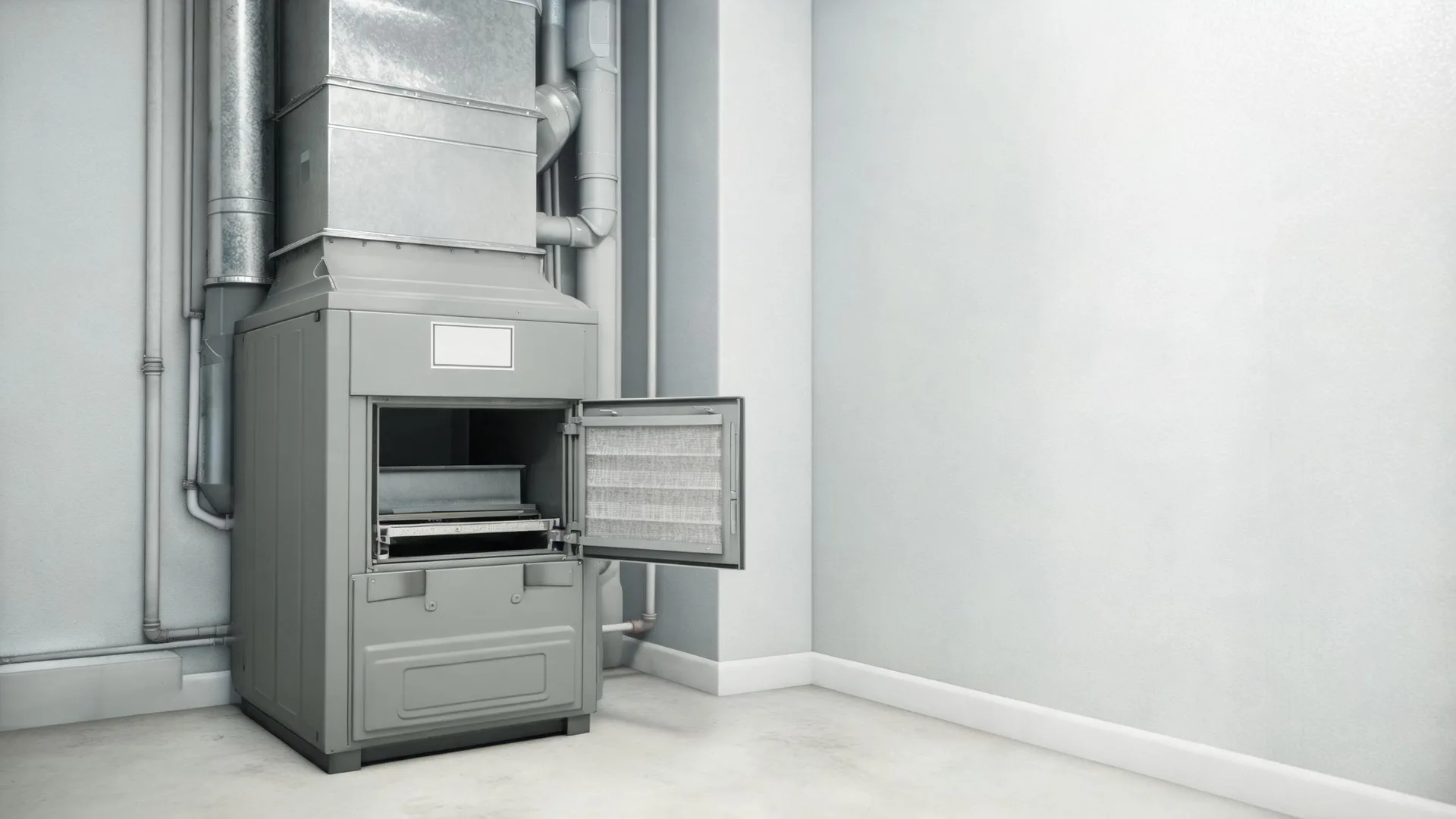
A gray residential gas furnace installed in an unfinished basement, connected to sheet-metal ductwork and PVC pipes.

Eight months of work, every year

Nights here average 16 degrees through December, January and February, and the furnace runs from October through May to keep up with that. Winter storms have hit Clinton County 26 times in the last decade, and each one means the furnace holds a house warm for days straight, not just overnight. That kind of steady demand wears down an igniter or a blower motor faster than mild weather would. A tune-up before the season starts catches those weak points while the furnace is still off and easy to check.

Opening the panel versus not

A quick visit means a tech listens to the furnace run, checks the thermostat, and calls it done. A thorough one means the panel comes off. The burners get pulled and cleaned, the flame sensor gets scraped clean of oxidation, and the igniter gets checked for hairline cracks you can't see from across the room. None of that happens with the panel still on.

What gets measured, not just looked at

Steady blue flame tells you the burners are clean, but a thorough tune-up also checks gas pressure against the furnace's rating and checks temperature rise across the heat exchanger. Those numbers catch a furnace that looks fine and isn't. A tech who skips the manometer and the thermometer is guessing at the same things a real check would confirm.

A furnace filter sits in the path of every bit of air the blower moves, and once it loads up with dust, the blower has to pull harder to push air through it. That strain shortens the life of the blower motor, and a clogged filter also means less air passing over the heat exchanger, which can make it run hotter than it should. The furnace doesn't have coils of its own, but if the same system handles cooling, the indoor coil sits right behind that filter and gets choked the same way. A clogged drain line is more of an air conditioner problem than a furnace one, but on a furnace with a high-efficiency condensing unit, the condensate line needs to drain freely or the furnace will shut itself down rather than let water back up into the cabinet. A tech checking a furnace checks all of it, because a dirty filter upstream is often the real reason a part downstream failed early.

A real tune-up starts with the furnace off and the panel open. The burners get pulled out and cleaned, because soot and dust on them changes how the gas burns. The flame sensor gets scraped down to bare metal since a coating of oxidation is what makes a furnace shut off a few seconds after it starts. The igniter gets checked under a light for hairline cracks, the kind that let it limp along until a hard freeze finds the break. The blower wheel gets looked at too, since dust built up on the blades throws it off balance and makes the motor work harder than it needs to. A tech also checks the flue for a solid connection, because a loose joint there is how combustion gas ends up somewhere other than outside. None of this is optional work tacked on to pad a visit. It's what separates a furnace that starts every time from one that gives out partway through the season.