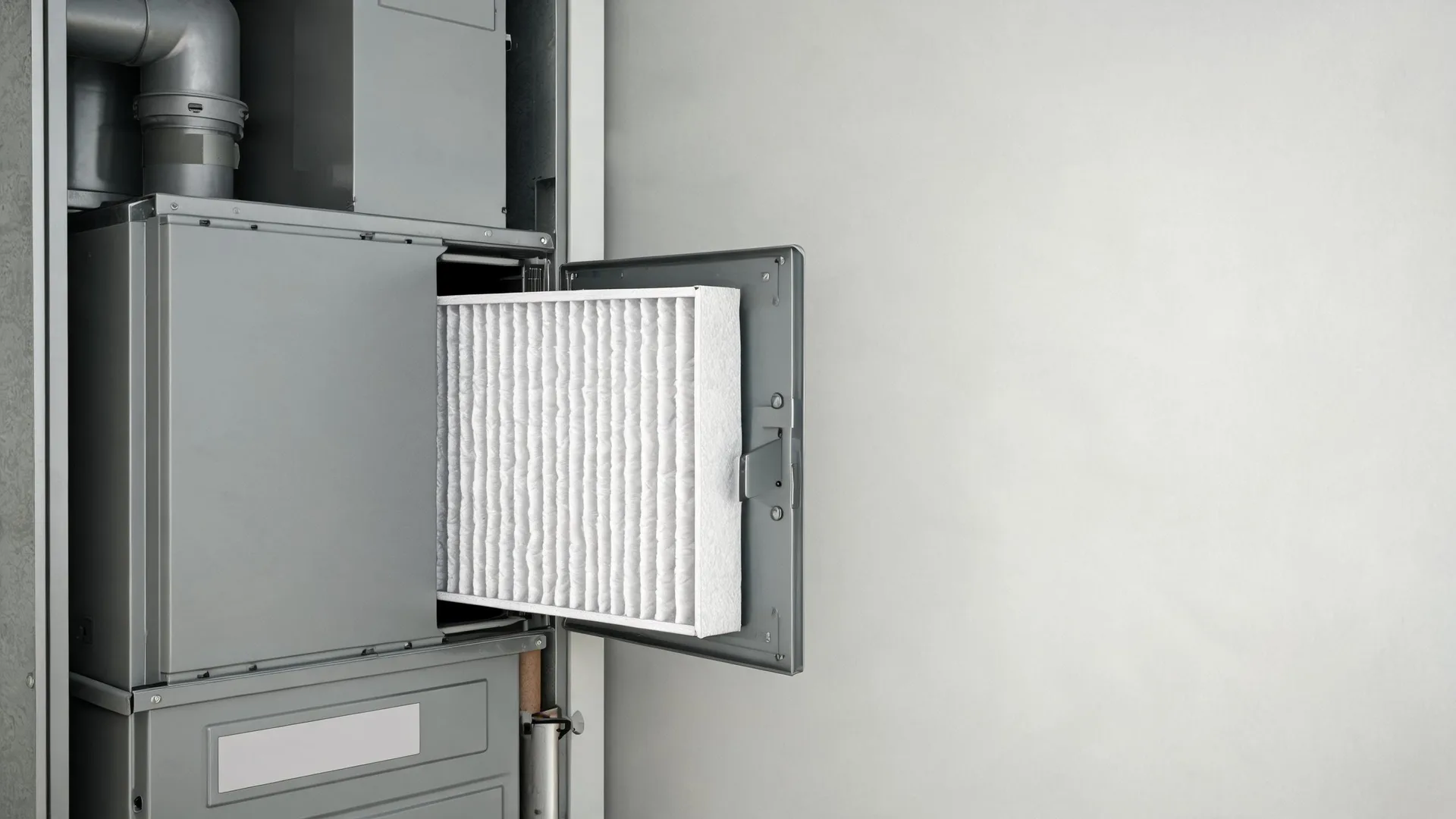
A gray forced-air furnace with sheet-metal ductwork stands in an unfinished basement with exposed wooden joists, concrete walls, and a hanging incandescent bulb.

Furnace Maintenance in Fort Dodge, IA

Tell us about the job

Takes about a minute. No obligation.

Tune-up, service, or cleaningFurnace or heatingWebster County, IA
Step 1 of 2

What ZIP code is the job in?

Eight months of work a year

Furnaces in Webster County run from October through May. That's most of the year asking the igniter, the blower motor and the heat exchanger to hold up under steady use. A furnace that only ran a few months could hide a weak part for a while. Here, it doesn't get the chance.

Storms don't wait for a good time

Webster County saw 31 winter storms between 2015 and 2024, heavy snow, ice and blizzards. A furnace that's been slowly losing ground tends to quit during the stretch it's working hardest, not before. A check before the cold sets in catches the worn part while it's still just worn.

Furnaces in Webster County go straight to work in October.

Get the furnace checked in September, before it has to carry the full load.

Half these furnaces are older than the house's last roof

Half the homes here were built by 1957
Heat runs October through May
Winter nights average 13°F

Close to two out of three homes in Webster County heat with gas. That's a furnace with a burner, a flue and a set of safety controls, not just a blower and a filter. Gas maintenance means checking that the burner lights clean, that the flue is venting exhaust outside instead of backing up, and that the flame sensor and limit switch still do their job. A dirty filter is the easy part to fix. A cracked heat exchanger or a venting problem is the part a yearly check is for.

Get it looked at before October puts it back to work

A furnace that's been losing ground tends to quit during the months it works hardest, not before. A check before October puts the worn igniter or the weak limit switch back to work while there's still time to fix it instead of replace it.

Find a contractor
A gray residential gas furnace installed in an unfinished basement, surrounded by ductwork, a metal flue pipe, and a gas supply line.

Years of this add up

If the furnace came with the house, a yearly check is the way to find out how it's holding up. A tune-up gets the burner, the flame sensor and the limit switch looked at while they're still working, not after one of them fails on a cold night. For a furnace that's already put in a lot of winters, that's worth doing every year, not just when something seems off.

It won't always tell you first

A cracked heat exchanger or a failing limit switch doesn't always announce itself. The furnace can keep running, keep heating the house, right up until a safety control shuts it down or a part gives out. A technician checks the flame sensor, the igniter and the exchanger before they fail, not after.

What a check actually catches

A yearly check means someone pulls the panel, looks at the burner flame, tests the safety switches and clears the flue path while the furnace is still running fine. Soot on the burner, a flame that burns yellow instead of blue, a blower that cycles on and off too fast: these show up in a check long before they'd show up as a breakdown.

A furnace that never gets looked at doesn't fail all at once. Dust builds up on the burner until the flame starts burning uneven. The flame sensor picks up a coating it can't read through, so the furnace shuts off a few seconds after it starts, then does it again the next cycle. A blower motor runs dry on a bearing that was supposed to get checked, and it grinds a while before it seizes. None of this shows up as one big warning. It shows up as the furnace working a little worse each month until the week it doesn't work at all, and that week is always the coldest one, because that's when every part is being asked for the most.

A tune-up starts with the burner. A technician shuts off the gas, pulls the burner assembly, and cleans off the rust and dust that build up on it over a year of use. Next comes the flame sensor, a thin metal rod that tells the control board the burner actually lit. Wipe the coating off it and the furnace reads the flame correctly again instead of shutting down a few seconds into the cycle. The igniter gets checked for a crack or a weak glow, since that's usually what's behind a furnace that tries to start and fails. The heat exchanger gets inspected for cracks, because a cracked exchanger can let exhaust mix with the air moving through the house. The flue gets checked to make sure exhaust is actually leaving the house instead of backing up. Belts and bearings get checked on the blower motor, and the filter gets replaced if it's dirty. Each of these is a small thing on its own. Skipped long enough, any one of them is what takes the furnace down.