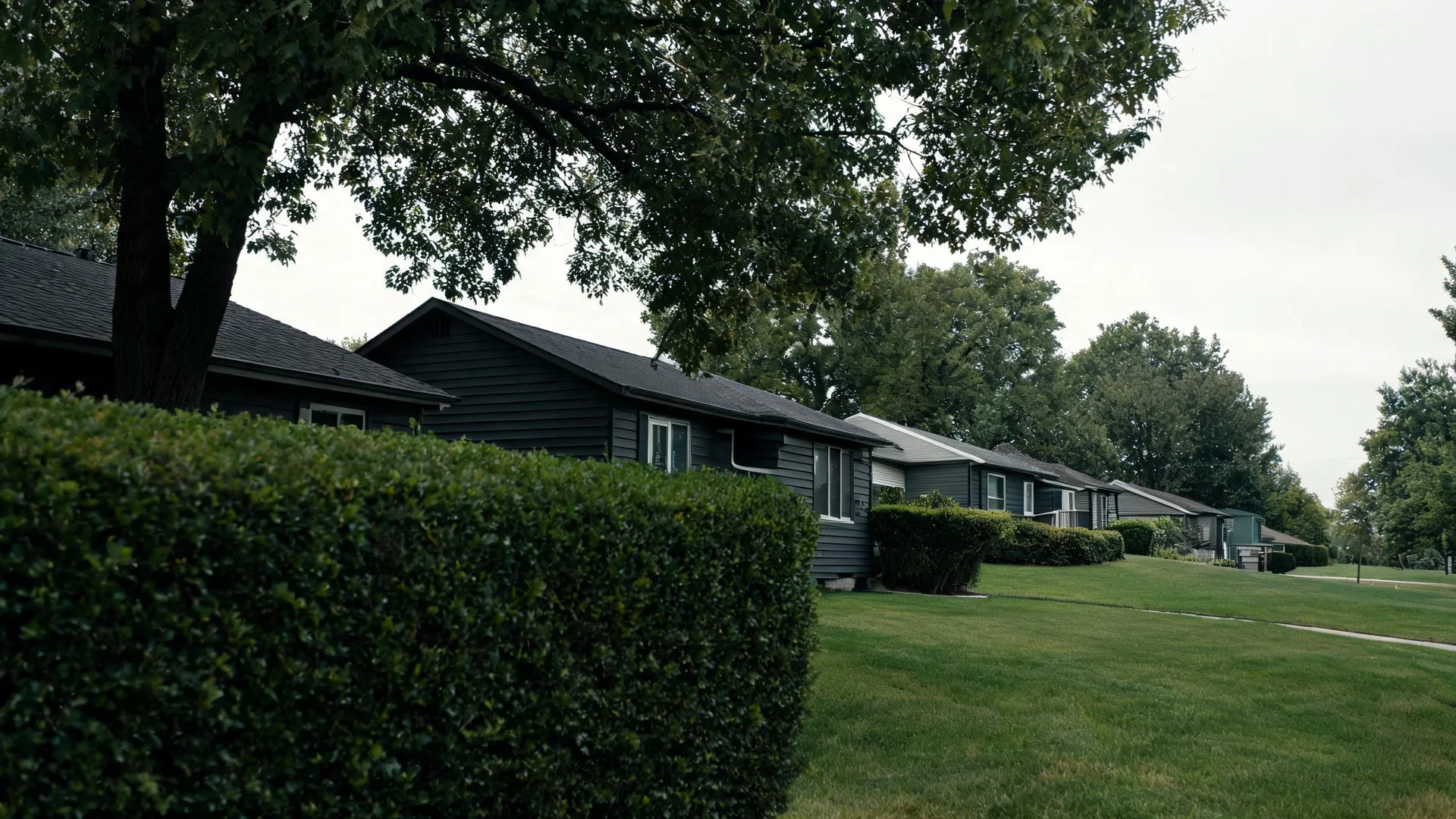




A row of dark-sided single-story houses behind a tall trimmed hedge and a large tree, with a mown lawn and a paved path under an overcast sky.

Furnace Maintenance in Fort Madison, IA

Tell us about the job

Takes about a minute. No obligation.

Tune-up, service, or cleaningFurnace or heatingLee County, IA
Step 1 of 2

What ZIP code is the job in?

Furnace here runs from October through May, about eight months of the year. That's a long stretch, but it's still one system working one job, not something that needs attention every few weeks. One visit a year, timed before that stretch starts, is enough to catch a weak igniter or a cracked heat exchanger before the cold sets in. Overnight lows average 20°F through December, January and February, so whatever is going to fail under load usually shows itself in that window. A fall check means it gets found on a technician's schedule instead of yours.

Furnace season in Lee County starts in October and runs through May.

Have the furnace checked in September, before it has eight months of heat to carry.

Half the homes in Lee County are old enough that their furnace has been replaced at least once

Half the homes here were built by 1960
Heat runs October through May
Winter nights average 20°F

Most homes in Lee County heat with gas, 55.6% of them, and another 11.7% run on propane. Both send a flame through a heat exchanger and out a vent every winter. That's a different check than an electric furnace needs. A maintenance visit on a gas or propane system means looking at the burner, the igniter and the flame sensor, and confirming the heat exchanger has no cracks and the vent is clear. A blocked vent is how exhaust ends up somewhere it shouldn't, so that part of the check matters as much as whether the furnace lights.

One furnace check a year, timed right, is enough

Lee County sees its share of rough weather, 79 damaging wind events and 44 hail events in the past decade, plus 13 winter storms bringing heavy snow and ice. None of that reaches a furnace sitting in a closet or basement. The weather outside changes what the AC and the roof have to deal with. It does not change what the furnace needs, which is one visit a year, timed before the system starts its run for the season.

Find a contractor
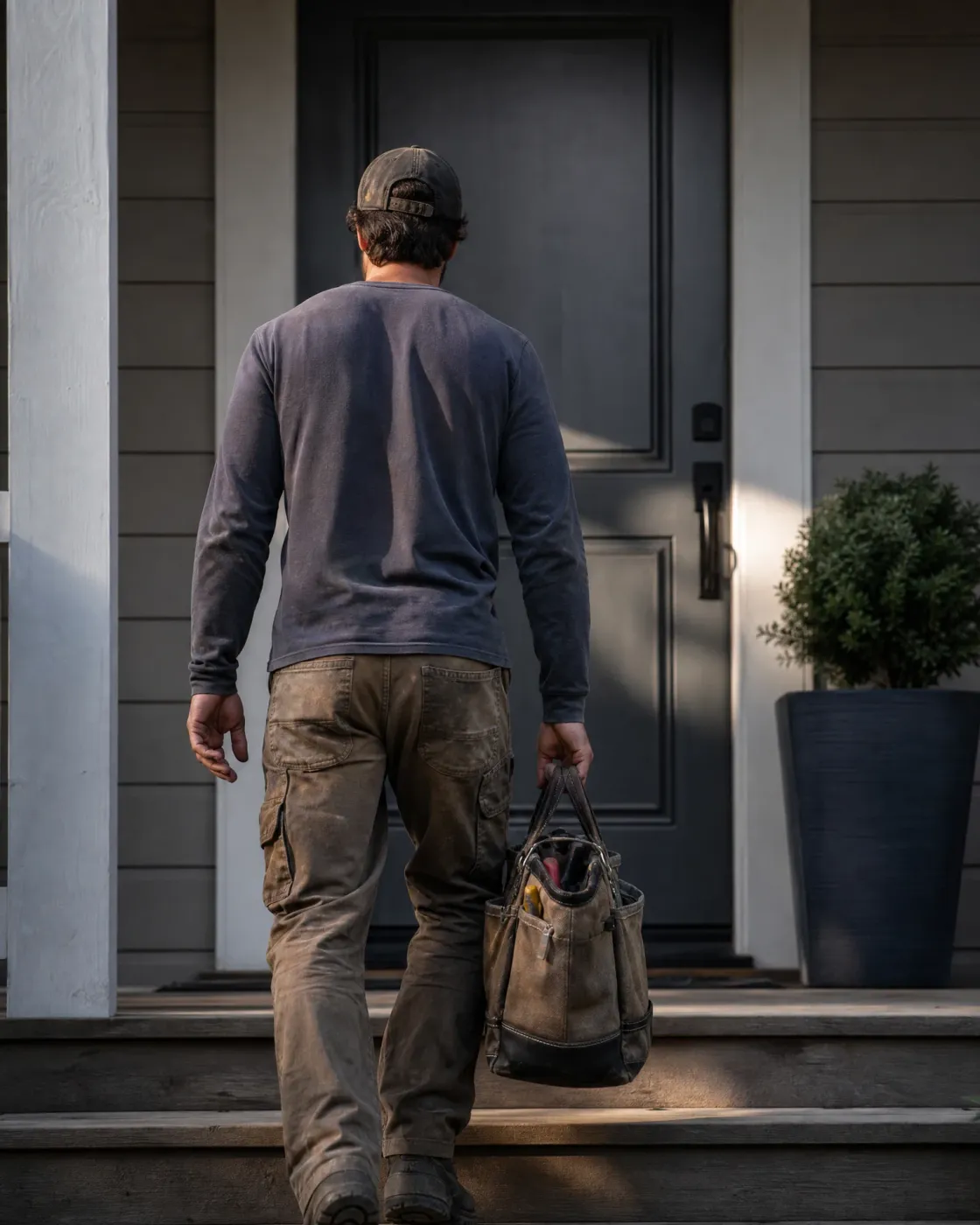
A man in a cap, dark long-sleeve shirt and dirty work pants walks up wooden steps toward a dark gray front door, carrying a canvas tool bag in his right hand, with a potted shrub beside the entry.
A gray high-efficiency gas furnace installed in an unfinished basement, surrounded by gas lines, a condensate drain, and sheet-metal ductwork.

A furnace that runs fine can still be telling you something

A furnace gives warning before it quits, but the signs are easy to miss because the furnace still runs while they're happening. A burner flame that's yellow or orange instead of steady blue means it's not burning clean, and that's worth a look regardless of whether the furnace seems fine otherwise. Short cycling, where the furnace fires up and shuts off again before the house warms, usually means a flame sensor that's fouled or a flow of air that's restricted somewhere. A furnace that takes longer to satisfy the thermostat than it used to is losing heat exchange efficiency somewhere along the way. Rattling, a burner that booms instead of lighting smoothly, or a blower that hums without spinning up right away are all mechanical complaints, not electrical ones, and they get worse with time, not better. None of these mean the furnace is about to fail tomorrow. They mean something inside it has changed since the last time someone had hands on it, and that's exactly what a yearly check is for.

A thorough check means hands on the furnace, not just eyes on it

A quick visit gets the furnace running and checks that warm air comes out of the vents. A thorough one pulls the burner cover, checks the flame sensor for corrosion, and tests the igniter under power instead of just looking at it. It means inspecting the heat exchanger with a light or a camera, not glancing at it from the doorway. Each step takes a few extra minutes, and each one is a different reason the furnace could fail.

The furnace filter tells you which kind of visit happened

If nobody touched the filter, nobody was checking airflow, and airflow is what keeps a heat exchanger from overheating and cracking. A thorough tune-up includes pulling the filter, looking at the blower wheel for dust buildup, and checking that return air is moving the way it should. A furnace can light every time and still be starved for air, and that's a problem a quick check won't catch.

A furnace doesn't have coils or a drain, that's the air conditioner side of the same cabinet, but if the system has both, the furnace's blower is what moves air across the AC coil every summer too. A dirty filter chokes both jobs at once. Dust that gets past the filter settles on the blower wheel first, and a caked wheel moves less air no matter how strong the motor is. Less air across the heat exchanger means it runs hotter than it should, and heat it wasn't built to hold is what eventually cracks it. On the cooling side, a dirty coil makes the system work harder to pull heat out of the air, and a clogged drain backs up condensate into the cabinet instead of carrying it outside. None of that is a furnace problem by itself, but it's the same airflow path, the same filter, and the same blower doing the work in both directions.

A tune-up also covers the parts that don't show themselves until they fail mid-cycle. A technician checks the gas pressure at the manifold, because too high or too low changes how the burner flame behaves, and a flame that's burning wrong is what fouls a sensor or scorches a heat exchanger early. The igniter gets tested under actual power draw, not just looked at, since an igniter can glow and still be too weak to hold a flame once it's under load. Belts aren't part of this, most furnace blowers run direct drive, but the motor's electrical connections get checked, because a loose wire at the blower is a common reason a furnace starts fine and then cuts out partway through a cycle. The condensate line gets checked too, on furnaces that have one, since a clogged line is a slow problem that ends with water somewhere it doesn't belong. None of these parts talk to each other. A thorough check means testing them one at a time, not just confirming the furnace comes on and air feels warm at the register.