Eight months of heat
Furnaces in Grinnell run from October through May. That is most of the year asking the igniter, the blower motor and the burners to cycle on and off, night after night.
Takes about a minute. No obligation.
Furnaces in Grinnell run from October through May. That is most of the year asking the igniter, the blower motor and the burners to cycle on and off, night after night.
Overnight lows average 15°F through December, January and February. On those nights your furnace runs longer stretches to hold the house steady, and that is when a weak part tends to quit.
A furnace that short cycles, turning on and off in quick bursts, is already telling you something is wrong.
A dirty flame sensor or a clogged filter can cause that, and both get caught in a check before they cause a shutdown.




Have the furnace checked before October, not after the first cold snap. A technician can catch a weak igniter or a cracked flame sensor while the furnace is sitting idle, not after it has already quit on a 15 degree night. That check also covers the blower motor, the burners, and the switches that cycle the system on and off. Waiting until the house is cold means waiting for a slot alongside everyone else whose furnace picked the same week to fail.
If your furnace came with a house that old, a yearly check is how you find the weak igniter or the worn blower motor before it quits on you, not after.
Find a contractor
Check the filter once a month and swap it when it looks gray or matted. A clogged filter starves the burners of air and makes the blower work harder to push heat through the house. Keep the area around the furnace clear. Nothing stacked against the cabinet, nothing blocking the return grille. If you have a standing pilot, check that the flame burns steady and blue, not yellow or flickering. Listen for anything new. A rattle, a screech from the blower, a clicking that won't catch into a steady burn. None of that replaces a real inspection, but it catches the obvious stuff between visits.
A thorough tune-up has the panels off, a meter on the igniter, and the flame checked for color and shape. The technician checks amp draw on the blower motor and tests the pressure switch instead of just listening for it to click. Each reading gets compared against what it should be, not just whether the furnace turns on.
A rushed visit has someone turn the thermostat up, watch the burners light, and call it done. The furnace will run that day no matter what shape the igniter or the heat exchanger are in. What that visit misses is exactly the part that fails on the coldest night, because a weak part can pass a short test and still quit deep into a long cycle.
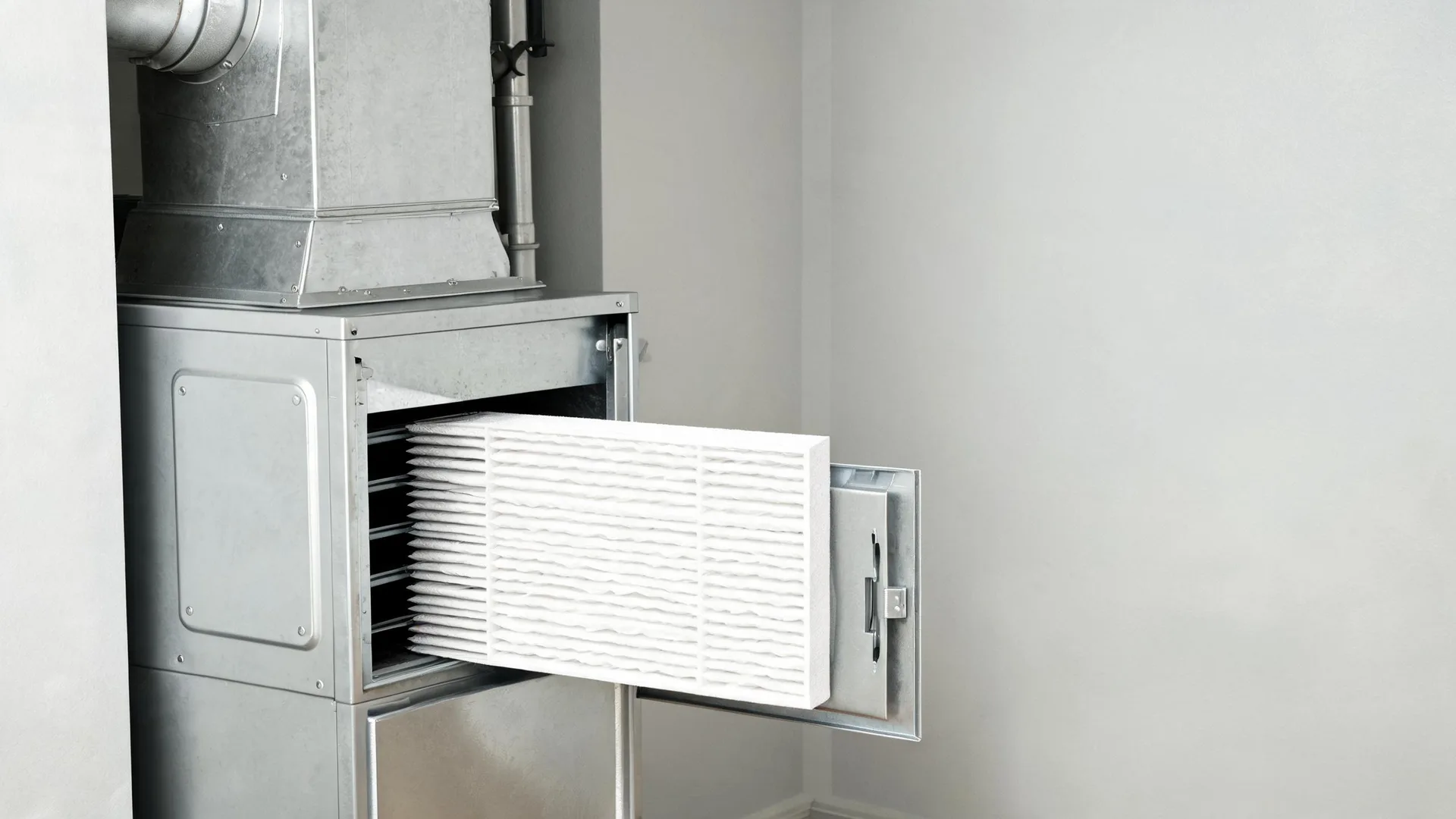
A furnace does not have a drain or coils doing the work, that is the air conditioner side of the same system, but the filter still runs the whole show in winter. Air has to pass through it to reach the burners and blower, and a filter packed with dust forces the blower to work harder to move the same amount of heat. That strain shows up as longer run times and, eventually, a blower motor that wears out sooner than it should. Some furnaces pull combustion air from inside the house, so a blocked filter can also mean the burners are starving for air right when they need it most. None of this is complicated to prevent. It just means checking the filter instead of assuming it is fine because the furnace is still running.
A tune-up starts with the heat exchanger, not the filter. A technician looks for cracks or corrosion along the metal, because a cracked exchanger lets combustion gas mix with the air your furnace blows through the house. That check alone is worth the visit. From there it is the igniter, tested under power instead of just eyeballed, and the flame sensor, cleaned or replaced if it is coated with residue that keeps it from reading the flame correctly. The gas pressure gets measured and adjusted if it is running rich or lean, since either one changes how clean and how hot the burners fire. Every electrical connection in the cabinet gets checked too, because a loose wire at the blower or the control board is what turns into a no-heat call later in the season.