Eight months of runtime
Furnaces around Mason City run from October through May. That's most of the year asking the igniter, the blower motor and the heat exchanger to cycle on and off, day after day.
Takes about a minute. No obligation.
Furnaces around Mason City run from October through May. That's most of the year asking the igniter, the blower motor and the heat exchanger to cycle on and off, day after day.
Cerro Gordo County saw 38 winter storms between 2015 and 2024. Cold snaps push a furnace to run longer and more often to hold the same temperature, and that extra load catches a weak part before the season's over.
Half the homes in Cerro Gordo County were built in 1959 or earlier.
A furnace that old has had a lot of owners before you, and a yearly check catches what the last one didn't.

Furnaces here start running in October and don't stop until May. That's eight months of straight work, and the first cold snap is when a weak igniter or a cracked heat exchanger usually shows itself. A check in September catches that before the furnace has to prove itself on the coldest night. Wait until October and you're asking a tech to find the problem at the same time the system is finally earning its keep.
A furnace around Mason City runs eight months straight once the season starts, and a cold snap doesn't ease it in. A check now catches a tired igniter or a weak blower motor while there's still time to deal with it, instead of leaving a tech to find it on the coldest night of the year.
Find a contractorIf your furnace came with the house, a tech can check its age off the nameplate the first time out. From there a yearly visit is how small wear gets caught, a cracked heat exchanger, a sensor going bad, before it turns into a breakdown or a safety problem. That matters more on a furnace that's already had a few owners than one you bought new.
A real tune-up means pulling the burner assembly and cleaning the flame sensor, checking the igniter's resistance instead of just looking at it, and testing the heat exchanger for cracks with a mirror or a camera. The tech checks gas pressure at the manifold, tests the limit switch, and pulls the blower wheel to clear dust buildup off the blades. Each of those takes time because each one means removing a panel or a part, not just looking at it from across the room.
A fast once-over usually means a visual check, a filter swap, and listening to the furnace run for a minute before calling it done. Nobody pulls the blower wheel to check for dust packed between the blades, and nobody tests the flame sensor's signal with a meter instead of just wiping it off. Those shortcuts don't show up right away. They show up as a part that fails mid-winter that a thorough check would have caught months earlier.
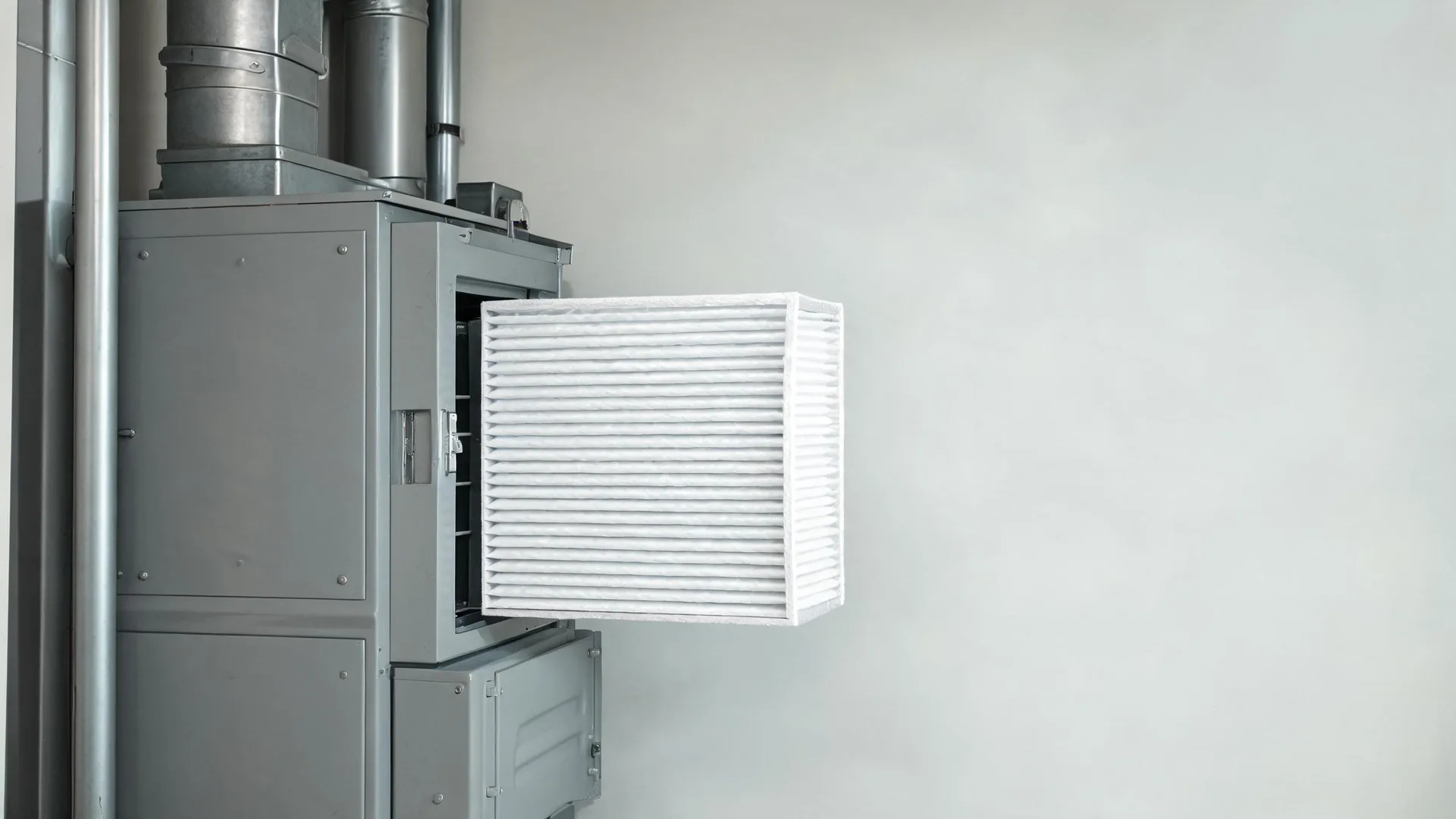
A furnace doesn't have coils or a drain. That's the air conditioner's job, sharing the same ducts and sometimes the same cabinet. What a furnace does have is a filter, and it matters more than most people think. A clogged filter starves the burner of airflow, and the heat exchanger overheats because the warm air isn't moving through fast enough to carry the heat away. Run it too long and that overheating stresses the metal until it cracks. A filter changed on schedule is one of the few things standing between a normal winter and a cracked heat exchanger.
A tune-up starts with the burner flame itself. A tech looks at its shape and color, because a flame that's lazy or uneven instead of sharp and blue means the gas and air mixing ahead of it isn't right. From there it's the ignition system, checking that the igniter glows evenly or that a spark igniter fires clean and quick instead of hesitating. The draft gets checked too, making sure exhaust is actually leaving through the flue instead of spilling back into the house. Wiring connections get tightened, since a loose connection at the control board causes the same lockout symptoms as a failed part and wastes a service call chasing the wrong thing. None of this is guesswork. Each check has a pass or fail answer, and a tech who skips one is leaving that answer for the furnace to give you on its own, usually at a bad time.