


An empty unfinished basement containing a forced-air furnace with overhead ductwork, exposed ceiling joists, and a single hanging light bulb.

Furnace Maintenance in Oelwein, IA

Tell us about the job

Takes about a minute. No obligation.

Tune-up, service, or cleaningFurnace or heatingFayette County, IA
Step 1 of 2

What ZIP code is the job in?

Furnace in Fayette County runs about eight months a year, October through May. That is most of the year on duty, not idling. Parts wear on hours of use, not on the calendar, so a blower motor or an igniter here is racking up more hours each season than the same part in a milder climate. More hours means less time between when a part starts to weaken and when it actually fails. A furnace getting checked before that long stretch starts has a better shot at making it through without a breakdown in the middle of winter.

Almost half the homes in Fayette County heat with utility gas.

A gas furnace needs its burner, venting and safety controls checked, not just a new filter.

Half the homes here were built in 1954 or earlier, and the furnace inside has had years to pick up wear

Half the homes here were built by 1954
Heat runs October through May
Winter nights average 12°F
Book It Before OctoberFurnace season starts in October here. Get the check done in September, before it's running every day.

A furnace in a house built in 1954 or earlier has had a lot of years to pick up wear, and nobody can tell you its full history just by looking at it. A yearly check is how a tech catches what doesn't show itself, a cracked heat exchanger, a loose wire, a connection that's worked itself part way out. If your system came with the house, or you don't know when it was last serviced, that's reason enough to get it looked at before the cold sets in. A small problem found early is a quick fix. The same problem found in the middle of winter is a furnace that won't run.

Get It Checked Before It Has To Run

Eight months of heat a season puts more hours on a blower motor and an igniter than most furnaces ever see. That's the window where a worn part turns into a breakdown. Get the furnace checked now, while it's still off, and a tech can catch what's wearing thin before the house needs it every day.

Find a contractor
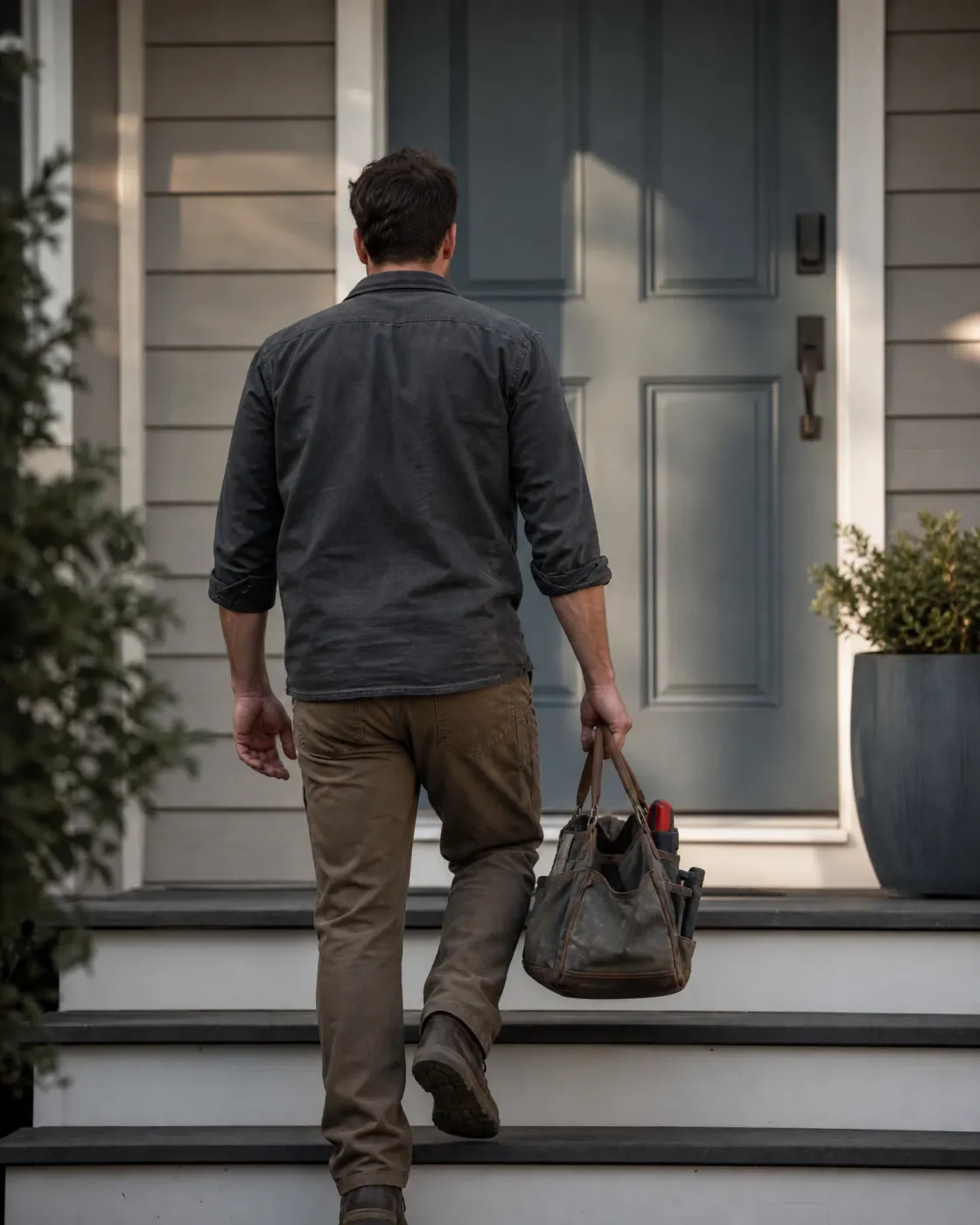
A man in a dark shirt and brown pants carries a worn canvas tool bag up concrete steps toward a gray-blue front door of a house with horizontal siding and a potted shrub.
A gray residential gas furnace installed in an unfinished basement, surrounded by ductwork, a metal flue pipe, and a gas supply line.

The Furnace Will Warn You First

A furnace usually tells you before it quits outright. The burner flame should burn steady and blue. If it's flickering yellow or orange, that's incomplete combustion, and it means the burner needs attention. Listen for a bang or thump when the burner lights. That's gas building up before ignition catches, often from a dirty burner or a failing igniter. A blower that runs longer than it used to, or cycles on and off more often, is working harder to hold the house at temperature than it should. Dust collecting fast around the vents, or a room that never quite warms up, points to airflow trouble somewhere in the system. None of these stop the furnace cold. They're the early signs, the ones a yearly check is built to catch before the part behind them gives out.

Change the Filter

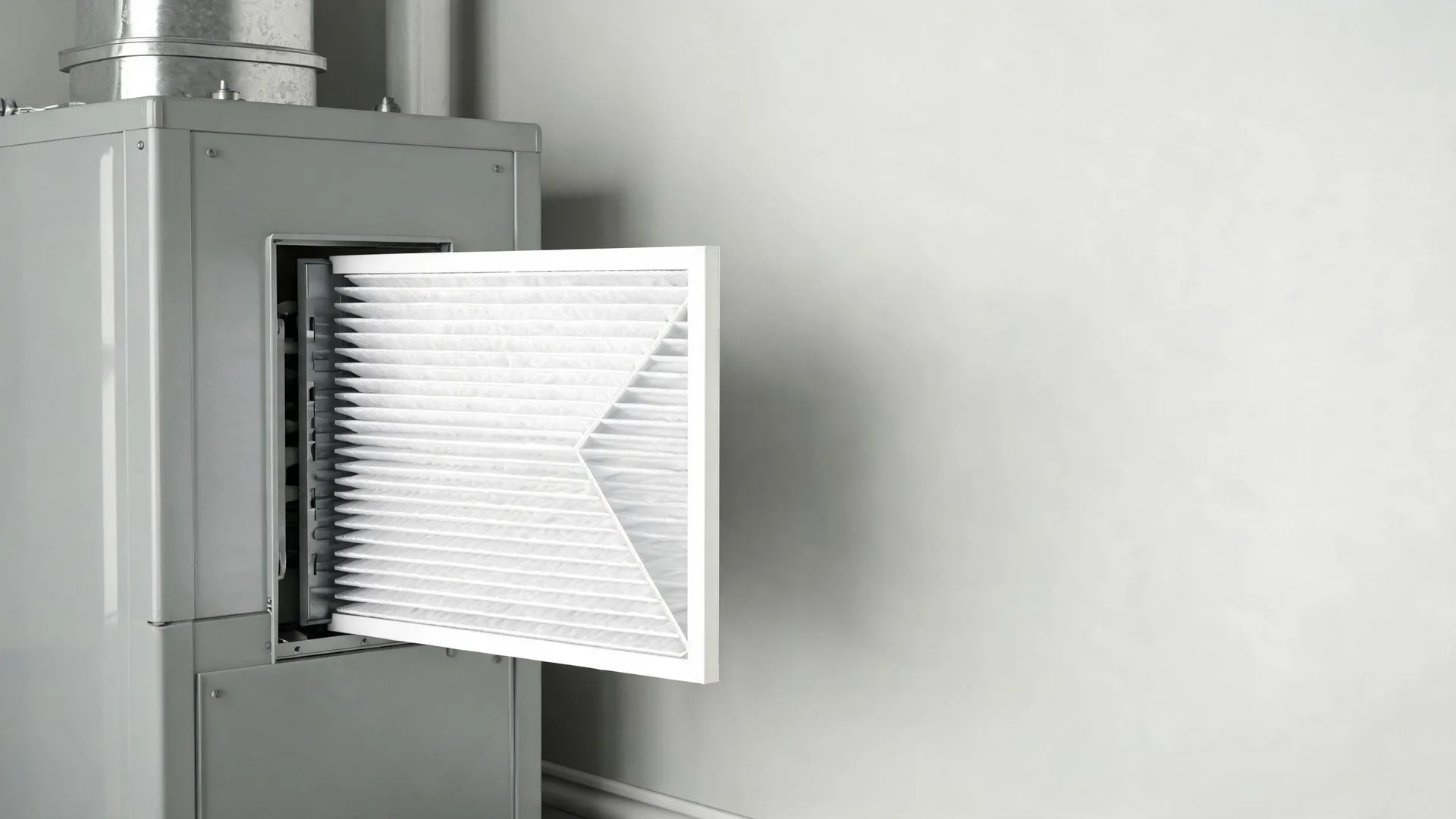
A dirty filter is the one thing a homeowner can handle alone. A clogged filter chokes airflow, makes the blower work harder, and can let the heat exchanger run hotter than it should. Check it every month during the heating stretch, and swap it when it looks gray and matted rather than waiting for a set schedule. Hold it up to a light. If light barely gets through, it needs to be replaced.
Leave the Rest Alone

Past the filter, the furnace is not something to open up. The burner, the igniter, the flame sensor and the heat exchanger all need a trained eye and the right tools to check safely, and some of them involve gas and electrical connections that aren't forgiving of guesswork. Keep the area around the furnace clear so it can pull air freely, and keep vents and returns in the house unblocked. Past that, a strange smell, a new sound, or a flame that isn't steady and blue is a reason to call for service, not to take the panel off and look.

A furnace doesn't have the same drain and coil worries a central air system does, but the filter still runs the whole show. Airflow moves across the heat exchanger and out into the ducts, and the filter sits right in that path. When it's clogged, less air moves past the heat exchanger, and that surface starts running hotter than it was built for. Over years, that kind of heat stress is what makes a heat exchanger crack. The blower feels the same squeeze. It spins longer and works harder to push air through a dirty filter, and a motor that works harder wears out sooner than one that doesn't. None of this shows up overnight. It shows up as a shorter lifespan on parts that were never meant to be replaced every few years.

A proper tune-up starts with the burner. A tech pulls it to clean off scale and corrosion, then checks that the flame burns steady and blue across every port. From there it's the heat exchanger, checked for cracks or hot spots with a camera or a mirror, since that's the part separating combustion gas from the air moving through the house. The igniter gets tested for resistance, not just a glance, because an igniter can look fine and still be too weak to light the burner reliably. The flame sensor gets cleaned, since a film of oxidation on it is one of the most common reasons a furnace shuts itself off mid-cycle. Gas pressure gets checked at the valve, venting gets checked for a solid connection and a clear path outside, and the blower motor gets checked for wear and proper amperage draw. Every electrical connection gets tightened, because a loose wire is a common cause of intermittent failures that are hard to track down later.