




A row of dark-sided single-story houses with shingled roofs behind trimmed hedges and mown lawn, framed by large leafy trees under an overcast sky.

Furnace Maintenance in Pella, IA

Tell us about the job

Takes about a minute. No obligation.

Tune-up, service, or cleaningFurnace or heatingMarion County, IA
Step 1 of 2

What ZIP code is the job in?

Eight months of the year, a furnace here is working. October through May, it's the thing standing between the house and the cold. That's most of the year spent cycling on and off, pushing air through the same ducts, firing the same igniter over and over. A furnace built for a climate like this can handle that load, but the parts inside it still wear with every cycle. The igniter weakens a little each time it fires. The blower motor logs hours most other places wouldn't put on it in a year. None of that shows up as a breakdown right away. It shows up as a part that was already tired before the first hard cold snap asked it to work.

A furnace that short cycles, turning on and off in quick bursts, is already telling you something is wrong before it quits.

Catching that now means a tech adjusts or replaces a part on a bench, not in a cold house at night.

Eight months of heat starts in October, so get it looked at in September

Heat runs October through May
Winter nights average 17°F
Climate zone 5A

Gas heats 60.1% of homes in Marion County, and most of the rest run on propane, another flame-fired fuel. A gas furnace moves air with a blower, but it makes heat by burning fuel, and that means a burner, a flue, and a set of safety controls that an electric furnace doesn't have. The burner has to light clean and burn steady. The flue has to carry exhaust out of the house instead of letting it back up. A cracked heat exchanger or a flue that isn't drafting right won't always announce itself. A tune-up checks the burner, the venting, and the safety controls, not just the filter.

A furnace that works this hard deserves a check before October

Eight months of heat puts real hours on an igniter and a blower motor. A tune-up before October catches the part that's already tired, while the furnace is still sitting idle.

Find a contractor
A man in a dark long-sleeve shirt and tan work pants carries a waxed canvas tool bag up concrete steps toward a blue front door of a gray-sided house, with potted shrubs nearby.
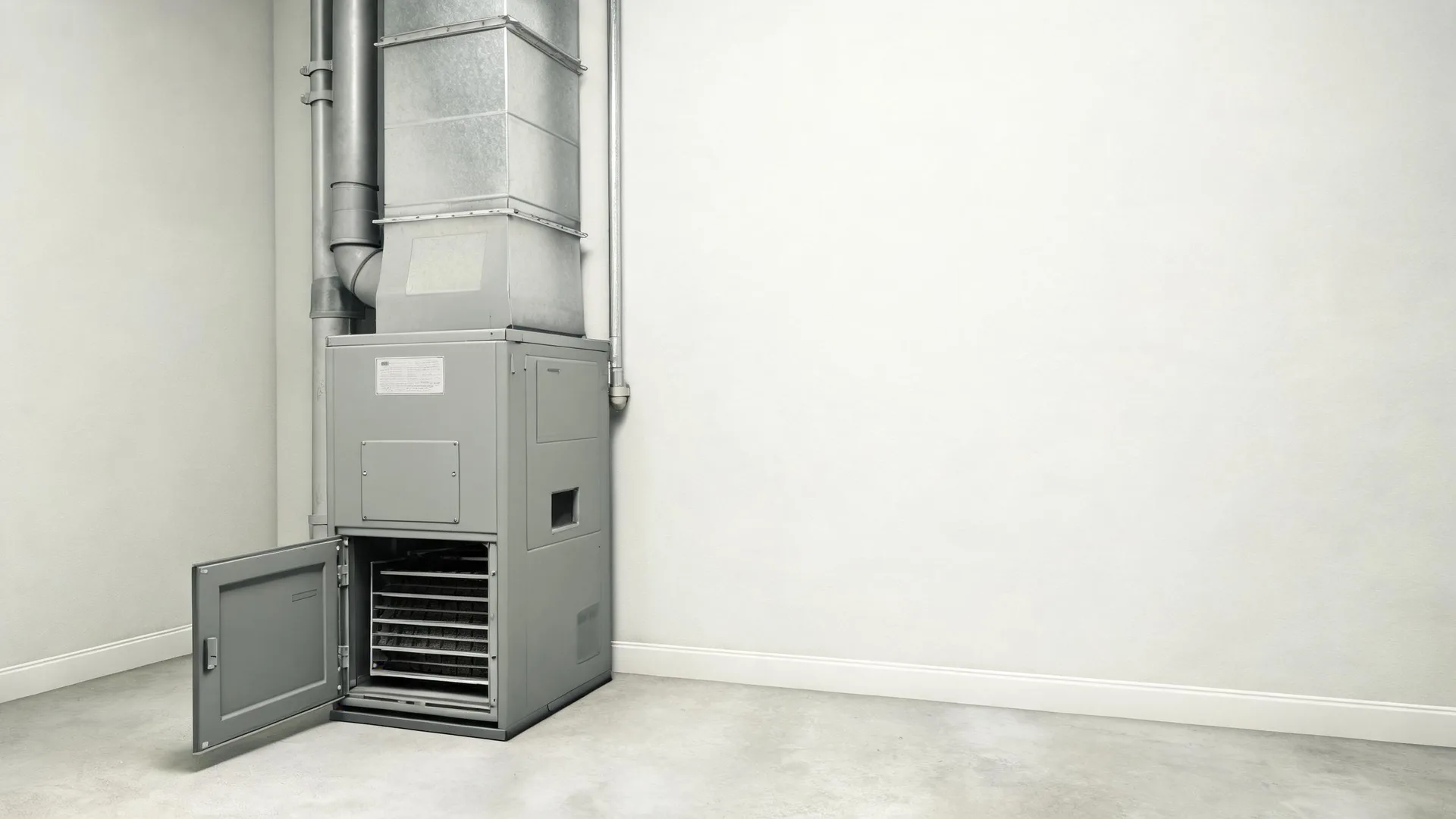
A gray gas furnace with attached ductwork and piping installed in an unfinished concrete basement.

What you can check, and what to leave to the tech

Between tune-ups, a filter is the one thing worth checking yourself. Pull it and hold it up to a light. If you can't see light through it, it's blocking airflow, and a furnace starved for air works harder to push heat through the ducts. A dirty filter makes the blower motor run longer to move the same amount of air, and it can let dust settle on the igniter or the burner over time. Check it monthly during the heating months and swap it when it looks gray and matted. Keep the area around the furnace clear too. Boxes, laundry piles or stored furniture pushed up against the cabinet block the return air it needs and can be a fire risk near the burner. If you have a standing pilot, you can check that the flame burns a steady blue. A flickering or yellow flame means something's off with the mix of air and gas, and that's a call for a tech, not a fix to try yourself. Beyond the filter and keeping the space clear, leave the burner, the flue and the gas line alone. Those need a trained eye, and the wrong adjustment there is dangerous, not just costly.

The heat exchanger cracks from the inside out

Every time the burner fires, the heat exchanger expands, and every time it shuts off, it contracts. Years of that cycling can open a crack too small to see without pulling the burner assembly and looking with a light. A cracked exchanger can let exhaust mix into the air the blower pushes through the house, and from the living room there's nothing to see or smell that tells you it's happening.
A pressure reading tells you what a flame can't

A tech checks gas pressure at the manifold with a gauge, not by eye. Pressure that's too high burns through an igniter and heat exchanger faster than they're built for. Pressure that's too low can leave unburned gas behind and foul the burner over time. Either way the furnace keeps running, so nothing about how it looks or sounds gives it away.

A quick tune-up looks at the furnace from the outside. Someone swaps the filter, glances at the flame, and calls it done. A thorough one opens the cabinet and gets hands on the parts that actually fail. That means pulling the burner assembly to check for rust or corrosion, checking amp draw on the blower motor instead of just listening to it run, and testing the flame sensor rather than assuming it's fine because the furnace lit. It means checking the inducer motor and the venting for blockage, not just the vent hood from the yard. A real tune-up also checks the safety controls, like the limit switch that's supposed to shut the furnace down if it overheats. Anyone can clean a flame sensor with a scrap of sandpaper in thirty seconds. Testing whether it actually signals correctly takes a meter and a few more minutes. That difference is usually where the quick visit and the thorough one split.

A proper tune-up starts before the burner ever fires. The tech pulls the panels and checks the wiring connections, because a loose connection at the blower or the control board causes problems that look electrical but aren't. The blower wheel gets inspected for dust buildup on the blades, since even a little buildup throws it out of balance and makes the motor work harder than it should. Belts, if the furnace has any, get checked for cracking or glazing, though most furnaces built in the last couple decades drive the blower directly and skip belts altogether. The condensate line on a high-efficiency furnace gets checked for algae or sediment, because a clogged line backs up and can shut the furnace down on a safety switch. Thermostat calibration gets a look too, since a thermostat reading a few degrees off makes the whole system cycle wrong no matter how clean the furnace itself is.