




An unfinished basement featuring a forced-air furnace, exposed wooden ceiling joists, bare concrete walls, and miscellaneous items including cardboard boxes and coiled cables on the floor.

Furnace Maintenance in Sioux Center, IA

Tell us about the job

Takes about a minute. No obligation.

Tune-up, service, or cleaningFurnace or heatingSioux County, IA
Step 1 of 2

What ZIP code is the job in?

Eight months of heat is a long stretch for one machine to carry. October through May, the furnace is what stands between the house and the cold, and it doesn't get much of a break in between. Sioux County saw 37 winter storms between 2015 and 2024, heavy snow, ice, blizzards that push outdoor temperatures down for days at a time. Each of those stretches means the furnace runs longer and harder to hold the same indoor temperature. That kind of use wears down an igniter or a blower motor faster than it would somewhere milder. The trouble is those parts tend to give out right when the next storm hits and you need them most.

Close to half the homes in Sioux County heat with gas.

A gas furnace needs its burner, venting and safety controls checked, not just a filter swap.

October is the first cold snap, not a warm-up lap

Heat runs October through May
Climate zone 6A
Winter nights average 11°F

Half the homes in Sioux County were built in 1973 or earlier. A furnace that old has likely been replaced once already, but the ductwork and gas line it ties into usually haven't changed since the house was framed. Years of heat moving through those same connections can loosen a fitting or wear a seal that nobody sees from the basement floor. A yearly check is how a contractor catches that kind of wear before it turns into a cracked heat exchanger or a venting problem. Waiting until the furnace fails means waiting until you've already gone without heat during a hard stretch of winter.

Get the furnace checked before the next storm asks too much of it

A tune-up now means a contractor checks the igniter and blower before the next storm puts them to work. Catching a worn part on a bench is a lot easier than catching it in the middle of a cold snap.

Find a contractor
A gas furnace with attached ductwork, gas piping, and condensate lines installed in a concrete-block basement.

Years on the clock, not just months

If your furnace has been tied into the same ductwork and gas line since 1973 or earlier, a yearly check is what catches a loose fitting or worn seal while it's still small. A contractor can look at those connections every year. You can't, not without pulling things apart.

A dirty filter makes the whole system work harder

Air has to pass through that filter every time the blower runs. Once it's clogged with dust, the blower has to pull harder to move the same air, and the heat exchanger behind it can run hotter than it's built for. A furnace that's straining to breathe wears out its blower motor and its igniter faster than one that isn't.
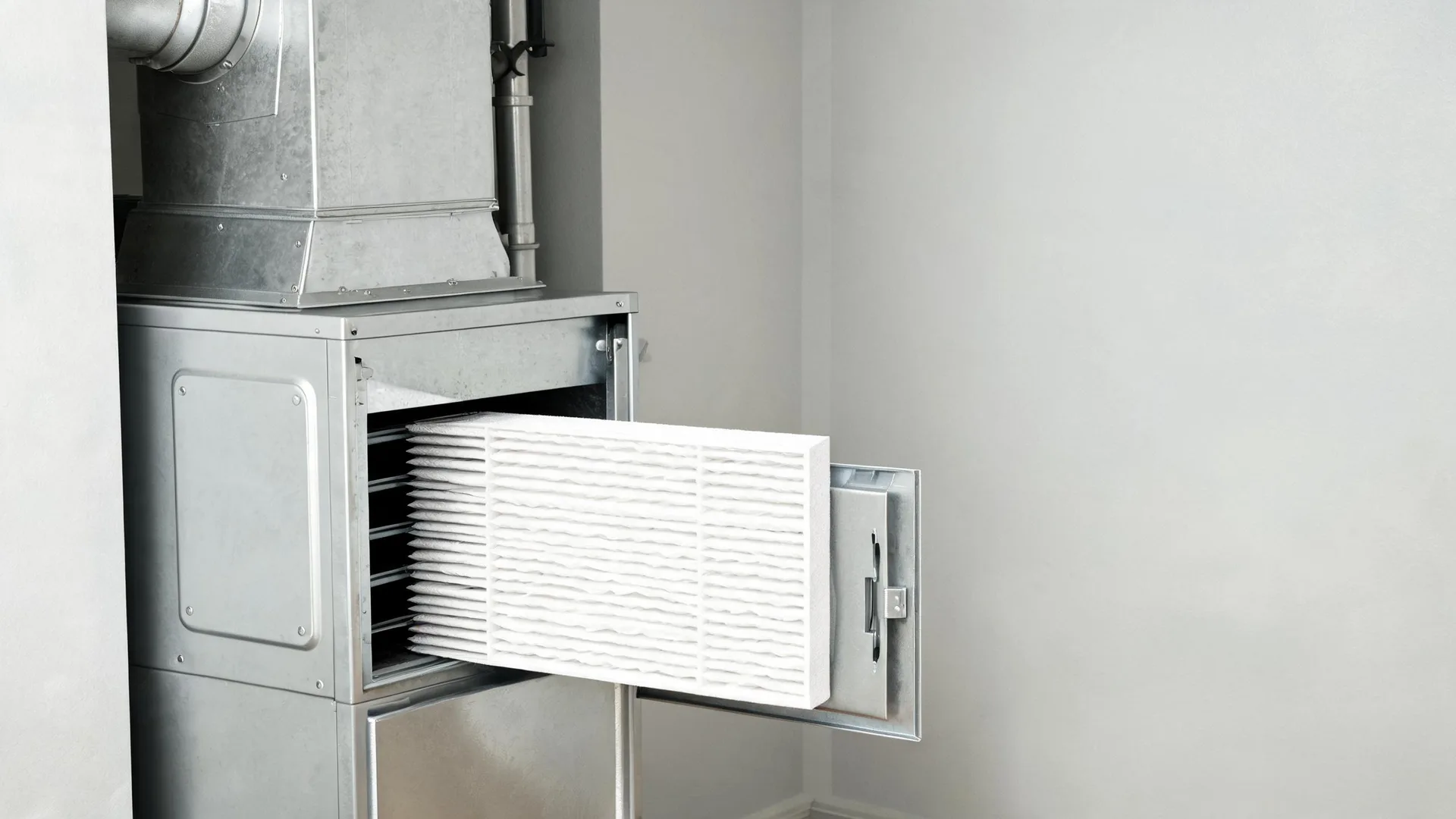
The drain and the flue need a clear path too

A high-efficiency furnace pulls condensation off as it runs, and that water needs somewhere to go. A clogged drain line can back up into the unit and trip a safety switch, shutting the furnace down until someone clears it. The flue has its own job, carrying exhaust out of the house, and a blocked or disconnected section is something a contractor checks every time, not something you'd notice from the basement floor.

A tune-up is mostly about what a contractor can take apart that you can't. The burner gets pulled and cleaned so the flame burns steady instead of ragged, because a flame that's lifting or rolling out of shape means incomplete combustion. The flame sensor gets checked too, since a coated sensor can't tell the control board the burner is actually lit, and that shutdown looks like a dozen other problems from where you're standing. Amp draw on the blower motor tells a contractor if the bearings are starting to wear long before the motor seizes up and quits. None of that shows up as a smell or a sound you'd notice walking past the furnace. It shows up as a part that fails and a bill nobody saw coming.

A tune-up also covers the parts that keep a furnace safe, not just running. The heat exchanger gets inspected for cracks, since that's the barrier between combustion gas and the air blowing through the house. Gas pressure gets checked at the valve, because too high or too low changes how the burner fires every single cycle. Limit switches and rollout switches get tested too, the ones that shut the furnace down if it runs hotter than it should. A contractor also checks that the thermostat is calling for heat correctly and that the furnace responds the way it's supposed to, cycle after cycle. These are the checks that don't show up as a problem until the one day they do.