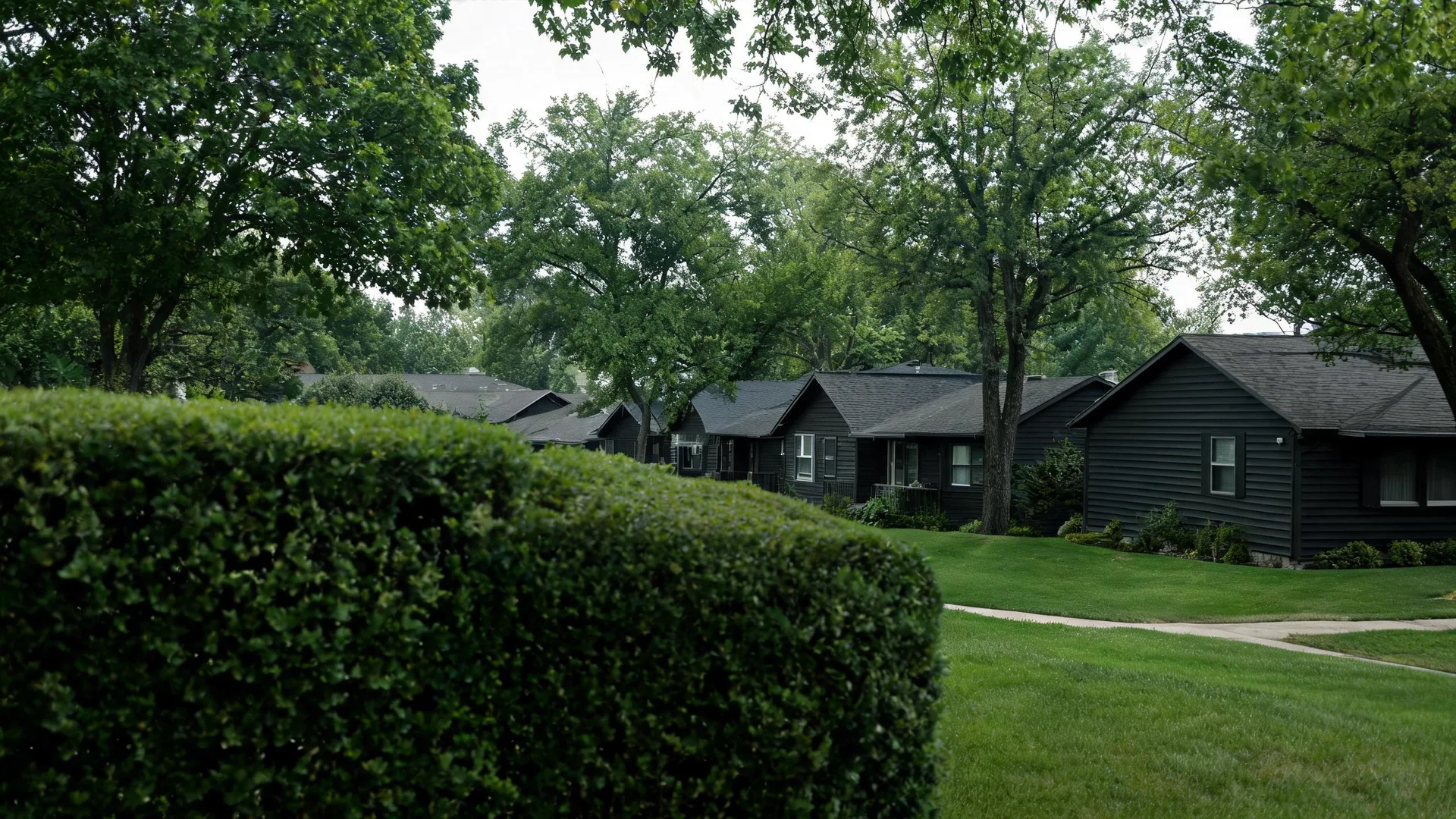



A row of dark-sided single-story houses among large deciduous trees, with a trimmed hedge in the foreground and a mown lawn crossed by a paved path.

Furnace Maintenance in Tipton, IA

Tell us about the job

Takes about a minute. No obligation.

Tune-up, service, or cleaningFurnace or heatingCedar County, IA
Step 1 of 2

What ZIP code is the job in?

Eight months of heat, October through May, is most of the year for a furnace here. That's a long stretch for one machine to carry without a break. Cedar County saw 28 winter storms between 2015 and 2024, and each one means the furnace runs longer and harder to keep the house warm. That kind of use wears down an igniter or a blower motor faster than it would somewhere milder. A problem that might take years to show up elsewhere can show up in a single hard season here.

Half the homes in Cedar County were built in 1965 or earlier.

A furnace that old has likely been replaced once already, so the one in the house now may be closer to the end of its life than its age on paper suggests.

Most of Cedar County heats with gas, which means a burner and venting to check, not just a filter

52.7% of homes heat with gas
Climate zone 5A
Heat runs October through May
October Starts It ColdFurnaces here come on in October and run through May, so the check belongs in September.

If your furnace came with the house, there's a decent chance nobody's looked inside it in years. A yearly check gets a technician in front of the burner, the igniter, and the heat exchanger, so a part close to failing gets caught before it quits on a cold night. That matters more on a furnace that's already had one life in a different house. The nameplate won't tell you what's worn. A technician looking at it once a year will.

Get It Checked Before It Has to Carry the Winter

A tune-up before October catches a worn igniter or a tired blower motor while it's still an easy fix. Once the cold sets in, that same part is working every day with no break until May.

Find a contractor
A gas furnace with attached ductwork, gas piping, and condensate lines installed in a concrete-block basement.

What the Furnace Isn't Telling You

A furnace looks fine from the hallway. The flame burns steady, the air comes out warm, and nothing seems wrong until the day it doesn't start. What a tune-up finds is what the running furnace hides. Flue gas can be spilling at the draft hood instead of drawing up the vent, and you'd never smell it or see it. A crack in the heat exchanger stays quiet until the metal expands with heat and opens just enough to matter. A flame sensor coated with a thin layer of oxidation will still let the furnace fire for weeks before it finally won't. None of that shows up as a noise or a smell or a cold room. It shows up as a reading on a combustion analyzer, a flame sensor pulled and cleaned, a heat exchanger checked with a camera or a mirror. A tune-up is someone looking at the parts that don't announce themselves until they fail.

The Signs Worth Watching For

A furnace losing efficiency will often show it before it quits. The burner flame should burn steady and blue. If it's flickering yellow or orange, something's off with the combustion. A furnace that cycles on and off more than it used to, or runs longer to reach the same temperature, is working harder to do the same job. Rooms that used to heat evenly and now don't, a blower that kicks on louder or rattles when it starts, a burner smell that lingers longer than a few seconds after startup. Each one by itself might not mean much. Together they're the furnace telling you it wants a look before it tells you by not starting at all.

Why Catching It Early Matters

A technician doing a seasonal check isn't just confirming the furnace runs. They're looking for the part that's close but not gone yet, a flame sensor starting to coat over, an igniter with a hairline crack, a blower motor drawing more current than it should. Caught at that stage, it's a straightforward fix on a schedule the homeowner picks. Missed, the same part fails on its own clock, usually on the coldest night it's worked the hardest. The check doesn't change how the furnace runs today. It changes who decides when the worn part gets replaced.

Skip the yearly check and the furnace doesn't fail any faster on its own. What changes is whether anyone catches it first. Dust builds on the burner assembly and the flame starts burning uneven instead of steady. A dirty flame sensor lets the furnace short cycle for weeks before it finally shuts down and won't restart. Bearings in the blower motor dry out slowly, drawing more current each month until the motor trips or burns out. None of that announces itself. It just adds up quietly until the furnace asks for a repair instead of a tune-up, usually at the worst possible time to be without heat.

A proper tune-up starts with the burner, pulled and cleaned so the flame burns even across every port instead of leaning yellow in spots. The igniter gets checked for hairline cracks, since that's usually how it fails, not all at once but a little more fragile every cycle until it doesn't glow hot enough to light the gas. The flame sensor comes out and gets cleaned of the oxide layer that builds up on it, because that layer is what causes short cycling long before anyone notices a pattern. A technician checks the heat exchanger with a camera or a mirror, looking for the hairline crack that only opens once the metal's hot. The venting gets checked too, making sure flue gas is actually drawing up and out instead of spilling back into the house. Blower wheel gets cleaned, motor bearings get checked, and the whole system gets tested running, not just looked at sitting still. A gas furnace draws air for combustion from somewhere, so that intake gets checked along with everything else. None of this is guesswork. It's the same handful of parts, checked the same way, because those are the parts that fail quietly and the ones a furnace won't tell you about on its own.