Eight months of work
Furnaces in Dallas County run from October through May. That's most of the year asking the igniter, the blower motor and the heat exchanger to do their job, not just a few cold snaps.
Takes about a minute. No obligation.
Furnaces in Dallas County run from October through May. That's most of the year asking the igniter, the blower motor and the heat exchanger to do their job, not just a few cold snaps.
Overnight lows average 15°F across December, January and February. A furnace built to take the edge off doesn't get that break here. It runs long and it runs often.
Furnaces in Dallas County start working in October.
September is when to get yours checked, before it has to run.


A furnace built in 2006 or later still has plenty of working life left in it. A yearly check is what keeps it that way. A technician cleans the burners, checks the heat exchanger for cracks, and tests the igniter before the cold sets in, so small wear gets caught while it's still small. Skip that check for a few years running and the same furnace starts short cycling or struggling to hold a temperature. If your furnace came with the house, a yearly check is enough to keep it running the way it was built to.
Almost six in ten homes in Dallas County heat with gas. That means a furnace with a burner, a flue and a gas valve doing the work, not just a blower and a filter. A yearly check covers the parts a filter change never touches.
Find a contractorOnce the furnace is running every night through a 15 degree stretch, a weak igniter or a cracked heat exchanger doesn't stay hidden long. Catching it before October means a technician finds it with the panel off, not you finding it on the coldest night of the year.
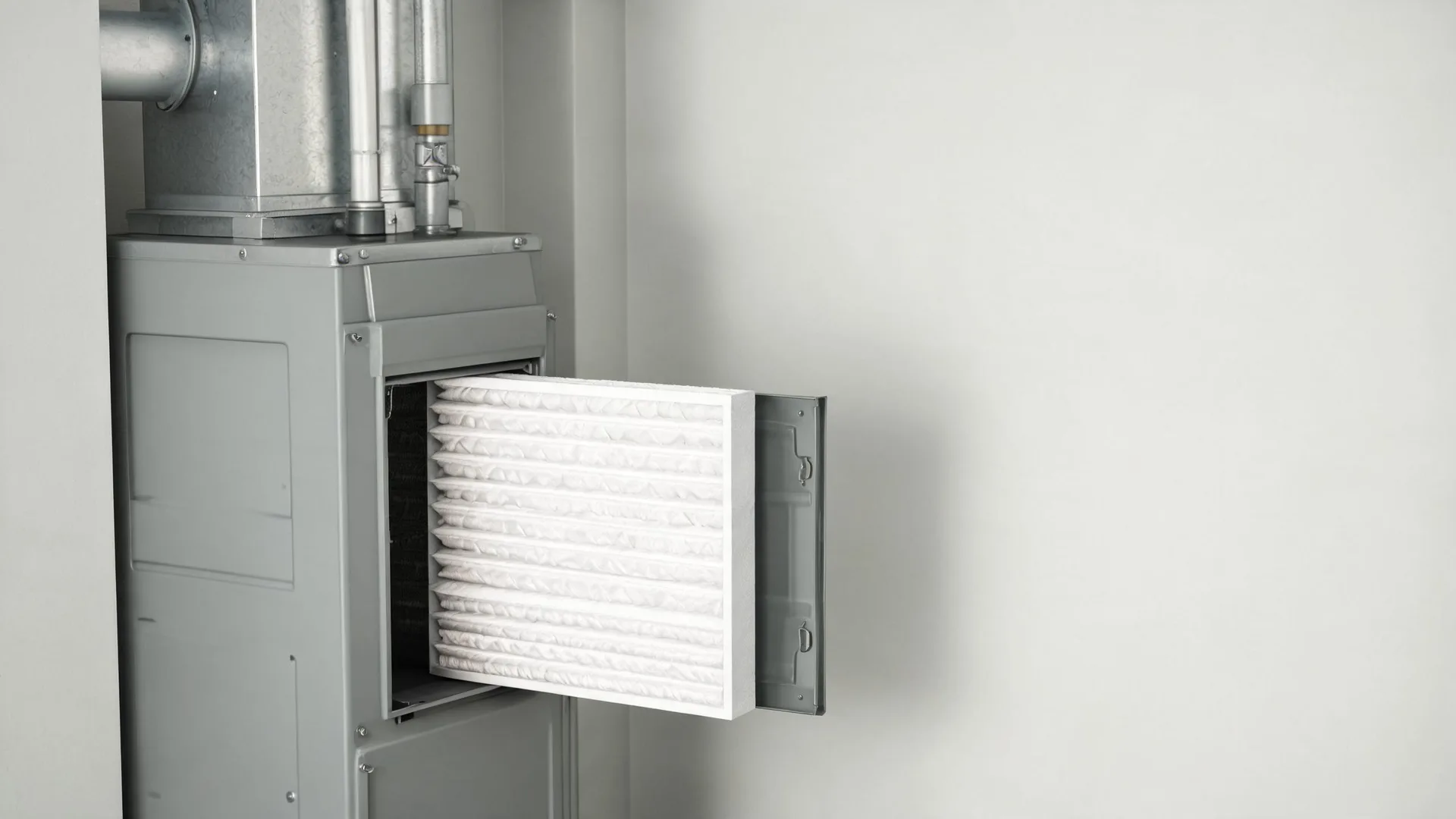
A furnace filter stops dust from caking the blower wheel and the coil if there's one in the cabinet for the AC side. A clogged filter doesn't stop the furnace, it just starves it for air. Less air across the heat exchanger means it runs hotter than it should and shuts off and on more than it needs to. Swapping the filter is the one part of this a homeowner can do between checks.
A high efficiency furnace pulls so much heat out of the exhaust that it condenses into water, and that water needs a clear drain line to get out. A clogged drain trips a safety switch and the furnace won't fire at all. Older furnaces with a standard flue don't have this problem, so whether it applies depends on which kind is in the house.
A tune-up finds what the furnace can't tell you on its own. A technician checks the flame through the viewport and reads its color and shape, because a flame that's lazy or flickering yellow instead of a steady blue means incomplete combustion, something you'd never see with the panel on. They measure the temperature rise across the heat exchanger, since too high a rise points to restricted airflow and too low a rise means it's not heating properly. The igniter gets tested under load, not just looked at, because an igniter can glow and still fail the moment it's asked to hold. None of this shows up as a smell or a sound beforehand. It shows up as a furnace that won't start on the coldest morning of the year.
A tune-up also covers what happens after the burners light. A technician checks that the inducer motor pulls exhaust out before the gas valve is allowed to open, because that's the safety interlock keeping combustion gas out of the house. They check the limit switch, which shuts the furnace down if the heat exchanger gets hotter than it should, and they make sure it trips where it's supposed to instead of after. Belts aren't part of this on a modern furnace. The blower motor and inducer motor are direct-drive, so what wears is the bearings and the motor windings, not a belt. A technician also vacuums the burner assembly and the area around the flame sensor, since dust buildup there is what causes a furnace to light, run a few seconds, and shut off again. None of this is visible with the panel closed, which is the point of doing it every year instead of waiting for a symptom.