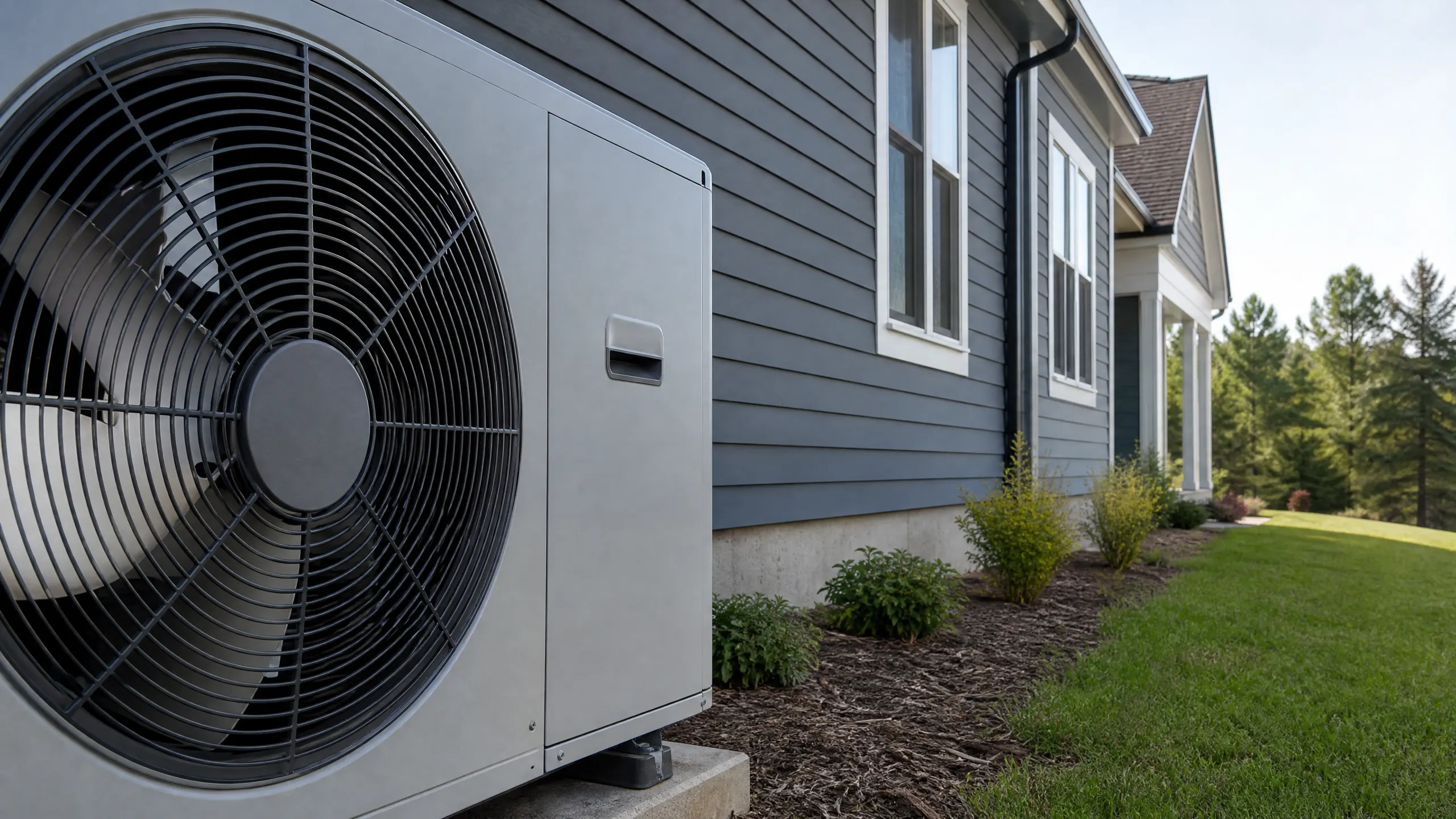







A heat pump outdoor unit mounted on a concrete pad next to the gray-sided exterior wall of a residential house.

Heat Pump Installation in Clinton, IA

Tell us about the job

Takes about a minute. No obligation.

New system or replacementHeat PumpClinton County, IA
Step 1 of 2

What ZIP code is the job in?

Gas heats 62.9% of homes in Clinton County, more than any other fuel. Propane heats another 17.2%, and electricity heats 16.5%. A heat pump can work alongside a gas or propane furnace, handling the milder months while the furnace stays in place for when it gets cold. In an all-electric home, a heat pump usually takes over the job that baseboard or resistance heat was doing. Either way, what's already installed, whether that's a furnace, an air handler, or electric baseboard, shapes how the new system gets put in.

8 months
October through May, your system heats
3 months
June through August, it cools
16°F
the average winter night it heats against
82°F
the average summer afternoon it cools against
Isometric cutaway illustration of a single-story house with a dark gabled roof, showing interior rooms with ductwork leading to an indoor air handler and an outdoor condenser unit connected by lines on the ground outside.
Your system heats October through May and cools June through August.

NOAA nClimDiv, 1991–2020 normals

Heat runs eight months a year here, October through May.

September is the month to get a heat pump installed, before the cold settles in.

Half the homes here were built in 1957 or earlier, and a heat pump has to work with that house, not a new one

Half the homes here were built by 1957
75 damaging wind events from 2015 to 2024
50 hail events from 2015 to 2024
A standard heat pump is built for thisZone 5A, overnight lows averaging 16°F in winter

A standard heat pump, sized and rated like the ones going into homes anywhere else in Iowa, is the right call here. Clinton County gets its share of rough weather, including damaging wind and hail, but none of that changes what the unit sitting outside needs to be. Sizing comes from your house, its square footage, its insulation, how many rooms need to stay warm, not from the storm count down the road. Where the weather does matter is the power staying on. Winter storms bring down lines here, and a heat pump needs electricity to run, same as the blower on a gas furnace does. A backup plan for outages is worth asking about, separate from the system itself.

A standard heat pump, sized for your house, is what this job calls for

A standard heat pump sized for your house is the right system here. Clinton County doesn't call for oversizing or a premium unit to handle anything unusual, so there's no reason to pay for more than your home needs. At 13.40 cents per kilowatthour, what matters more than the system's size is getting it sized correctly from the start.

Find a contractor
A man in a cap, long-sleeved shirt and work pants walks up porch steps toward a dark gray paneled front door, carrying a canvas tool bag, with a potted shrub to the right.
A gray outdoor HVAC unit mounted on a concrete pad beside a house with gray lap siding and a stone foundation.

Half built in 1957 or earlier, sized for the house you have

Ask the contractor for a load calculation before anything gets ordered. That's what sizes the heat pump to your house instead of to a guess, and it matters more here, with half the homes built in 1957 or earlier, than it would in a newer subdivision. If ductwork is already in place, it was sized for whatever heated the house before, worth asking about too.

The rating tells you the ratio, not the bill

The efficiency rating on a heat pump's label describes how much heat it moves for the power it uses, against a less efficient unit doing the same job. It says nothing about your house, your ductwork, or how many hours the system has to run to keep up. Homes with the same rated heat pump can end up using very different amounts of power depending on insulation, air leaks, and whether the system was sized right in the first place.
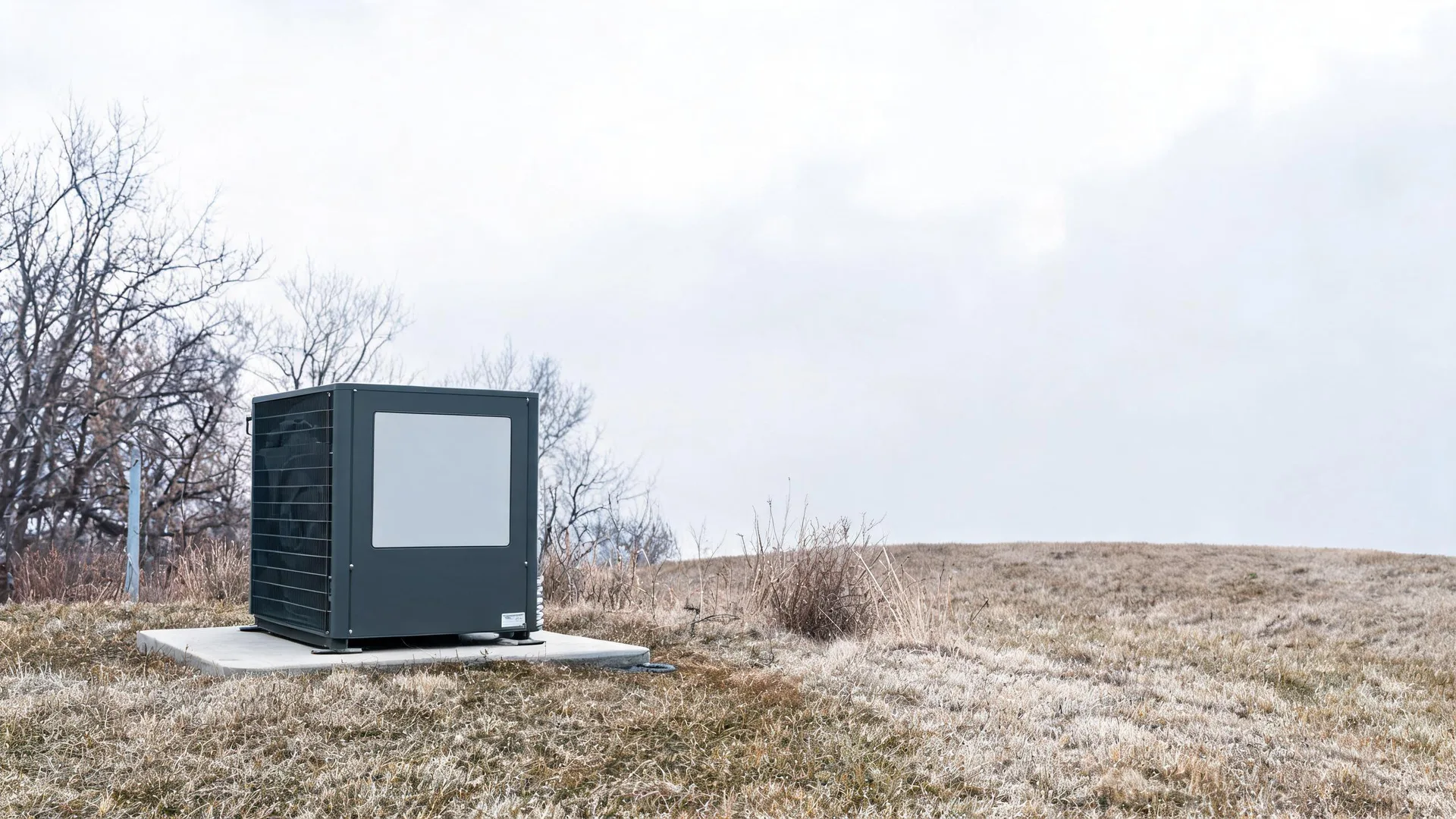
A higher rating costs more up front

Units with a higher efficiency rating generally cost more to buy and install than standard ones. That extra cost only pays off if the system runs enough to make up the difference, and only if it's matched to the house correctly. A high-efficiency unit that's the wrong size will cycle on and off too often and never reach the performance the label promises.

A handful of things push the price of a heat pump installation up or down, apart from the unit itself. Ductwork is one. If what's there is sealed and sized right, the crew connects to it. If it's leaky or undersized, that gets fixed or replaced before the heat pump can do its job, and that's labor beyond the equipment swap. Electrical is another. A heat pump runs on a dedicated circuit, and if the panel doesn't have room or the wiring isn't rated for it, that's an upgrade on top of the install. Where the outdoor unit goes, how far the line set has to run between it and the indoor coil, and whether a crane or extra crew is needed to move equipment into place all factor in too. None of this is optional or padding. It's what it actually takes to get the system running the way it's supposed to.

Taking out the old system is part of the job, not an afterthought. If a furnace is going, it gets disconnected from the gas line or power, and the gas line gets capped off properly, not just shut at the valve. Old refrigerant in a worn-out air conditioner or heat pump has to be recovered before the unit comes apart, not vented, that's a federal rule, not a preference. Baseboard or resistance heat comes out wall by wall, and whatever wiring fed it either gets reused or capped. A window gets patched where a line set used to pass through it, and the pad or slab the old condenser sat on either holds the new one or gets cleared. None of this is hard to do, but it's real work, and it happens before the new heat pump is calibrated and left running.