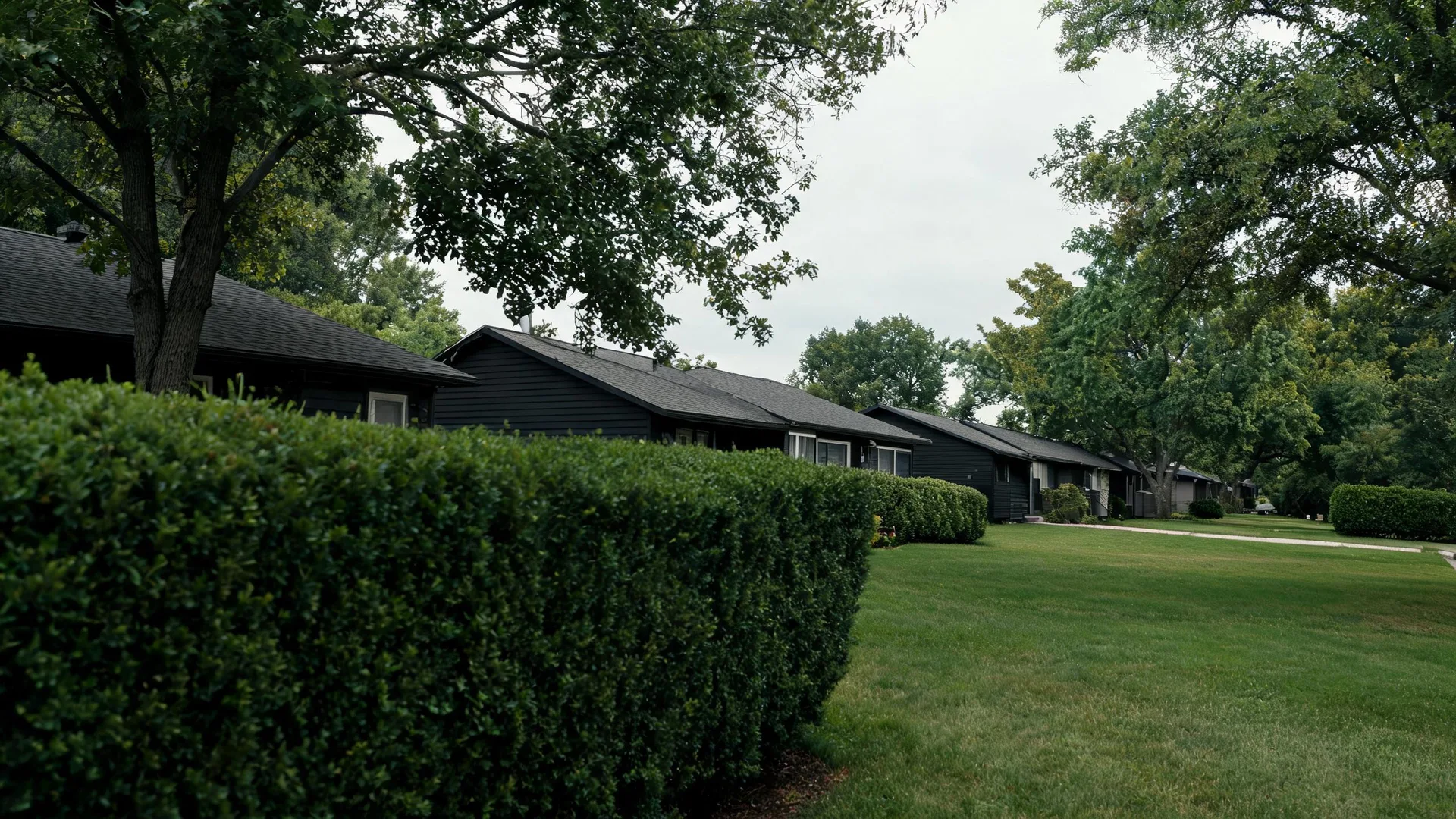






A row of dark-sided single-story houses behind a long trimmed hedge, with mown lawn, a paved path and large leafy trees under an overcast sky.

Heat Pump Installation in Iowa City, IA

Tell us about the job

Takes about a minute. No obligation.

New system or replacementHeat PumpJohnson County, IA
Step 1 of 2

What ZIP code is the job in?

Gas heats most homes in Johnson County, 63.3% of them. Electricity covers another 27.6%, with the rest on LP gas. That matters for a heat pump because most homes here already have a furnace to pair it with. A heat pump can carry the heating load in milder weather and let the furnace take over once it gets cold, which cuts gas use without taking the furnace out. Some homeowners size the heat pump to cover the whole year instead. Either way, what's already in the house, gas furnace or electric heat, decides which setup makes sense.

8 months
October through May, your system heats
3 months
June through August, it cools
16°F
the average winter night it heats against
83°F
the average summer afternoon it cools against
Isometric cutaway illustration of a single-story house showing interior rooms, attic ductwork and an air handler, with an outdoor condenser unit connected by lines along the exterior wall.
Your system heats October through May and cools June through August.

NOAA nClimDiv, 1991–2020 normals

Johnson County sits in zone 5A, a cool climate where heating does most of the work.

A standard heat pump sized for this zone handles winters here without upsizing.

A normal size, built for normal weather

Power costs 13.4 cents a kWh statewide
87 damaging wind events from 2015 to 2024
71 hail events from 2015 to 2024
Normal weather, standard equipment87 wind events and 25 winter storms in ten years, nothing a standard system can't handle

Heat pump installation in Iowa City is easiest to plan before heat season starts in October, so September is the month to get it done. A new system takes some time to size and schedule once you factor in the furnace pairing, and a contractor can take that time if you're not racing the first cold night. Cooling runs June through August here, so a September install also gives the heat pump a full winter to prove itself before it has to carry summer. Wait until October and you're choosing a system while you need heat that day, which pushes you toward whatever's on the shelf instead of what fits your house.

A new system here starts at 14.3 SEER2 and 7.5 HSPF2

Any heat pump installed here now has to meet federal minimums of 14.3 SEER2 and 7.5 HSPF2, so the baseline is already set for you. That still leaves room to size the system around your furnace pairing or around covering the whole year. Get the paperwork started and find out what fits.

Find a contractor
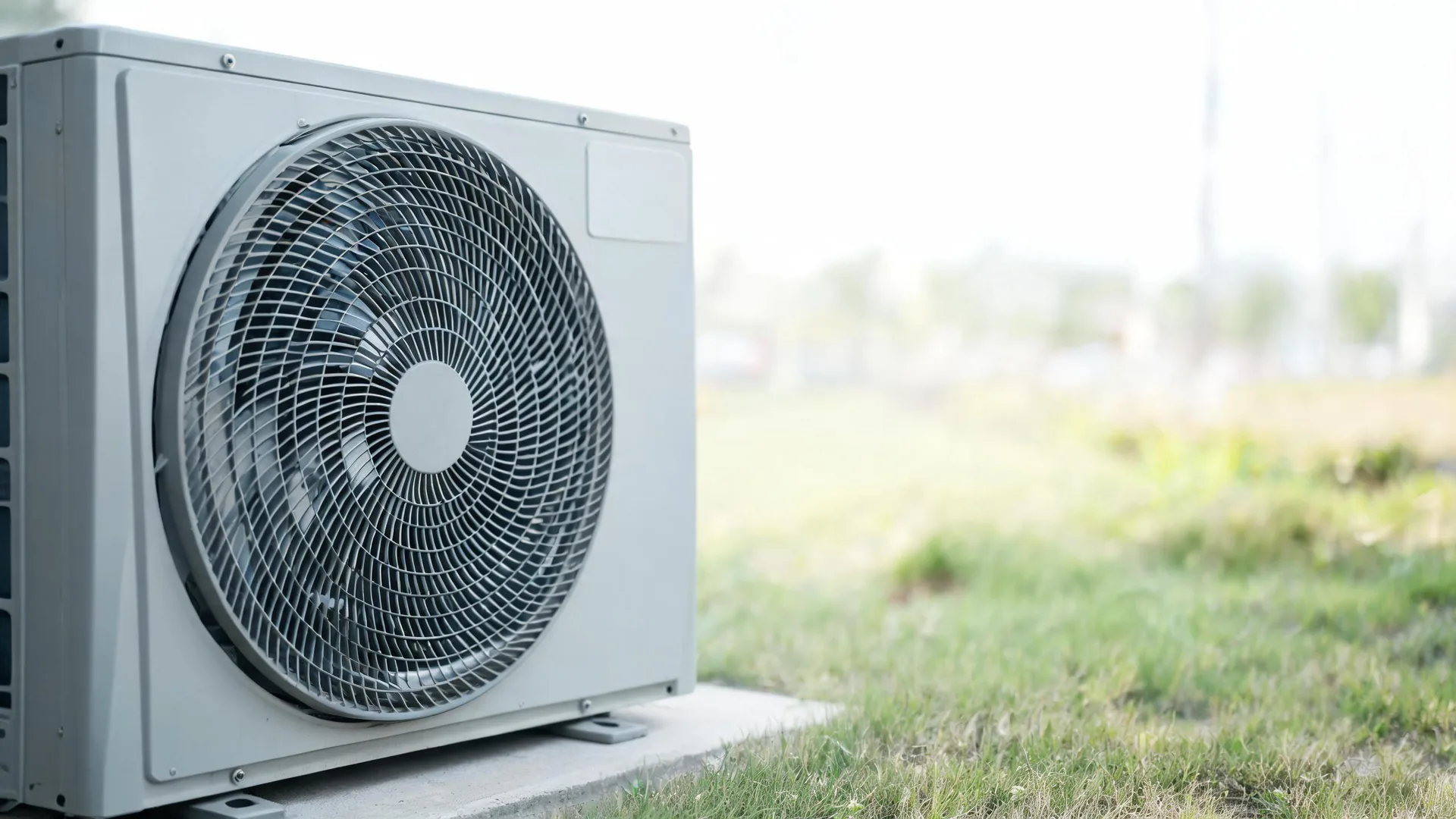
A gray heat pump outdoor unit mounted on a concrete pad next to the stone-accented exterior wall of a house.

The size comes from the house, not the old unit

Sizing a heat pump isn't about matching the old equipment or going bigger to be safe. A contractor works it out room by room, adding up the walls, windows, ceiling and floor area, and how much heat they lose or gain, to land on a number that matches the house. Oversize it and the unit short cycles, running in quick bursts that cool or heat the air but never run long enough to pull moisture out or settle the temperature evenly. Undersize it and it runs constantly, struggling to keep up on the coldest or hottest days. Either mistake wears the compressor down faster, since it's the part working hardest every time the system turns on. A unit sized right runs longer, steadier cycles, which is easier on the equipment and keeps the house more even room to room.

The old system doesn't just get hauled off

If you're keeping the furnace and adding a heat pump, the furnace stays put and the new coil ties into that same ductwork. If the whole system is going, the old condenser, coil and furnace or air handler all come out together, along with the refrigerant lines running between them. A contractor has to reclaim whatever refrigerant is still in the old lines before anything gets disconnected. That's not optional. It's handled as part of the teardown.
What gets reused and what doesn't

Ductwork usually stays, since it's already sized to the house and tearing it out isn't part of a normal swap. The electrical disconnect and the pad the old unit sat on often get reused too, if they're in decent shape. The thermostat almost always gets replaced, since a heat pump needs one that can run a furnace and a heat pump together or switch between them on its own. Expect the old equipment gone the same day the new system goes in, not sitting around after.

Ask for the heating and cooling capacity on every quote, not just the model number. A low price on a unit that doesn't match your house isn't a deal. Ask what sound rating the outdoor unit carries, since a heat pump runs more hours across the year than an air conditioner alone, and that adds up if it sits near a window or patio. Ask how the contractor arrived at the size, and expect an answer that points to your walls and windows, not the old equipment. If a new thermostat is part of the quote, ask whether it can run the heat pump and the furnace together or only one at a time. Ask what happens on the coldest day, where the furnace takes over, and who sets that point. A contractor who answers without pausing has actually worked out the numbers for your house.

Installation day starts with the outdoor unit and the indoor coil, and usually runs the better part of a day for a straight swap, longer if a furnace pairing or new ductwork is part of the job. The old refrigerant lines get reclaimed before anything is cut loose, then the new lineset gets run and brazed, pressure tested, and pulled down into a vacuum before any refrigerant goes in. That vacuum step matters more than people think. Any moisture or air left in the lines turns into acid or ice once the system runs, so a contractor won't charge the system until the gauges hold steady. Once the coil's set and the lines are charged, it's electrical hookups, a new thermostat, and a run-through of both heating and cooling before anyone calls it done. A tech will cycle the system a few times, check the temperature split at the vents, and listen for anything that shouldn't be there before packing up.