






A quiet suburban street at twilight featuring two-story brick homes with illuminated windows and large trees lining the sidewalk.

Heat Pump Installation in Maquoketa, IA

Tell us about the job

Takes about a minute. No obligation.

New system or replacementHeat PumpJackson County, IA
Step 1 of 2

What ZIP code is the job in?

Most houses in Jackson County heat with utility gas, 54.1 percent of them. Another 28.7 percent run on bottled or LP gas, which usually means a home off the main gas line. Electric heat covers a smaller share. A heat pump doesn't have to replace any of that outright. Plenty of installs here pair a heat pump with the existing furnace, so the heat pump handles the milder months and the furnace takes over when it gets cold enough to need it. That works whether the backup is gas or propane. If you're on LP, it's worth asking what a heat pump does to your propane use over a winter, since that's the fuel it would be offsetting most.

8 months
October through May, your system heats
3 months
June through August, it cools
16°F
the average winter night it heats against
82°F
the average summer afternoon it cools against
Isometric grayscale illustration of a cutaway house showing interior rooms, ceiling ductwork and an air handler, connected by lines to an outdoor condenser unit on a pad outside.
Your system heats October through May and cools June through August.

NOAA nClimDiv, 1991–2020 normals

Electricity in Iowa runs 13.40 cents a kilowatt-hour.

A standard heat pump sized for your house runs on that rate without any surprise.

Get it in before September, so it's working before heat season starts

Cooling runs June through August
Heat runs October through May
26 winter storms from 2015 to 2024

Jackson County sits in climate zone 5A, a cool zone where winter heating demand outweighs summer cooling. Any split-system heat pump installed here new has to meet federal minimums that took effect in 2023. That's 14.3 SEER2 for cooling and 7.5 HSPF2 for heating. HSPF2 is the one that matters most in a zone like this, since it measures how the unit performs pulling heat out of cold air, not just how it cools. Those numbers are floors, not targets, so a contractor sizing a system for your house may land above them depending on what the home needs. A heat pump paired with a furnace for backup still has to clear the same minimums on its own.

Size it for the house you actually have

Half the homes in Jackson County were built in 1970 or earlier. A heat pump going into a house that age has to work with the ductwork and layout already there, not some ideal setup. That's a sizing question, and it's one a contractor needs to answer by looking at your house, not just its square footage.

Find a contractor
A man in a dark long-sleeved shirt and brown pants walks up concrete steps toward a dark blue front door, carrying a canvas tool bag with tools in it, beside a potted shrub.
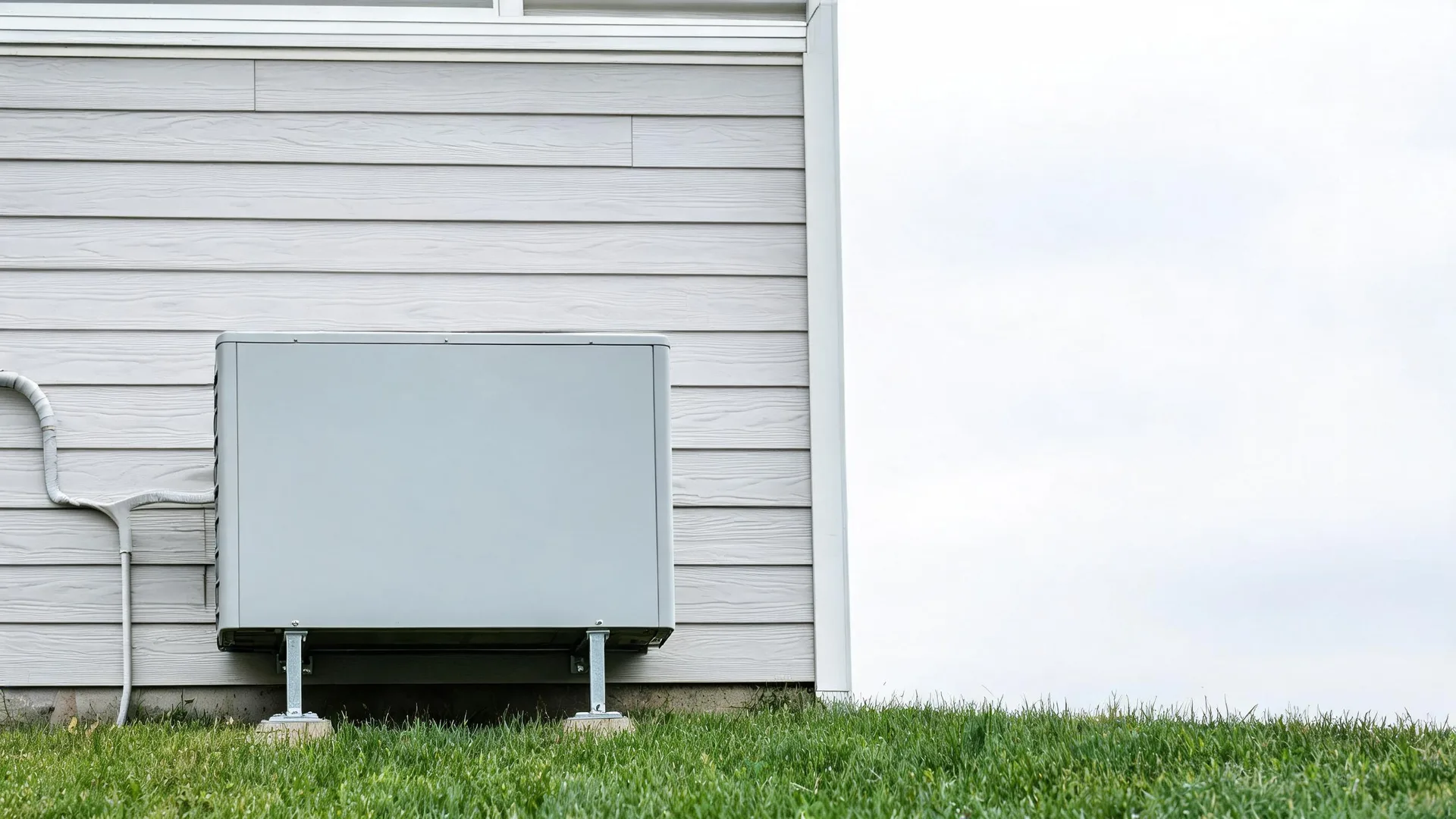
A gray outdoor HVAC unit mounted on a concrete pad beside a house with gray lap siding and a stone foundation.

It runs more hours than a furnace alone ever did

A heat pump run as the only heat source works every day of the year, not just in the shoulder months. If yours is paired with a furnace for backup, it's still the one running on milder days and doing the defrosting and cycling that a furnace never had to do. Either way, ask what the compressor does at low outdoor temperatures, since that's when it's working hardest and a weak unit leans on backup heat sooner than it should. Ask how the defrost cycle is controlled. A unit that defrosts on a timer clears frost whether the coil needs it or not, while one that defrosts on demand only runs the cycle when the coil is actually iced. Ask what the sound rating is at the compressor, since this runs outside a bedroom window at times a furnace alone never did. And ask about the compressor's speed range. A single-speed unit is either on at full output or off, cycling hard every time it starts. A variable-speed compressor can run low and steady for long stretches, which is easier on the equipment and holds the house at a steadier temperature besides.

The equipment is only part of the bid

A heat pump costs more up front than a furnace of similar quality, since it's built to move heat both directions with a compressor and a reversing valve a furnace never needed. But the line items around the unit, the refrigerant lines, the electrical work to feed the outdoor unit, any ductwork changes so it can move enough air at low heating output, often matter more than which brand of heat pump gets picked.
What's already at the house changes the job

If the ductwork is undersized or leaky, a contractor either designs around that or recommends fixing it first, and either path adds cost that has nothing to do with the heat pump itself. The electrical panel matters too. A heat pump draws differently than a furnace did, and if the panel can't carry that load as it sits, that work has to happen before the heat pump goes in at all.

Whatever is getting replaced has to come out before the new system goes in, and that's its own job, not an afterthought. If a furnace is going, the old gas line to it gets capped off, not just shut, so there's no fitting left to leak later. If there's a straight AC condenser going away, the old refrigerant gets recovered into a tank before anyone disconnects a line, since venting it is illegal and a contractor won't do it. Any line set that isn't getting reused comes out too, since old refrigerant lines left in a wall or crawlspace don't do anything but take up space. The old electrical disconnect and whip usually get pulled and replaced rather than reused, since a heat pump's outdoor unit draws differently than whatever was there before and the breaker and wiring need to match it. None of this shows up as a line item people expect, but it's part of the job every time.

Install day starts with the outdoor unit and the indoor coil, and a good crew sets the pad or bracket before anything else moves off the truck. Refrigerant lines get run and brazed, then pressure tested before any refrigerant goes in, since a joint that leaks at low pressure fails outright at operating pressure later. The electrical work usually happens in parallel, a new circuit or disconnect run out to where the outdoor unit sits. Once the lines are tight and the wiring is landed, the system gets evacuated with a vacuum pump to pull out moisture and air, because either one left in the lines ruins the refrigerant charge over time. Only after that does the refrigerant go in, charged to the weight the manufacturer specifies for that line length. Expect the crew to run the system through a full cycle before they leave, heating and cooling both, checking temperatures at the vents against what the equipment should be producing.