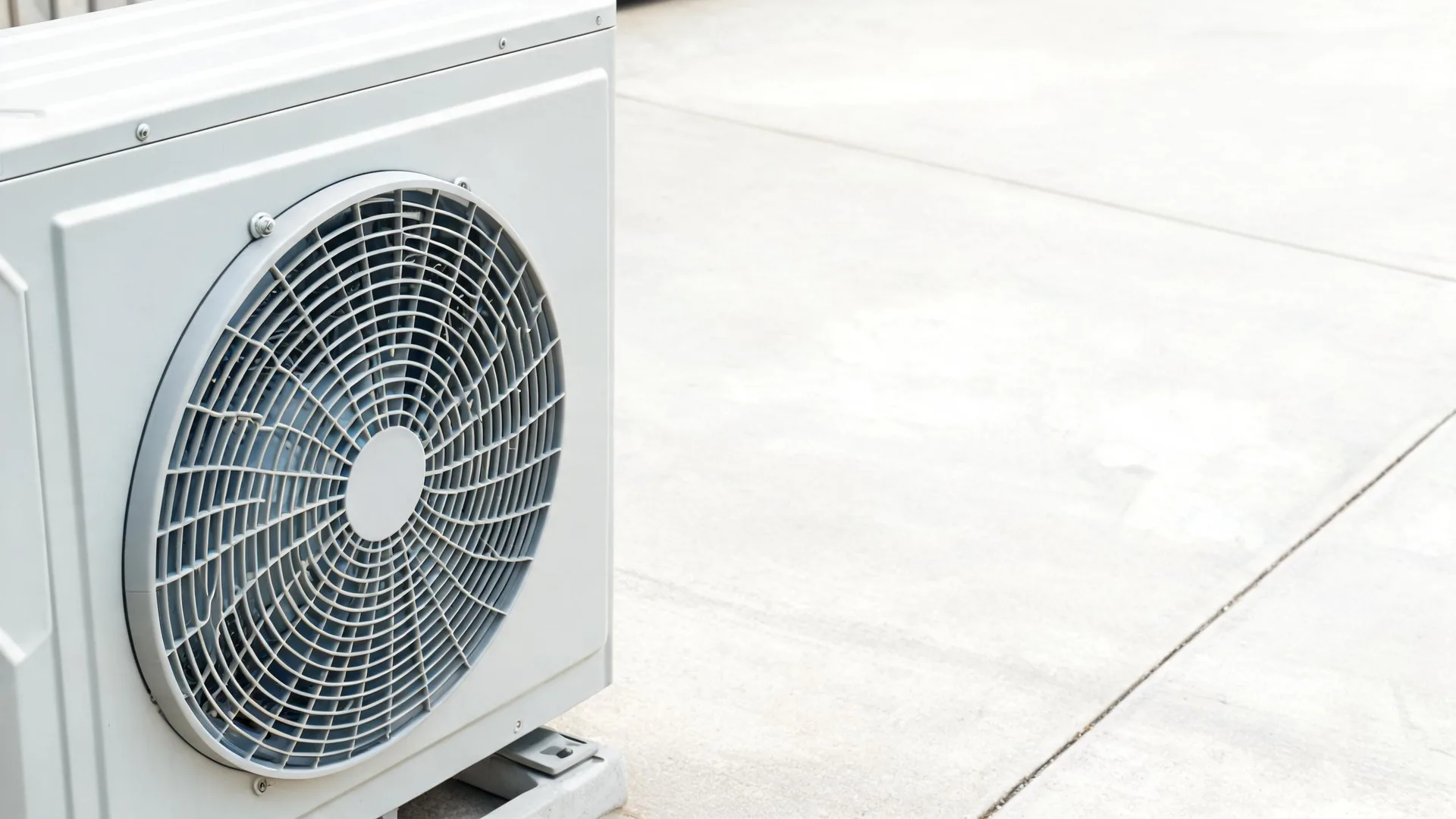
Electricity here runs 16.98 cents a kilowatt-hour
Marshall County pays more for power than most US counties. A heat pump runs on electricity for both heating and cooling, so that rate applies every time it cycles on, winter or summer.
Takes about a minute. No obligation.
Marshall County pays more for power than most US counties. A heat pump runs on electricity for both heating and cooling, so that rate applies every time it cycles on, winter or summer.
Two heat pumps can heat and cool the same house and still leave different bills behind. In a county where power costs this much, the difference between a well-matched system and an oversized or poorly installed one shows up every month.

NOAA nClimDiv, 1991–2020 normals
Gas heats most homes in Marshall County, close to six in ten.
A heat pump replacing a furnace usually means adding ductwork or a coil to work with the gas system already there, not tearing it out.



The rate on your bill is fixed. What a contractor sizes and installs is not. A heat pump matched to this house runs the way it's supposed to, cycle after cycle, all year. That gets decided at installation, not after.
Find a contractor
Half the homes in Marshall County were built in 1958 or earlier. A furnace swap in a house that age usually means the ductwork was sized for that furnace, not for a heat pump. Heat pumps move more air at lower temperatures than a gas furnace does, so a contractor needs to check whether the existing ducts can handle that before anything goes in. Skip that step and the system can run constantly trying to keep up, and in a county paying this much per kilowatt-hour, that shows up on the bill fast.
A contractor measures the house itself: wall and ceiling insulation, window area, orientation, air leakage, room by room. That math produces a load number, and the equipment gets matched to it. Going by square footage alone or matching the old furnace's output skips the part that actually determines what the house needs.
A heat pump too big for the house satisfies the thermostat fast and shuts off before it finishes pulling humidity out of the air, so the house feels damp even at the right temperature. One too small runs constantly and still falls short on the coldest or hottest days. The right size runs long steady cycles and holds the temperature without either problem.
What drives the cost of a heat pump installation is mostly what has to happen before the equipment ever gets set outside. A straight swap, same spot, same line set, same ductwork, is the cheapest version of this job. Add a new circuit back to the panel, or a panel upgrade to handle it, and the price moves. Add modified or new ductwork, and it moves again, since that's cut-and-fit labor on top of the equipment itself. The line set run matters too: a short, simple path between the outdoor unit and the indoor coil costs less to install than one that has to snake through finished walls or a long attic run. Variable-speed and multi-stage equipment costs more up front than single-stage, and it usually comes with a tradeoff in quieter, steadier operation. None of this is optional scope a contractor adds to pad the job. It's what the house actually needs to make the equipment work the way it's supposed to.
Installation day starts with the outdoor unit going on a pad or mounted bracket, level and away from the wall so air can pull through the coil. Indoors, the coil goes in above or beside the furnace, in the existing plenum or a new one built to fit it. The line set connecting the two gets run, brazed at both ends, then pressure tested with nitrogen to make sure every joint holds before any refrigerant goes near it. Once it passes that test, the system gets evacuated to pull out moisture and air, then charged to the weight the equipment calls for, not just until the pressure looks right. The last steps are electrical: a dedicated circuit to the outdoor unit, low-voltage wire to the thermostat, and a run through the system's modes to check that it heats, cools, and switches between the two the way it should. A contractor who rushes the brazing or skips the pressure test leaves a system that seems fine for months and then loses its charge slowly, and by the time it shows up as weak heating or weak cooling, the cause is buried behind a wall.