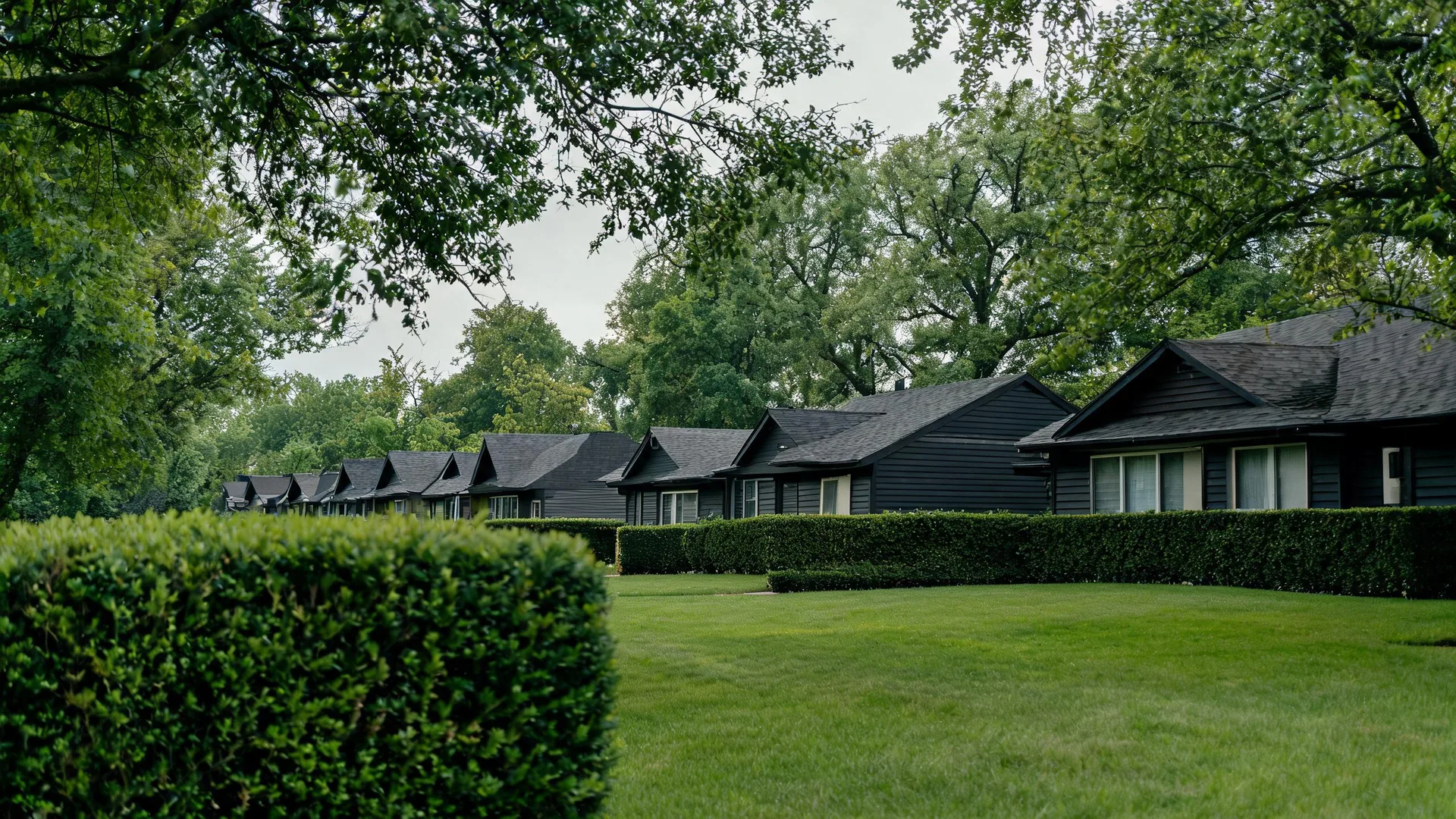







A row of dark-clad single-story cottages with gabled roofs behind trimmed hedges, with a mown lawn in the foreground and large leafy trees under an overcast sky.

Heat Pump Installation in Mount Pleasant, IA

Tell us about the job

Takes about a minute. No obligation.

New system or replacementHeat PumpHenry County, IA
Step 1 of 2

What ZIP code is the job in?

Gas heats 52.5% of homes in Henry County, more than any other fuel, with LP gas heating another share of homes that don't have gas lines run to them. Either way, most houses here were built around a furnace, with ductwork already in place to move warm air. A heat pump can use those same ducts. It can run as the main heat source or work alongside the furnace, switching over when the temperature drops low enough that the furnace takes over. No new ductwork needed to get one in.

8 months
October through May, your system heats
3 months
June through August, it cools
18°F
the average winter night it heats against
83°F
the average summer afternoon it cools against
Isometric grayscale illustration of a cutaway house showing interior rooms, ductwork and an indoor air handler connected by lines to an outdoor condenser unit on the ground outside.
Your system heats October through May and cools June through August.

NOAA nClimDiv, 1991–2020 normals

Heat here runs October through May, eight months out of the year.

Get the heat pump installed in September and it's already proven itself before the first cold night.

A standard heat pump handles Henry County winters fine

34 hail events from 2015 to 2024
18 winter storms from 2015 to 2024
Winter nights average 18°F
Mount Pleasant's older homes need a heat pump sized to fit themHalf the homes in Henry County were built in 1968 or earlier.

The rating on a heat pump's label tells you how much heat it moves for the energy it puts in, not how big a space it can handle. A higher rated unit isn't stronger. It's just better at squeezing more heat out of the same power, the way one truck hauls the same load as another while burning less fuel doing it. That number gets measured across a full season, mild days and cold snaps both, so it reflects how the system runs through all kinds of weather rather than on one easy afternoon. A unit sized wrong for the house will run poorly no matter what the label says, so the rating only tells part of the story. Ask what rating fits a system sized correctly for your home, not just which number sits highest on the shelf.

A standard heat pump, sized right, is all this job needs

At 13.40 cents per kilowatt-hour, a correctly sized standard heat pump is what keeps that rate working in your favor. Nothing about Henry County calls for oversizing or a higher-tier unit to get through the winter here. Get the sizing right and a standard system does the job.

Find a contractor
A man in a dark long-sleeved shirt and brown pants walks up concrete steps toward a dark blue front door, carrying a canvas tool bag with tools in it, beside a potted shrub.
A gray heat pump outdoor unit mounted on a concrete pad next to the stone-accented exterior wall of a house.

Sizing starts with your house, not a number off the old unit

A load calculation is what tells a contractor the right size, not the square footage or whatever the old furnace was rated for. They measure the windows, the insulation, the layout, room by room, and size the heat pump to what they find there. Skip that on a house built in 1968 or earlier and you're sizing for a guess instead of your actual home.

The old furnace usually stays put

When a heat pump goes in alongside an existing furnace, the furnace doesn't come out. It stays connected to the same ductwork and takes over when the air gets too cold for the heat pump to keep up efficiently. They share the job instead of one replacing the other.
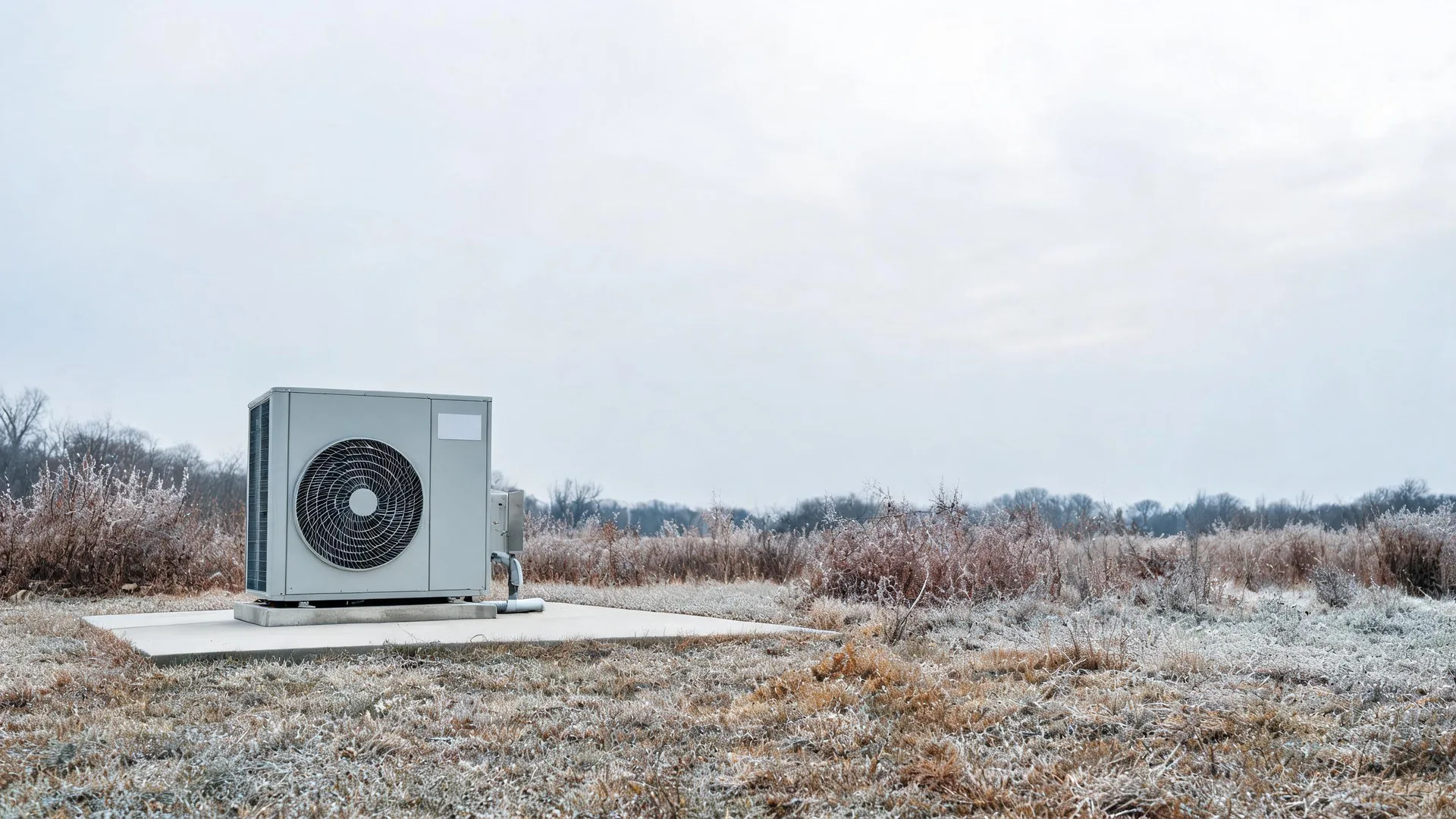
A heat pump swapped in alone is a different job

If a heat pump is going in as the only heat source, the old furnace or AC unit comes out, along with any refrigerant lines or flue venting that won't be needed anymore. The contractor doing the install handles removing and disposing of that old equipment as part of the job.

A few things drive what an installation runs into beyond the unit itself. Where the outdoor unit sits matters, since it needs clearance on all sides for airflow and a path back to the indoor coil that isn't blocked by a deck or a tight side yard. If the job is adding a heat pump alongside a furnace, the contractor has to tie into the existing ductwork and wire up a control board that can run both systems and hand off between them correctly, and that wiring takes more work than a straight swap. The line set between the outdoor and indoor units has to be sized and run properly too, and a longer or more complicated path costs more than a short, simple one. Electrical capacity is its own question. Some panels can take a heat pump without changes, others need an upgrade to handle the new circuit, and that's not something you know until an electrician looks at the panel. None of this is about the brand on the unit. It's about what the house already has and how much of it the new system can use as is.

A heat pump too big for the house will still get the room warm, but it gets there by kicking on, dumping a short blast of heat, and shutting off again before it's pulled moisture out of the air or settled into a steady rhythm. That start-stop cycle wears on the compressor faster than it should and leaves rooms feeling muggy or uneven even though the thermostat reads fine. Too small and it runs constantly, struggling to keep up on the coldest days and never quite reaching the set temperature. Either mistake comes from sizing off a shortcut, square footage alone or whatever number was on the last unit, instead of what the house actually needs room by room. The right size is the one that runs in long, steady cycles, matching its output to how fast the house loses heat rather than overpowering it or falling behind it.