





An outdoor heat pump unit mounted on a concrete pad in front of a single-story suburban house with beige siding.

Heat Pump Installation in Oelwein, IA

Tell us about the job

Takes about a minute. No obligation.

New system or replacementHeat PumpFayette County, IA
Step 1 of 2

What ZIP code is the job in?

Electricity in Fayette County runs 16.91 cents per kilowatt-hour, more than what most counties in the country pay. A heat pump runs on electricity, not gas, so that rate applies to every hour it works, all year. Summers here add to that. The dew point averages 62°F across June, July and August, which means the air holds a lot of moisture, and a heat pump has to pull that moisture out as it cools the house. More moisture to remove means more hours running. With power priced the way it is here, those hours cost more than they would somewhere cheaper.

8 months
October through May, your system heats
3 months
June through August, it cools
12°F
the average winter night it heats against
80°F
the average summer afternoon it cools against
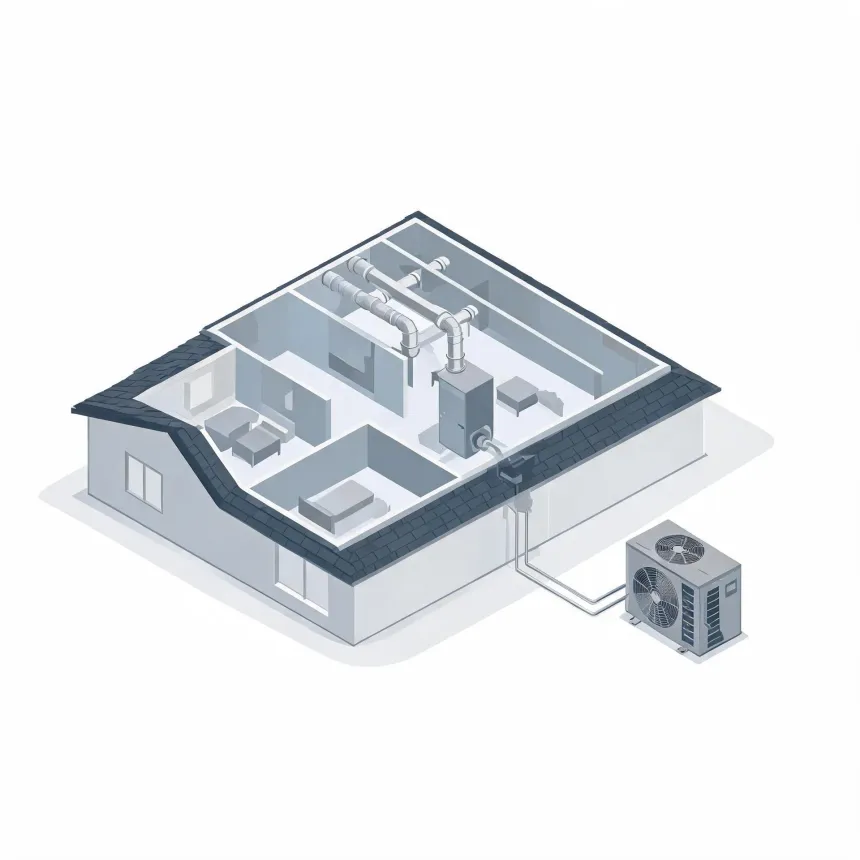
Isometric cutaway illustration of a single-story house showing interior rooms with ductwork, a furnace or air handler, and refrigerant lines running outside to a condenser unit on a pad.
Your system heats October through May and cools June through August.

NOAA nClimDiv, 1991–2020 normals

Heat pumps here get installed before October, not during a cold snap.

A system going in before October gets set up right instead of rushed in on the coldest week of the year.

Half these homes were built in 1954 or earlier, and the heat pump has to work with what's already there

Half the homes here were built by 1954
Climate zone 5A
Power here costs 16.91 cents per kilowatt-hour

Fayette County falls under zone 5A in the 2021 energy code, a cool zone where the heating load matters more than the cooling load. Any split-system heat pump installed here has to meet the federal minimum for both sides of the job: at least 14.3 Btu of cooling for every watt-hour it draws, and at least 7.5 Btu of heating for every watt-hour in winter. That heating number carries more weight here than the cooling one, since winters are the harder season to get through. These are floors, not targets, so a contractor sizing a system for this county is already working above them. A system meeting only the bare minimum is still built to handle a cold-climate winter, not a mild one.

Get a heat pump that earns its rating here

Power here costs more than most places pay, and a heat pump runs on it all year. The efficiency rating on the unit you install is not just a number for comparing models. It is what your bill looks like every month you run it. Ask for a system sized to this house, installed to hit the rating it's built for, not just the minimum the code allows.

Find a contractor
A man in a dark long-sleeve shirt and tan work pants, seen from behind, carries a canvas tool bag up porch steps toward a dark blue front door, with a potted plant beside him.
A gray air-source heat pump mounted on a concrete pad next to a house with gray vinyl siding, surrounded by gravel and flanked by green shrubs and white hydrangea flowers.

This runs for years, in the house you already have

A heat pump installed now will likely run for a decade or more in the house you already have. If your home was built in 1954 or earlier, the ductwork was probably sized for a furnace, not a heat pump. Furnaces push hotter air at lower volume. A heat pump needs steadier, higher airflow to move the same heat. Ask the contractor what they're checking on your ducts before the unit goes in, not after it's running.

Sizing decides how hard it runs

A heat pump sized too big short cycles, switching on and off before it settles into steady heating or cooling. One sized too small runs constantly and still struggles on the coldest and hottest days. Getting the size right takes a load calculation on the actual house, not a guess based on the old system's size. That calculation looks at square footage, insulation, windows and duct layout together.
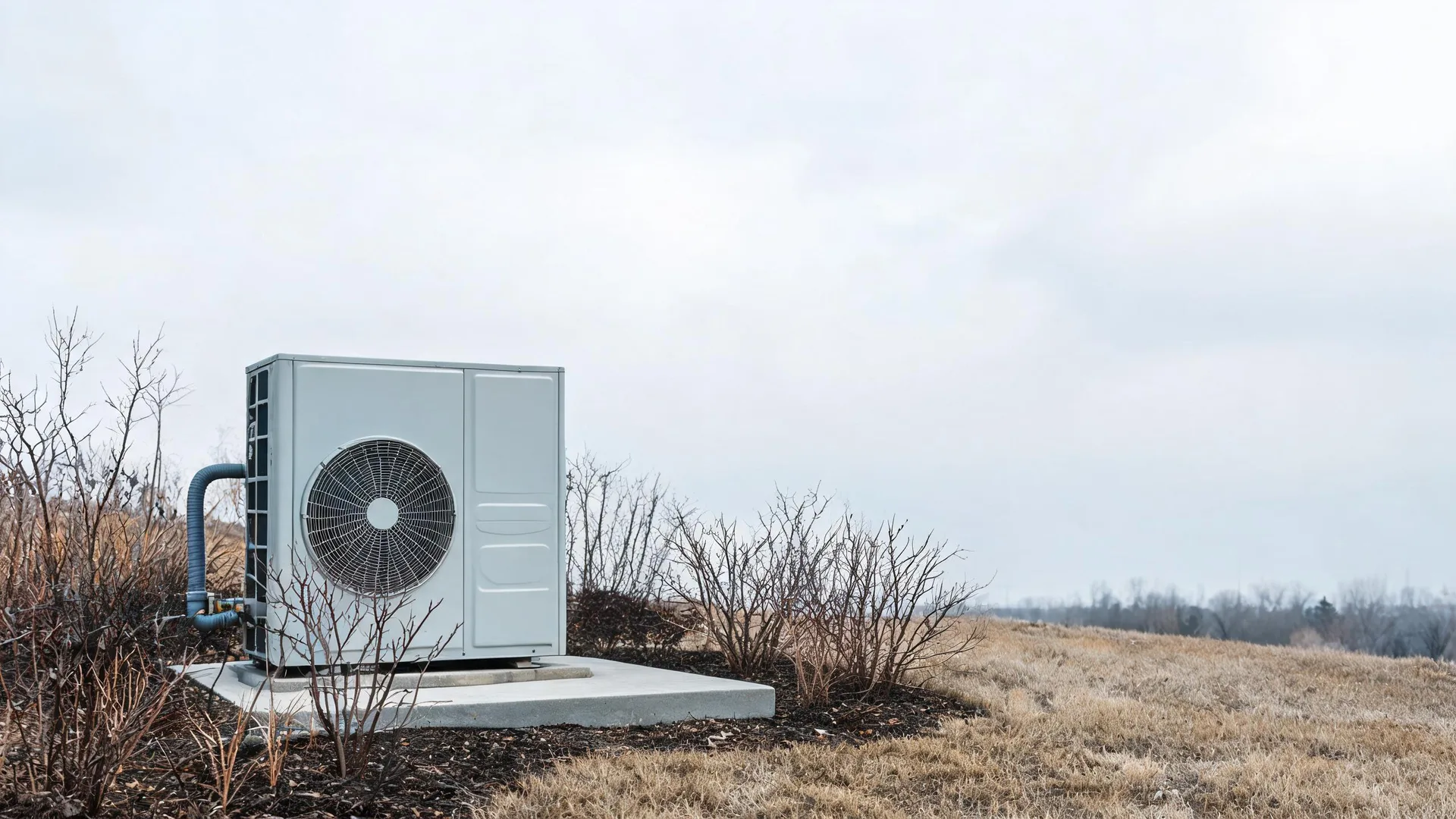
The outdoor unit and the indoor coil are matched

The outdoor compressor and the indoor coil are built to work as a pair, tested together to hit a certain efficiency rating. Installing a mismatched coil and compressor means the system won't reach the rating on the outdoor unit's label, no matter how well the rest of the job is done. A contractor quoting the job should be specifying both pieces together, not just the condenser outside.

That rating on the label, the one with the two numbers, is measured under set conditions in a lab, not in your house. It tells you how much heat the system moves for the electricity it draws, at that outdoor temperature. Drop the temperature further than the test condition and the system has to work harder to move the same heat, so the real efficiency on a cold night is lower than the number on the sticker. The rating is still useful. It tells you how one model stacks up against another, tested the same way. What it won't tell you is what your ducts, your insulation or your thermostat settings do to that number once the unit is running in your house, not the lab.

Utility gas heats close to half the homes in Fayette County, and LP gas heats most of the rest. A heat pump installed here usually isn't replacing a furnace outright. It's paired with one, taking over the heating and cooling load for most of the year and stepping aside when the temperature drops low enough that the furnace can do the job cheaper. That setup, a dual-fuel system, is worth asking about directly. The contractor wiring the switchover point has to know what the furnace is rated for and what the heat pump can still handle efficiently before gas takes over. Getting that handoff temperature right is what decides whether the two systems are actually working together or just running one after the other.