






A grey heat pump outdoor unit mounted on a concrete pad against the exterior wall of a house with grey siding and stone veneer.

Heat Pump Installation in Tipton, IA

Tell us about the job

Takes about a minute. No obligation.

New system or replacementHeat PumpCedar County, IA
Step 1 of 2

What ZIP code is the job in?

Gas heats most homes in Cedar County, 52.7 percent, and another 30.6 percent run on bottled or LP gas. That means most houses in Tipton already have a furnace as the main heat source, not a heat pump or electric resistance setup. A heat pump going into a home like that usually pairs with the existing furnace rather than replacing it outright, switching over to gas on the coldest days. Electricity alone heats 12.8 percent of homes here, so a system built to run on electric heat by itself is the exception in this county, not the rule.

8 months
October through May, your system heats
3 months
June through August, it cools
16°F
the average winter night it heats against
82°F
the average summer afternoon it cools against
Isometric cutaway illustration of a small house showing interior rooms with furniture, an indoor air handler with ductwork, and lines running to an outdoor condenser unit beside the building.
Your system heats October through May and cools June through August.

NOAA nClimDiv, 1991–2020 normals

Cedar County has its share of hail, wind and winter storms, same as most of this part of Iowa.

A heat pump install here calls for standard sizing and standard equipment, the same as it would anywhere in the county.

Plan the swap for September, before heat season starts in October

Cooling runs June through August
Heat runs October through May
63 damaging wind events from 2015 to 2024

A standard size and standard efficiency rating is the right call for a Tipton install. Nothing about this county pushes you toward a bigger unit or a higher-tier one. Electricity here ran 13.40 cents per kilowatt-hour in 2024, and that number matters more for a heat pump than it would for a furnace, since a heat pump runs on electricity full time whenever it's the one doing the heating. If it's paired with the existing gas furnace, that cost only applies on the days the heat pump is doing the work. Your contractor sizes the unit to the house, not to anything particular about Cedar County.

A standard heat pump, sized to your house, is the right fit here

A heat pump sized to your house, paired with the furnace you already have, is what this install calls for. Nothing about Cedar County changes that math. Get the sizing right and the rest follows.

Find a contractor
A man in a cap and dark jacket, seen from behind, carries a canvas tool bag up porch steps toward a dark blue front door of a gray-sided house.
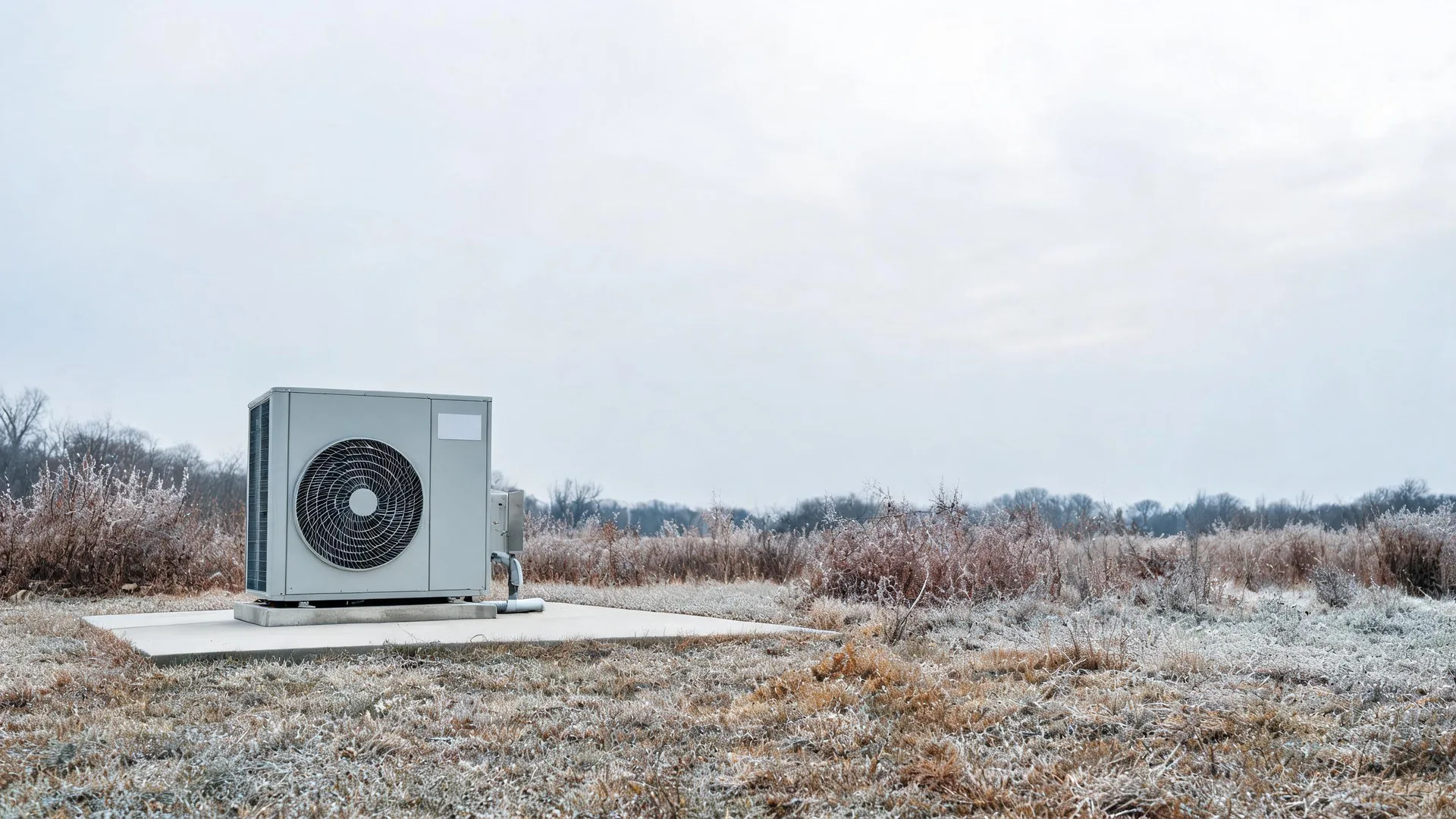
A gray heat pump outdoor unit mounted on a concrete pad next to the stone-accented exterior wall of a house.

This house has been heated one way for a long time

Half the homes in Cedar County were built in 1965 or earlier. A house that age wasn't built with a heat pump in mind, and the ductwork running through it has been moving warm air from a furnace for decades, not warm and cool air from an outdoor unit. That doesn't rule anything out. It just means whoever installs this one needs to look at what's actually running through your walls before they size and place it, not assume it matches a newer build.

The rating tells you the ratio, not the bill

The efficiency rating on a heat pump's label describes how much heat it moves for the electricity it uses, compared to straight electric resistance heat. A higher rating means more heat moved per unit of power. It doesn't tell you what your power costs, how big your house is, or how much heat leaks out through the walls and windows. Households running the same rated unit can still see different usage depending on all of that.
A higher rating costs more up front

Equipment with a higher efficiency rating generally costs more to buy and install than a standard-rated unit of the same size. Whether that difference is worth paying depends on how many hours a year the heat pump actually runs and carries the load on its own. A unit that only handles mild days and hands off to a furnace when it gets cold won't rack up the same running hours as one working alone all season, so the payoff looks different for each setup.

When you're comparing bids, ask each contractor what size unit they landed on and how they got there. A proper sizing calculation looks at your square footage, your insulation, your windows, and your layout, not just a rule of thumb based on the old furnace. Ask what happens below freezing too. Every heat pump has a point where it can't pull enough heat from the outside air to keep up, and below that point something else has to carry the load, usually the furnace it's paired with or backup electric strip heat. A contractor who can't tell you where that switchover happens for the equipment they're proposing hasn't finished the job of sizing it. Ask about the sound rating of the outdoor unit too, since some run noticeably quieter than others, and ask what the warranty covers on the compressor versus the rest of the parts. Bids that look alike on paper can still describe different installs underneath.

The old furnace usually doesn't leave. Most heat pump installs that pair with existing gas heat just add the new outdoor unit and leave the furnace in place as backup, so there's nothing to haul away on that side. If the house is getting a heat pump instead of central air, the old AC condenser comes out, since the heat pump's outdoor unit does both jobs now. An old furnace that's being fully replaced, not paired, gets disconnected from the gas line and vented flue before it's removed, which is work a licensed contractor handles as part of the swap, not something left for the homeowner to deal with after. Whatever gets hauled off, a contractor should tell you upfront whether removal and disposal is part of the bid or a separate line.