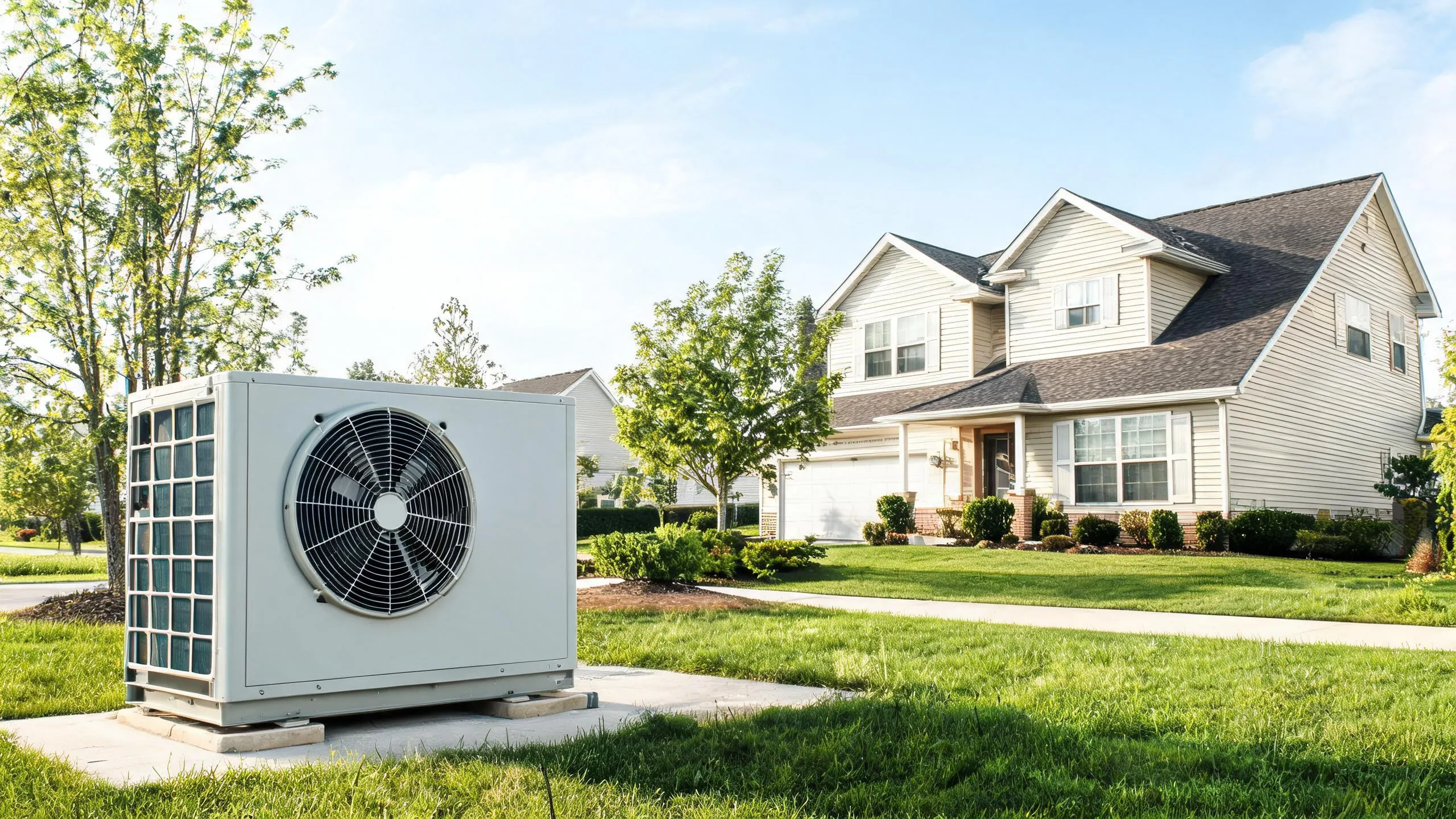






An outdoor heat pump unit mounted on a concrete pad in front of a two-story suburban house with a landscaped lawn.

Heat Pump Repair in Cedar Rapids, IA

Tell us about the job

Takes about a minute. No obligation.

RepairHeat PumpLinn County, IA
Step 1 of 2

What ZIP code is the job in?

Linn County saw 344 severe weather events between 2015 and 2024. That includes 156 damaging wind events, 139 hail events, and 17 tornadoes. The outdoor unit sits outside and takes whatever comes through: hail dents the fins, wind throws branches and debris into the coil, and none of that always shows up as a problem right away. Winter storms hit the county 30 times in that same stretch, which matters for a heat pump since it has to keep running when the cold sets in. If a storm has come through and the unit took a hit, it's worth having someone look even if it's still blowing air.

8 months
October through May, your system heats
3 months
June through August, it cools
15°F
the average winter night it heats against
82°F
the average summer afternoon it cools against
Isometric line illustration of a cutaway house showing interior rooms with furniture, ceiling ductwork, and an outdoor condenser unit connected by lines along the exterior wall.
Your system heats October through May and cools June through August.

NOAA nClimDiv, 1991–2020 normals

The dew point in Linn County averages 63°F through June, July and August, and that heavy air keeps a heat pump running long hours to keep up.

Hours like that wear down parts faster, so a breakdown now is usually a sign of that workload catching up, not bad luck.

September and May are when a weak part gets found

Cooling runs June through August
Heat runs October through May
156 damaging wind events from 2015 to 2024

Electricity here runs 16.91 cents per kilowatt hour, higher than most of the country. A heat pump that's struggling, short cycling, running constantly, blowing weak air, pulls more power to do the same job or just runs longer trying. That shows up on the bill before it shows up as a full breakdown. In a county where power already costs more than average, a repair you put off is a repair you're paying for twice.

After a storm, get the unit looked at, not just the forecast

If a storm has come through recently, have the outdoor unit checked before deciding it's fine. Hail and debris don't always announce themselves right away, and 15% of Iowa households already went at least a day without power in 2024. A heat pump that's been through that kind of weather and is now acting up isn't a coincidence.

Find a contractor
A man seen from behind in a dark sweatshirt and tan work pants climbs porch steps toward a gray paneled front door, carrying a canvas tool bag in his right hand, with a potted shrub to the left.
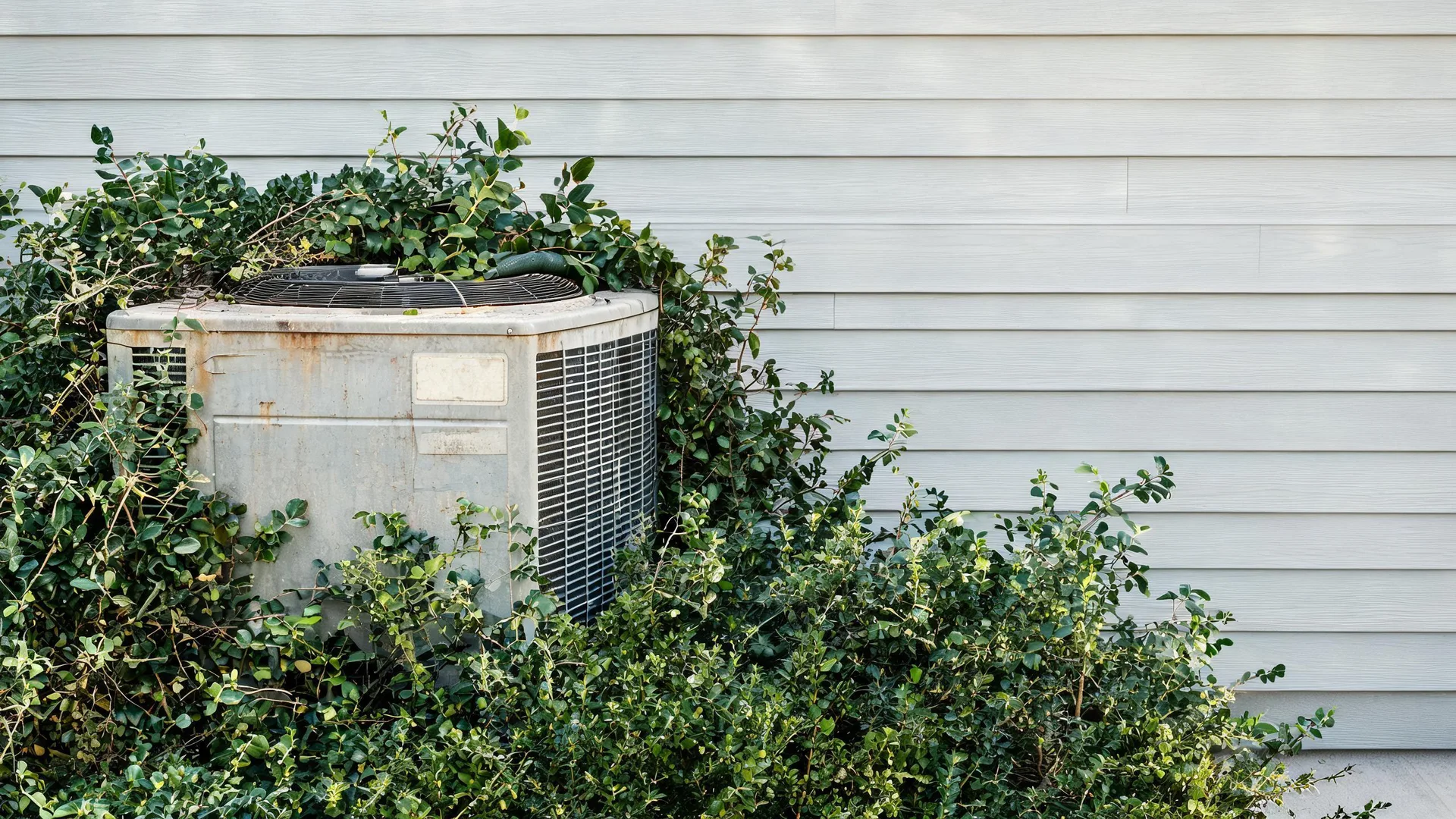
A gray heat pump condenser unit mounted on a concrete pad against the gray lap-siding exterior wall of a house.

This unit doesn't get an easy season

The heat pump in this clip is running around the clock, not just through the hot stretch of summer. Years of that kind of runtime add up differently here than somewhere mild. Long hours in heavy air plus a hard winter on the other end means the parts inside get worked from both directions, with barely a break between. When something finally gives out, it's rarely one bad day doing it. It's the months of long runtime before it that set the failure up. A proper diagnosis finds what actually wore out, not just what's making noise right now, so the repair holds instead of becoming the first of several.

What the sound tells you

A heat pump that clicks on and off every few minutes is short cycling, usually a bad capacitor or a refrigerant charge that's off. A grinding or screeching noise from the outdoor unit points to the fan motor bearings giving out. A hissing sound can mean refrigerant is escaping, and a heat pump that's low on charge will struggle to move heat either direction.
What the air tells you

Air blowing from the vents that feels barely warm, or in summer barely cool, often means the reversing valve is stuck and the system can't switch between heating and cooling. Weak airflow across every vent points to a failing blower motor or a coil so frozen or dirty that air can't get through it. Either way, the unit works harder for less result, and that gap gets wider until someone replaces the part.

A heat pump that's struggling doesn't fix itself by staying on. A frozen coil blocks airflow, so the system pulls in less return air and runs longer to move the same amount of heat. That longer runtime keeps the coil cold enough to stay frozen, and the cycle feeds itself until a tech thaws it out and finds what caused the freeze in the first place. A compressor working against a bad capacitor draws more current than it's rated for, and that heat builds up in the windings every time it tries to start. One struggling start might not hurt it. Months of them will. Refrigerant leaks follow the same pattern: a system low on charge runs longer to make up for it, and the compressor ends up working with less lubrication than it needs, since the oil travels through the system mixed in with the refrigerant. Catching a problem early usually means replacing one part. Letting it run usually means it takes a second part down with it.

If the heat pump is already struggling, that's the time to get it looked at, not after another bill comes in higher than the last. A system pulling extra power to fight through a bad part doesn't average out over the month. It adds up every single day it keeps running that way. Waiting to see if it gets worse just means paying the higher rate longer before the repair happens anyway. Get the diagnosis now and the bill stops climbing the day it's fixed.