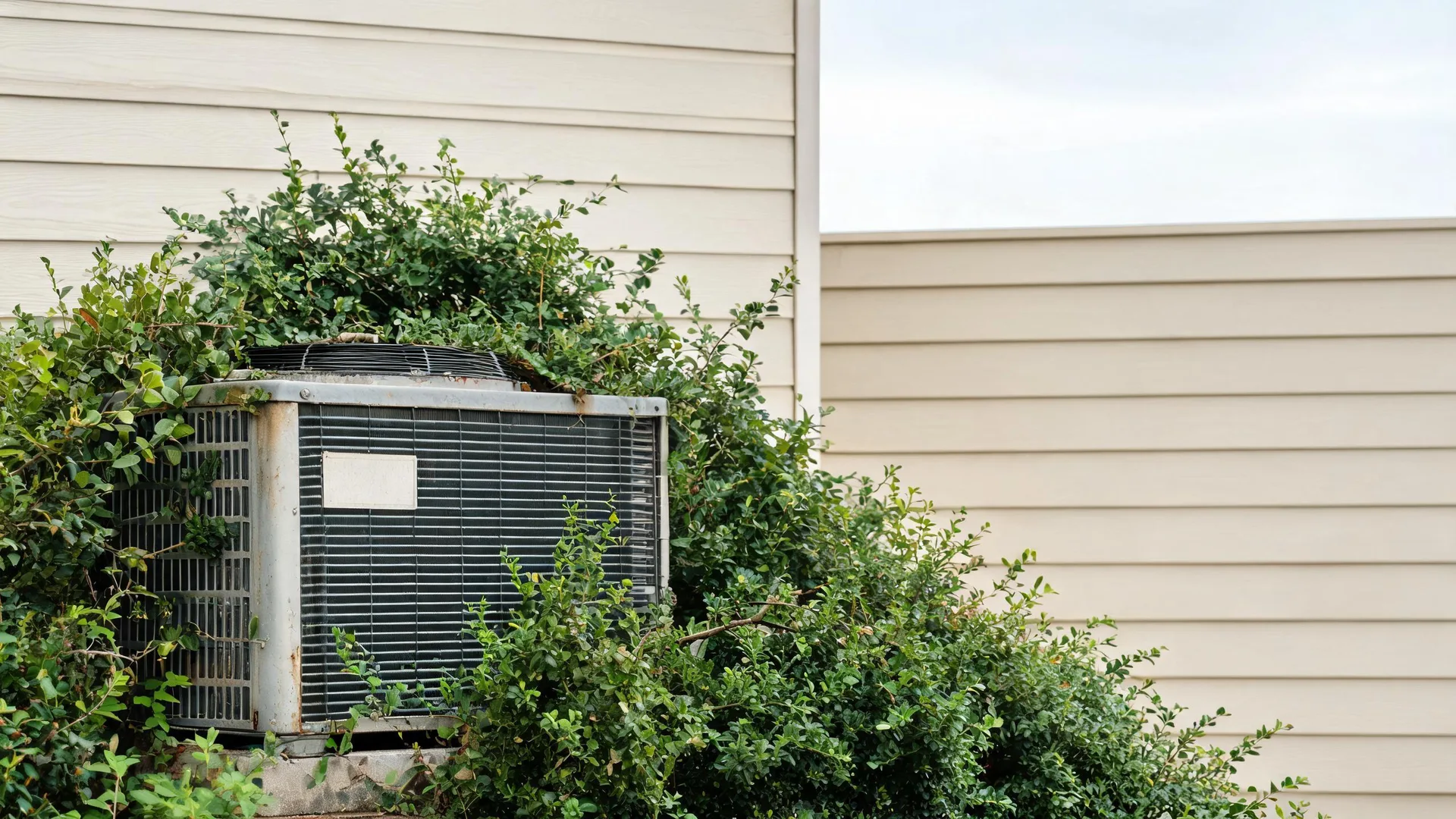
An outdoor heat pump unit mounted on a concrete pad in front of a single-story suburban house with beige siding.

Heat Pump Repair in Le Mars, IA

Tell us about the job

Takes about a minute. No obligation.

RepairHeat PumpPlymouth County, IA
Step 1 of 2

What ZIP code is the job in?

This climate doesn't overwork a heat pump

Le Mars sits in a zone where heating is the bigger job and summer humidity stays moderate, dew points around 61 degrees most of the summer. A heat pump here isn't fighting extreme swings in either direction. If yours is acting up, it's not because the area asked too much of it.


So look for the common cause first

A failing capacitor, a low charge, a worn contactor, a defrost control that's stuck. These are the same problems that show up in heat pumps anywhere, and they're what a contractor should check before assuming anything unusual is going on. Getting the actual cause right the first time is what makes the repair hold.

8 months
October through May, your system heats
3 months
June through August, it cools
13°F
the average winter night it heats against
83°F
the average summer afternoon it cools against
Isometric grayscale illustration of a cutaway house showing interior rooms, ceiling ductwork and an air handler, connected by lines to an outdoor condenser unit on a pad outside.
Your system heats October through May and cools June through August.

NOAA nClimDiv, 1991–2020 normals

Heat pumps in Le Mars switch over in September for heat and May for cooling, right before the months that use them most.

A part that was already weak tends to show itself in that first week of real use, not before.

Half the homes here are old enough that the heat pump itself may be the problem

Half the homes here were built by 1971
53 hail events from 2015 to 2024
26 winter storms from 2015 to 2024
Weather Here Doesn't Break Heat PumpsPlymouth County saw 51 wind events and 53 hail events between 2015 and 2024, and neither one reaches the parts inside your heat pump.

Before paying for a big repair, ask the contractor how much life the unit has left. Half the homes around Le Mars were built in 1971 or earlier, and a heat pump doesn't last as long as the house around it. If yours came with an older home and nobody has replaced it since, it may already be past the point where repair makes sense. A contractor can tell you its age from the data plate and weigh that against what's actually broken. That answer should come before the repair, not after.

Get the usual fix

Nothing about this area is especially hard on it. It's most likely the usual problem with the usual fix.

Find a contractor
A man in a cap, dark shirt and tan work pants walks up porch steps toward a gray front door, carrying a canvas tool bag, with a potted plant on the porch to the right.
A residential heat pump outdoor unit mounted on a concrete pad next to a house with gray vinyl siding.

It Runs All Year, So It Wears All Year

A heat pump runs the whole year, so its parts wear on a different clock than a furnace that only fires part of the year. The outdoor fan motor and compressor cycle on and off through every mild day in spring and fall, not just the hard stretches of summer and winter. That constant cycling is what wears a contactor down, pitting the contacts until it stops pulling in reliably. It's also what shortens the life of a run capacitor, which loses its charge over time and eventually can't give the compressor or fan motor the kick they need to start. The reversing valve takes a different kind of wear. It switches the system between heating and cooling, and if it sticks, the unit can blow cold air when it should heat or run constantly without satisfying the thermostat. None of this points to anything unusual about how the unit was used. It's what happens to the parts inside any heat pump after enough cycles, regardless of where it sits.

What you can check yourself

Look at the outdoor unit first. If snow or leaves are packed around it, clear them so air can move through the coil. Check the thermostat batteries and make sure it's set to the right mode, since a heat pump stuck in cooling mode will blow cold air all day. Go to the breaker panel and look for a tripped breaker, both for the outdoor unit and the air handler inside. Replace the filter if you haven't in a while. A clogged filter starves the system of airflow and can make it seem like the unit has failed when it's just suffocating.

What to leave alone

Don't take the access panels off the outdoor unit or touch anything inside it. The capacitor in there holds a charge even when the power is off, and the refrigerant lines aren't something to open without the right equipment. If the outdoor coil has heavy ice on it outside of a normal defrost cycle, don't chip at it. Turn the system off and let it thaw, then call someone to find out why it iced up in the first place. A heat pump that's icing, short cycling, or not switching between heat and cool needs a contractor's gauges and meters to find the real cause.

A heat pump that's struggling usually sends up a small signal before it sends up a big one. Weak airflow, a breaker that trips and gets reset, a strange smell, ice where ice shouldn't be. Keep running it through that and the small problem turns into a bigger one. A motor working against a clogged filter draws more current than it was built for, and that heat has to go somewhere. A compressor starting on a weak capacitor strains every time it kicks on, until the day it doesn't start at all. Ice left to build on the outdoor coil blocks the airflow the system needs to defrost itself, so the ice just grows. None of these fix themselves by waiting. The part that's struggling now is the part most likely to fail outright, and it tends to take a more expensive part down with it.

A diagnostic visit starts outside, at the unit itself, not with a parts list. A contractor will check the refrigerant pressures, test the capacitor under load instead of just looking at it, and watch how the contactor pulls in. They'll run the system in both heating and cooling to see whether the reversing valve actually switches when it's told to. Airflow gets checked on both sides, the filter and ducts inside, the coil and fan outside, since a problem that looks electrical sometimes starts as a simple airflow block. The goal is to find which part is actually failing, not to guess from the symptom alone, because a lot of different problems can make a heat pump blow the wrong temperature of air or shut off early. Once that part is found, the contractor can tell you whether it's worth replacing on its own or whether it's a sign the unit is done.