A dark two-story house with a covered front porch and shrubs, framed by large leafy trees, photographed from ground level across a mown green lawn with blurred grass in the foreground.

Heat Pump Repair in Oskaloosa, IA

Tell us about the job

Takes about a minute. No obligation.

RepairHeat PumpMahaska County, IA
Step 1 of 2

What ZIP code is the job in?

Built for this cold

A heat pump here runs through nights that average 17°F in December, January and February. That's normal duty for this equipment, not a strain on it. When one stops keeping up, the cause is almost always a part failing, not the weather beating it.


What that means for the repair

A tech will check the usual suspects first. A failing defrost board. A low charge. A stuck reversing valve. Oskaloosa winters don't call for anything special in a heat pump, so the fix is probably the same one a tech would make anywhere in zone 5A.

8 months
October through May, your system heats
3 months
June through August, it cools
17°F
the average winter night it heats against
83°F
the average summer afternoon it cools against
Isometric line illustration of a cutaway single-story house showing interior rooms, ceiling ductwork, an indoor air handler unit, and an outdoor condenser connected by a line set.
Your system heats October through May and cools June through August.

NOAA nClimDiv, 1991–2020 normals

Heat pumps in Mahaska County switch over to heat in October and run through May.

A unit with a weak part often makes it through summer fine and fails in October, the first cold morning that asks more of it.

Half the homes here are old enough that the heat pump isn't the original equipment

Half the homes here were built by 1965
18 winter storms from 2015 to 2024
Winter nights average 17°F

Electricity here runs 13.40 cents a kilowatt-hour, close to the national average. That matters for a heat pump more than it would for a furnace, since the whole system runs on it instead of burning gas. It doesn't make the repair different. A stuck reversing valve or a weak capacitor costs what it costs no matter the rate. What the rate does mean is that a heat pump running poorly, short cycling or limping along on a failing part, shows up on the power bill fast. That's often the first sign something needs a look before it fails outright.

Worth knowing before you pay for the repair

Half the homes in Mahaska County were built in 1965 or earlier. If yours is one of them, the heat pump has likely been swapped out at least once already, maybe more than once. Before paying for a repair, it's worth asking the tech how old the current unit is and how much life it has left. A straightforward fix on a unit with years ahead of it is a different call than the same repair on one near the end.

Find a contractor
A gray air-source heat pump mounted on a concrete pad next to a house with gray vinyl siding, surrounded by gravel and flanked by green shrubs and white hydrangea flowers.

What to listen for, not just what to wait for

A heat pump doesn't get an off season the way a furnace or an air conditioner does. It runs one direction all summer and the other all winter, so a part that's starting to go usually shows itself as a change you can feel or hear, not a sudden shutdown. Weak heat on a cold morning, where the air from the vents feels barely warm, is one of the clearest signs. So is ice building up on the outdoor unit and not clearing on its own. A unit that runs and runs without the house catching up to the thermostat is working harder than it should for the result it's getting. Short cycling, where it kicks on, runs a few minutes, and shuts off again, points to a different problem but is just as worth a call. A clicking or buzzing at startup that wasn't there before usually means a part is wearing out, not that anything is about to quit on the spot. None of these mean the unit is being pushed past what it's built for. They mean a specific part needs a look, and that's worth doing before the symptom turns into no heat at all.

Check the thermostat first

Make sure it's set to heat, not auto, and the set point is actually above room temperature. Check the batteries if it uses them. A thermostat that's lost power or lost its schedule will leave a heat pump sitting idle for no mechanical reason at all.

Look at the outdoor unit and the breaker

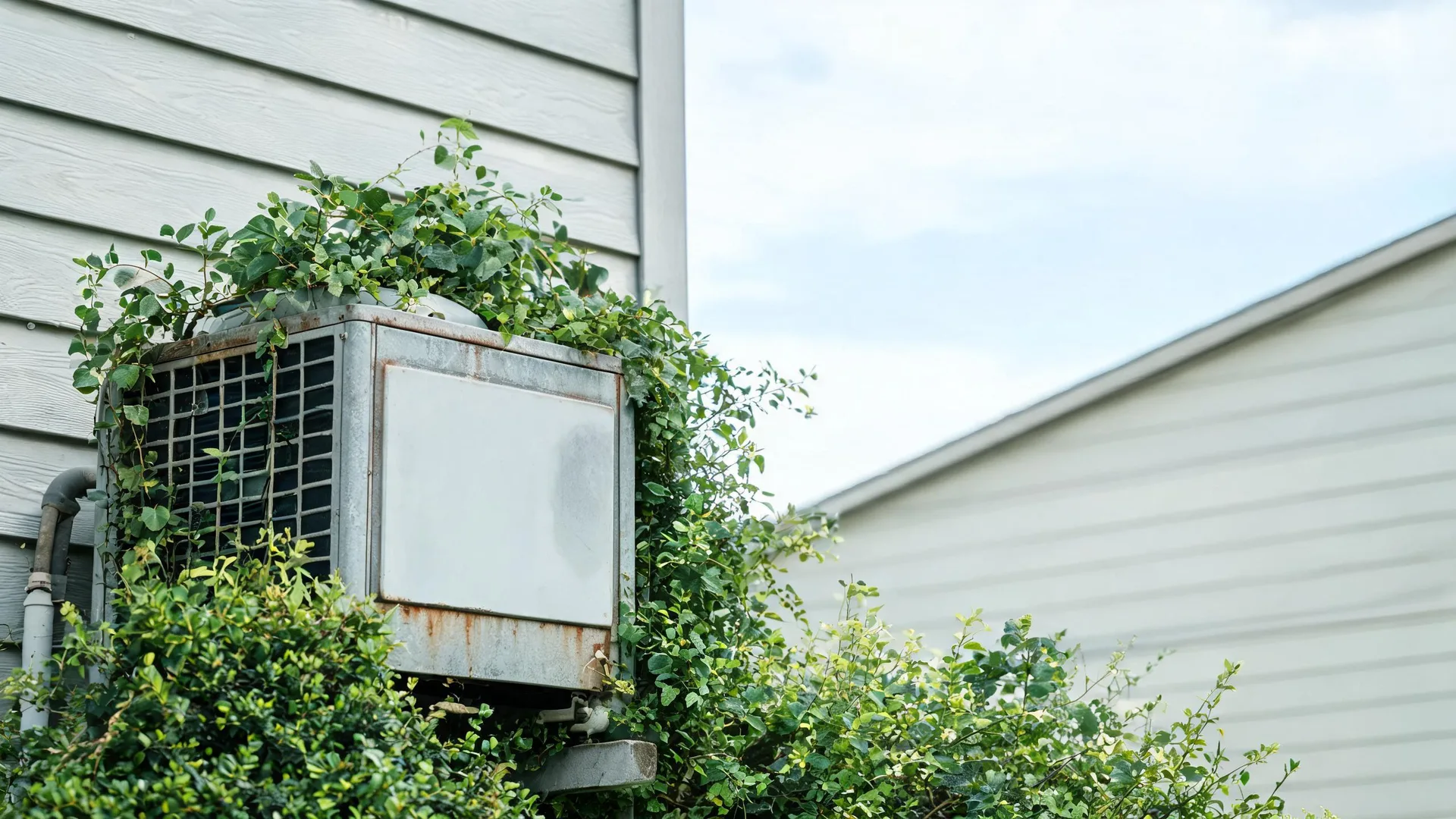
Walk outside and see if the unit is running, iced over, or boxed in by anything blocking airflow around it. Check the breaker panel for a tripped switch. Those are the checks safe to do without a tech. Anything involving the refrigerant lines, the wiring, or the inside of the cabinet is a job to leave alone.

A heat pump that's struggling doesn't fix itself by staying on. A reversing valve that's sticking will stick worse each time it has to switch. A compressor running low on charge keeps working anyway, just harder, and that's how it burns out early. Ice on the outdoor coil blocks airflow, so the unit draws harder to compensate, and that extra strain is how a small problem turns into a failed compressor. A part that's already struggling doesn't get a rest while you wait it out. It just keeps spending whatever life it has left until it quits.

Age is the first thing to weigh, and most of the time the tech standing in front of the unit can tell you right off. A compressor near the end sounds different, draws differently, and a tech who works on these every day can often feel that before any gauge confirms it. If the compressor itself has failed, that's usually the point to stop and talk replacement instead of repair, since the compressor is most of what you're paying for in the whole system. A failing capacitor, a bad defrost board, a stuck reversing valve, those are worth fixing on almost any unit, young or old, because they're a small part of the machine and swapping one doesn't gamble on the rest. The harder call is a unit old enough that one repair now is likely to be followed by another next year, on a different part. That's not a decision about this repair. It's a decision about how many more of these calls you want to make.